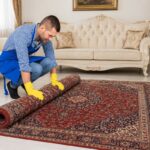
Professional rug cleaning in London can cost anything from around £30 for a small standard rug to several hundred pounds for a large, handmade or specialist piece. The final cost depends on much more than dimensions: fibre type, construction, dye stability, overall condition, stains, odours and whether the rug can be cleaned at your property must all be considered.
At Hi Carpet Cleaner, cleaning a small standard rug starts from £30, with a minimum booking charge of £75 per visit. Medium and large rugs, as well as wool, silk, viscose, Persian, Oriental, handmade and antique rugs, require an individual quotation.
Collection, delivery and workshop treatment may be priced separately depending on the rug, your location and the service required. Parking and access charges can also apply, so these details should be provided before the booking is confirmed.
This guide explains our current rug-cleaning prices, what may increase the final cost and how to request an accurate quote without unexpected charges.
Rugs and fitted carpets are priced differently, so compare with the carpet cleaning cost in London.
Hi Carpet Cleaner Rug Cleaning Prices at a Glance
The following prices represent Hi Carpet Cleaner’s current pricing policy rather than general London market averages.
| Rug Type or Service | Price | Important Information |
|---|---|---|
| Small standard rug | From £30 | Material, construction and condition may affect the final price |
| Medium rug | Individual quote | Dimensions and photographs are required |
| Large area rug | Individual quote | Size, weight, access and treatment method must be assessed |
| Wool rug | Individual quote | Dye stability, construction and condition are considered |
| Silk or viscose rug | Specialist quote | Sensitive fibres require individual assessment |
| Persian or Oriental rug | Specialist quote | Fibre, age, dyes, construction and condition affect the price |
| Handmade or antique rug | Specialist quote | Existing wear, previous repairs and unstable dyes must be considered |
| Workshop cleaning | Individual quote | Collection, delivery and specialist handling may be priced separately |
A minimum booking charge of £75 per visit applies. This means that although cleaning a small standard rug starts from £30, a booking for that rug alone will still be subject to the £75 minimum.
Where suitable, it may be more cost-effective to combine rug cleaning with carpet, sofa, upholstery or mattress cleaning during the same appointment.
Need an accurate rug-cleaning price?
Send photographs and dimensions via WhatsApp, or call us to receive an accurate quote.
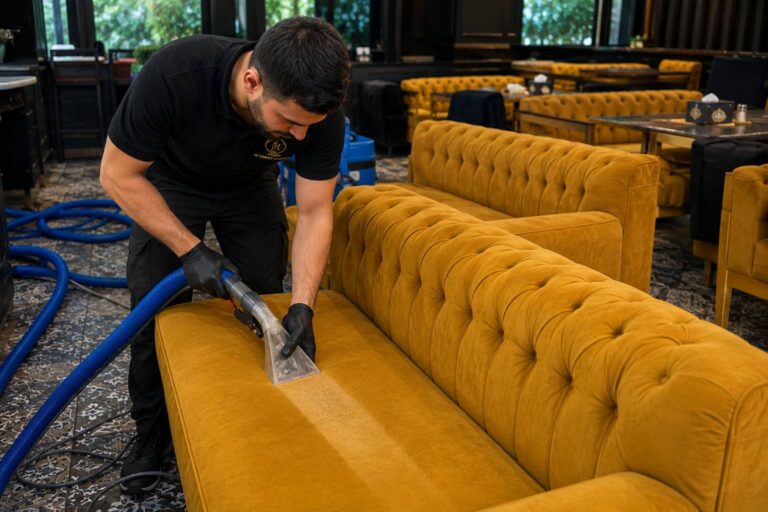
Got sofas too? See the full breakdown of sofa cleaning costs in London.
Why Does a Small Rug Start From £30 if the Minimum Charge Is £75?
The £30 price is the starting cleaning cost for an eligible small standard rug. The £75 figure is the minimum total charge for allocating a technician, travelling to the property, transporting and setting up professional equipment and completing the appointment.
For example, if one small synthetic rug qualifies for the £30 starting price but is the only item booked, the appointment total will still start from £75. If you add another suitable rug, a carpeted room or upholstery cleaning, the combined item prices may exceed the minimum and make better use of the visit.
The minimum booking charge applies to eligible on-site appointments. Workshop cleaning, collection and delivery may be calculated differently and should be confirmed in your written quotation.

How Is the Cost of Rug Cleaning Calculated?
Rug cleaning cannot always be priced using dimensions alone. Two rugs measuring exactly 2 × 3 metres may require completely different treatments if one is a machine-made polypropylene rug and the other is a hand-knotted wool and silk Persian rug.
Before confirming a quote, we consider the following factors.
Rug Size and Weight
Length and width establish the total area requiring treatment:
Length × width = total area in square metres
For example, a rug measuring 2 metres by 3 metres covers 6 square metres.
However, area alone does not provide a complete quotation. A thick, dense or unusually heavy rug requires more handling and may take longer to clean and dry than a lightweight rug with the same dimensions.
Large rugs may also need more than one person for safe collection, movement or repositioning.
Fibre Type
Different fibres respond differently to water, cleaning solutions, agitation, heat and drying. Common rug materials include polypropylene, polyester, nylon, cotton, wool, natural silk, viscose, rayon, bamboo silk and mixed fibres.
Standard synthetic rugs are often more straightforward to assess. Wool, silk and viscose rugs generally require more careful product selection, moisture control and testing.
A care label can be helpful, but it may describe only the visible pile rather than the backing, foundation or adhesive used within the rug. Photographs of the front, reverse side and care label should therefore be provided when requesting a quote.
Rug Construction
A rug may be machine-made, hand-tufted, hand-knotted, flat-woven or constructed using several materials and adhesives. Its construction affects how much moisture it can safely tolerate and whether on-site cleaning is appropriate.
The assessment may consider pile density, backing material, foundation, fringe construction, age, previous repairs and signs of structural weakness.
Latex or adhesive-backed rugs can also present different risks from traditionally hand-knotted rugs, particularly when the backing is already deteriorating.
Dye Stability
Some rug dyes can migrate, fade or bleed when exposed to unsuitable products or excessive moisture. This is particularly important for handmade, antique, Persian and Oriental rugs, although colour instability can occur in modern rugs as well.
Where appropriate, colour testing is carried out before cleaning begins. A rug with unstable dyes may require a more controlled treatment and therefore an individual specialist quotation.
Soil, Stains and Odours
A rug affected only by ordinary household dust will usually require less preparation than one containing grease, food spills, pet urine, ingrained traffic soil or residues from previous DIY cleaning.
The type, age and depth of contamination affect the treatment required. Coffee, red wine, ink, make-up, paint, food oil and pet accidents do not respond to the same products.
Persistent odours can be particularly complex because contamination may have passed through the pile and reached the backing or foundation. Surface cleaning alone may improve the appearance without eliminating the source of the smell.
Specialist stain, urine or odour treatment may therefore be priced separately.
Existing Damage and Previous Treatments
Loose fringes, worn edges, holes, tears, moth damage, weakened backing and previous repairs can affect the safest cleaning method.
DIY products must also be disclosed. Bleach, washing-up liquid, carpet shampoo, supermarket stain removers and powders may leave residues, alter colours or change how a stain reacts to professional treatment.
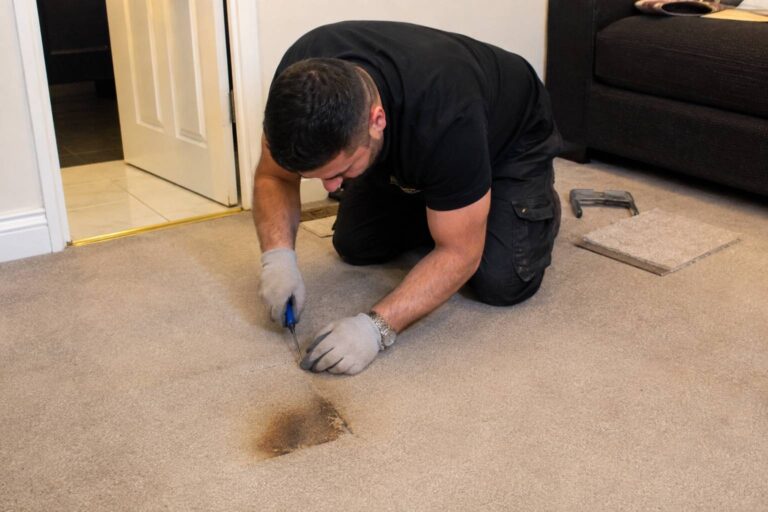
Cleaning cannot repair missing fibres, burns, tears or colour removed by bleach. These problems may require a separate professional rug repair service.
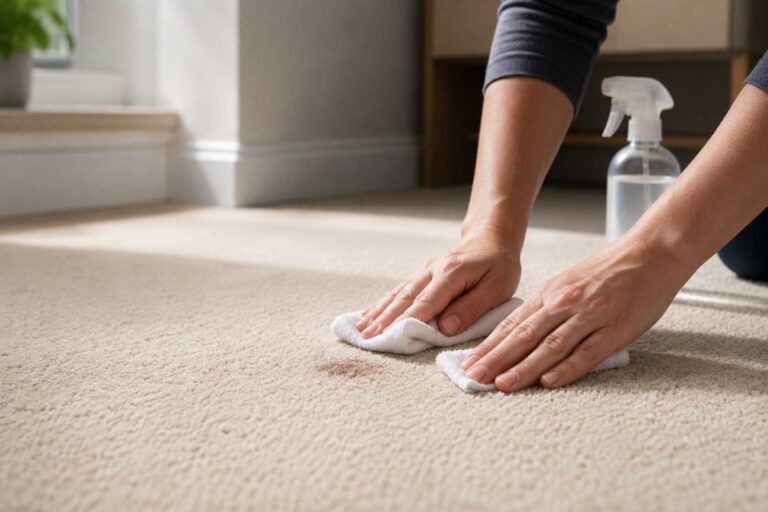
If odour is the issue rather than dirt, read how to get smells out of a rug first.
Rug Cleaning Prices by Material
Synthetic Rugs
Synthetic rugs commonly contain polypropylene, polyester or nylon. A small standard synthetic rug may start from £30, subject to the £75 minimum booking charge.
The price may increase if the rug is unusually large or dense, heavily soiled, affected by pet contamination or constructed with a moisture-sensitive backing. Previous DIY cleaning residues may also require additional rinsing or treatment.
Not every synthetic rug can automatically be cleaned in the same way, so its construction and condition still need to be reviewed.
Cotton Rugs
Cotton can absorb moisture readily and may respond differently from synthetic fibres during cleaning and drying. Strong dyes, decorative borders and mixed-fibre construction may also affect the recommended treatment.
For an accurate quote, send photographs of the full rug, its reverse side and the care label.
Wool Rugs
Wool rugs require an individual quotation because wool quality, pile density, dye stability and construction can vary considerably.
A machine-made wool rug may not require the same handling as a hand-knotted rug with a cotton foundation and delicate fringes. Existing shrinkage, pile distortion, moth activity, staining and previous cleaning attempts must also be considered.
For this reason, a wool rug should not be quoted solely according to its dimensions.
Silk, Viscose and Bamboo-Silk Rugs
Natural silk, viscose, rayon and bamboo silk are different fibres, even when their appearance is similar. These materials can be sensitive to moisture, friction, pile movement and changes in surface appearance.
They require a specialist assessment rather than a standard starting price. Photographs should show the complete rug, the pile at close range, the reverse side, the label and any affected areas.
Persian and Oriental Rugs
The terms “Persian” and “Oriental” describe origin or style rather than one particular material. These rugs may contain wool, silk, cotton or several fibres.
Their cleaning cost may depend on knot density, foundation condition, dye stability, age, fringes, previous repairs, stains and signs of colour migration.
Because these factors cannot be represented accurately by one universal price, Persian and Oriental rugs receive an individual quotation.
Handmade and Antique Rugs
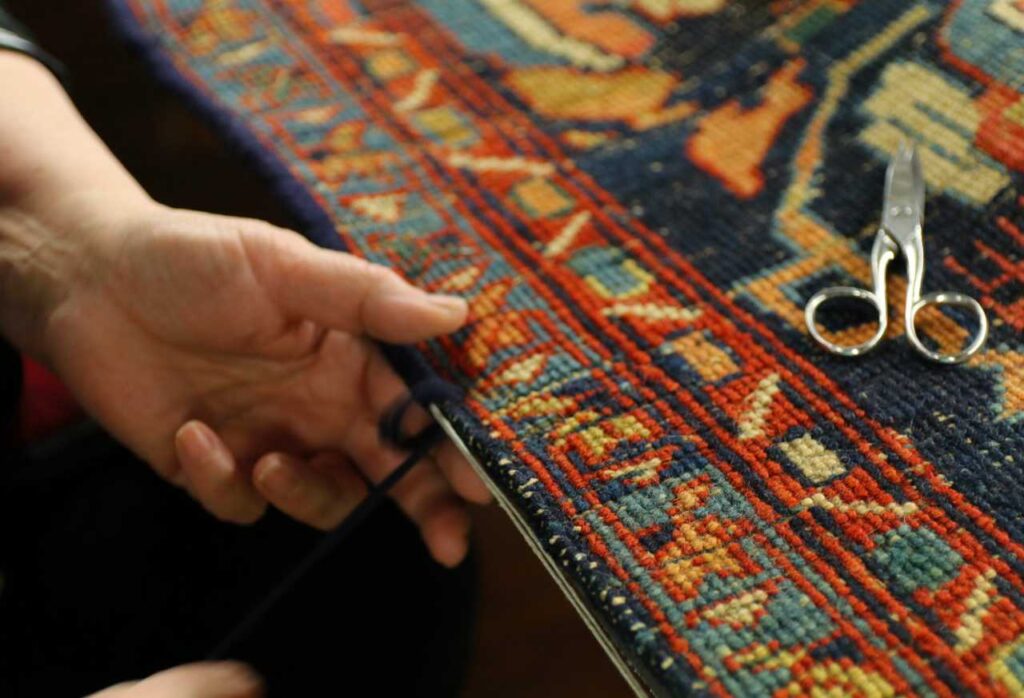
Older and handmade rugs may contain weakened foundations, worn pile, previous restoration work or damaged fringes. Even when the rug appears stable on the surface, the reverse side may reveal structural issues that affect handling and cleaning.
Before requesting a quote, disclose any known tears, loose edges, missing pile, moth damage, water damage, colour bleeding or previous repairs.
On-Site vs Workshop Rug Cleaning Costs
Hi Carpet Cleaner provides both on-site rug cleaning and specialist workshop treatment. The suitable option is determined by the rug rather than customer preference alone.
| Cost Factor | On-Site Cleaning | Workshop Cleaning |
| Location | Cleaning takes place at your property | The rug is collected and treated off-site |
| Suitable rugs | Rugs that can be safely cleaned in place | Rugs requiring more controlled or specialist treatment |
| Handling | The rug remains at the property | Collection, transport and additional handling are required |
| Drying | Drying takes place at the property | Controlled drying is available at the workshop |
| Additional costs | Parking or equipment-access charges may apply | Collection, return and workshop treatment may be priced separately |
| Final quote | Based on rug, condition and property access | Based on rug, treatment, handling and transport requirements |
On-site cleaning may be appropriate for a stable synthetic or machine-made rug when its construction and condition allow it. Workshop treatment may be recommended for handmade, Persian, Oriental, wool, silk, antique or heavily contaminated rugs requiring controlled testing, cleaning and drying.
Workshop treatment is not automatically necessary for every rug, and on-site cleaning is not suitable for every rug. We assess the available information before recommending the safest practical option.
When comparing quotations, confirm whether the price includes collection, return delivery and workshop treatment. These services should not be assumed to be included unless stated in the quote.
Where existing damage requires attention, review the likely rug repair costs in London.
Parking, Stairs and Access Charges
London parking and property access can affect the final appointment cost, particularly when professional equipment must be transported into a flat or building with restricted loading.
Customers must provide suitable parking for on-site appointments and collection or delivery visits. Any parking costs incurred during the appointment are added to the final invoice.
If heavy professional equipment must be carried above the ground floor at a property without lift access, a £10 handling charge per floor applies. This charge is capped at £25 per visit.
For example, if an on-site appointment is on the second floor and there is no lift, the equipment-handling charge would be £20. At the third floor or above, the maximum charge would be £25.
This equipment charge applies when heavy machinery must be carried. The handling or collection of an unusually large or heavy rug may still need to be assessed separately.
To prevent unexpected costs, provide your postcode, floor number, lift availability, parking arrangements and any loading restrictions before accepting the quote.
Are Collection and Delivery Included?
Collection and return delivery are available across London, but they are not automatically included in every advertised starting price.
The cost depends on your location, the rug’s size and weight, the number of rugs, the type of vehicle or handling required and whether the collection can be combined with another appointment.
Your quotation should make clear whether collection and delivery are included or charged separately. If this information is not shown, ask for it before confirming the booking.
Does Stain or Odour Removal Cost Extra?
Routine pre-treatment and attention to common marks may form part of the recommended cleaning process. However, specialist stain, urine or odour treatment can be charged separately when additional products, inspection or repeated treatment are required.
Complete stain removal cannot be guaranteed before the rug has been assessed. The result depends on the substance, fibre type, dye stability, age of the stain and products previously applied.
Bleach marks are particularly important. Bleach removes or alters colour rather than leaving a removable deposit, so normal cleaning cannot restore the missing colour. Colour correction or restoration may be required instead.
Pet urine can also penetrate beyond the visible pile. Where contamination has reached the backing or foundation, a standard surface treatment may not fully resolve the odour.
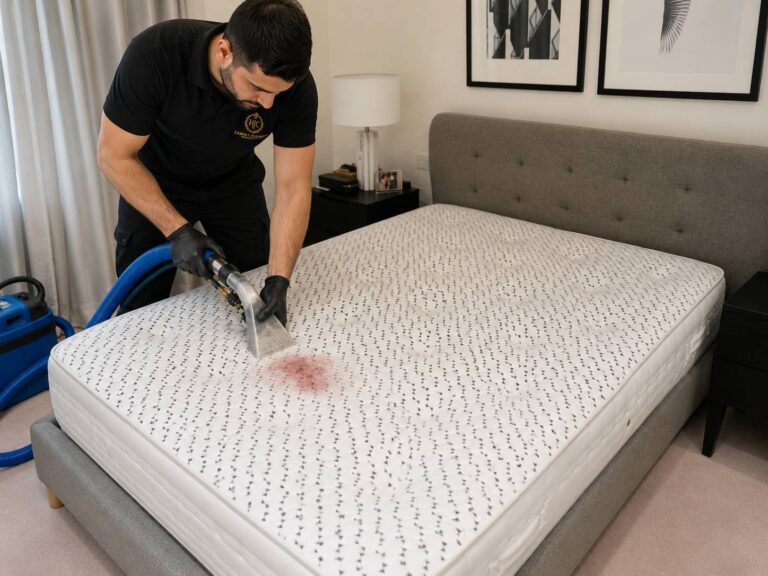
See what mattress cleaning costs in London and whether it’s worth adding to your booking.
FAQs About Our Rug Cleaning Cost in London
How much does it cost to clean a rug in London?
At Hi Carpet Cleaner, a small standard rug starts from £30. A minimum booking charge of £75 applies per visit. Medium, large, wool, silk, viscose, Persian, Oriental, handmade and antique rugs require an individual quote.
Can I book cleaning for one small rug?
Yes, but the £75 minimum booking charge still applies even if the individual rug’s starting cleaning price is lower. Combining suitable services during one appointment may offer better value.
Is rug cleaning priced per square metre?
Dimensions are important, but we do not calculate every rug using one fixed square-metre rate. Material, construction, dye stability, condition, staining and the required cleaning method can all affect the final price.
How much does Persian rug cleaning cost?
Persian rugs are individually quoted. Fibre composition, construction, knot density, dyes, age, condition, fringes and previous repairs must be considered before confirming the price.
Does workshop rug cleaning cost more?
It can. Workshop cleaning may involve collection, secure transport, specialist treatment, controlled drying and return delivery. The quote should state which of these services are included.
Is collection and delivery free?
Collection and delivery may be priced separately depending on the location and service required. Do not assume they are included unless your quotation specifically confirms this.
Are parking charges included?
Parking charges incurred during the appointment are added to the invoice. Providing suitable parking information before booking helps us produce a clearer quote.
Do you charge extra for flats without a lift?
When heavy professional equipment must be carried above the ground floor without lift access, a £10 charge applies per floor, capped at £25 per visit.
Does stain removal cost extra?
Specialist stain treatment may be charged separately when additional products, labour or repeated treatment are required. Complete removal cannot be guaranteed because the result depends on the stain, fibre, dyes and previous cleaning attempts.