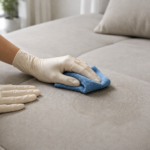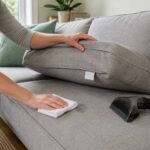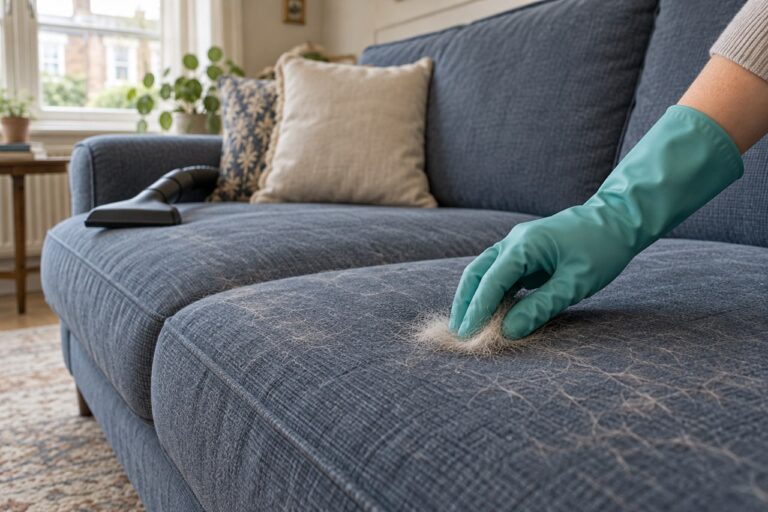
To remove pet hair from a couch, check the fabric care instructions first. If vacuuming is permitted, use a suitable upholstery attachment, then gently gather remaining hair with a dry rubber glove, soft upholstery brush or fabric-safe lint remover. Vacuum again where allowed. Avoid abrasive rakes on delicate or looped fabrics, and stop if fibres catch or the texture changes.
Loose fur on a cushion is usually easier to collect than short hairs lodged in the weave. When vacuuming leaves some behind, the answer is not necessarily stronger suction or a sharper tool. A gentler method that gathers the hair without pulling the upholstery may work better.
The five tools below offer different ways to tackle the problem. You do not need to use all of them: choose according to your sofa’s care instructions, fabric condition and the amount of hair remaining.
What Should You Check Before Removing Pet Hair?
Check the Fabric and Manufacturer’s Instructions
Look beneath the cushions or sofa base for the care label, and check any instructions supplied with the furniture. Some upholstery tolerates gentle vacuuming, while other fabrics need a more restricted approach.
You may find these cleaning codes:
- W: water-based cleaning products.
- S: solvent-based cleaning products.
- WS or SW: water-based or solvent-based products.
- X: vacuuming or light brushing only, according to the manufacturer’s instructions.
These codes concern cleaning methods. They do not confirm that an adhesive roller, powered brush or pet hair rake is suitable.
Do not add moisture to S- or X-coded upholstery. Even with W or WS fabric, check the full instructions before trying a damp glove. A water-compatible cleaning code does not mean the material can be soaked or that its cushion covers are machine washable.
For broader care advice, see our guide to cleaning a fabric sofa at home.
Test the Tool and Recognise Signs of Damage
Try your chosen tool gently on a small, hidden area first. Inspect the surface in good light before continuing.
Stop if you notice:
- Threads lifting or catching.
- New fuzziness or pilling.
- A change in the direction or appearance of the pile.
- Colour transferring to the tool.
- Sticky residue.
- Fabric stretching under suction or friction.
Check existing damage too. A worn cushion edge or loose seam may be more vulnerable than the main seating area, even when both have the same covering.
Which of These Five Tools Is Suitable for Your Sofa?
Start with the least aggressive option allowed by the sofa manufacturer. The tool should collect hair without scraping, stretching or repeatedly rubbing the fabric.
| Tool | Useful for | When to skip it |
|---|---|---|
| Vacuum cleaner with upholstery attachment | Loose hair, cushion edges and accessible seams | Where vacuuming is restricted, or suction pulls at the material |
| Rubber glove | Gathering remaining hair into small clumps | Where friction catches threads or changes the texture |
| Soft upholstery brush | Gently loosening hair on compatible fabric | Fragile, worn or snag-prone upholstery, unless specifically approved |
| Fabric-safe lint remover | Stray surface hairs and small finishing areas | Where adhesive or brushing could disturb delicate pile or loose fibres |
| Pet hair rake | Persistent hair on fabric explicitly compatible with the particular tool | Bouclé, open weaves, delicate pile, damaged areas or unknown upholstery |
“Lint remover” can describe very different products. For this task, choose a suitable lint roller or reusable directional lint brush—not a razor, fabric shaver or metal scraper.
A pet hair rake also needs particular care. A tool intended for carpets should not automatically be used on a sofa.
How Do You Remove Pet Hair from a Fabric Sofa Step by Step?
Remove throws and lift detachable cushions where the sofa’s instructions allow. Keep your tools clean and dry, and work from the upper surfaces towards the seat and lower sections.
The practical sequence is:
- Remove loose hair.
- Gently gather any remaining embedded hair with one compatible tool.
- Collect the clumps and check the fabric.
- Make a final light vacuuming pass, if permitted.
The methods below explain where each tool fits into that sequence.
1. Start with a Vacuum Cleaner and Upholstery Attachment
If your sofa manufacturer permits vacuuming, fit a clean upholstery attachment and begin with low suction. Do not assume a powered pet brush is suitable simply because it fits your vacuum.
Move slowly across the backrest, arms and cushions without pressing the attachment firmly into the material. Clean cushion edges and underneath removable cushions too.
Use a crevice attachment for accessible gaps, keeping its hard edges from scraping the covering. If the nozzle grips or lifts the fabric, reduce the suction or stop.
Check the attachment regularly. Hair wrapped around a brush or blocking an opening can make collection less effective. Switch the vacuum off before clearing it, following the appliance instructions.
Vacuuming may leave some hairs caught in the weave. Inspect what remains before choosing another tool.
2. Gather Embedded Hair with a Rubber Glove
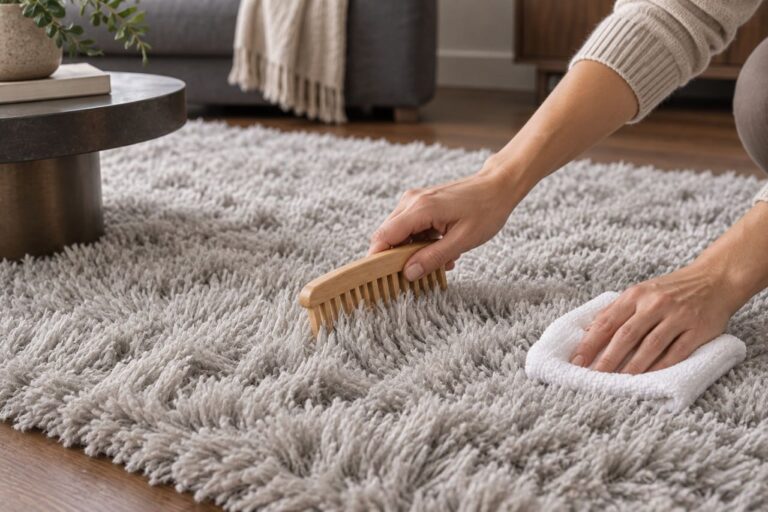
A clean rubber glove can help gather hair into small clumps through gentle friction.
Start with a dry glove:
- Place your hand lightly on the tested area.
- Make short strokes in one direction.
- Lift away the collected hair frequently.
- Move to the next section without repeatedly rubbing the same patch.
The glove should glide with light resistance. If it drags the cloth, catches threads or changes the surface, stop.
Some advice recommends dampening the glove. Consider this only when the sofa’s instructions permit moisture and a hidden-area test causes no change. The glove should be barely damp, with no droplets transferring onto the upholstery.
Use a dedicated clean pair rather than gloves previously used with bleach, bathroom cleaners or other chemicals.
3. Loosen Remaining Hair with a Soft Upholstery Brush
A soft upholstery brush offers another way to loosen hair on suitable fabric. Use it as an alternative to the glove where appropriate; there is no need to brush an area that is already clear.
Choose a brush intended for the upholstery, rather than a stiff household scrubbing brush or pet grooming brush.
Make light strokes, following the direction of the pile where the fabric has one. Clear hair from the bristles regularly so it does not transfer back onto the cushion.
Avoid forceful back-and-forth brushing. If hair stays caught after a few gentle passes, more pressure may disturb the fabric without solving the problem.
4. Lift Stray Hairs with a Fabric-Safe Lint Remover
A suitable lint roller or reusable directional lint brush can help with fine hairs left on the surface.
For an adhesive roller, roll lightly without pressing it firmly into the upholstery. Replace the sheet once it is covered with hair. Do not repeatedly work over the same area to compensate for a full sheet.
For a reusable lint brush, follow the marked collection direction and clean it as instructed.
Test either type first. Strong adhesion can pull at loose fibres, while a directional brush may catch textured fabric. Avoid seams with loose stitching, decorative trim and damaged patches.
5. Use a Pet Hair Rake Only Where the Fabric Permits It
A pet hair rake is an optional tool for compatible upholstery, not a necessary final step.
Check the instructions for the exact model. Rakes may have rubber edges, rigid teeth or scraping surfaces, and their fabric restrictions differ.
Only proceed when the tool is intended for your upholstery and the sofa’s care guidance allows its use. Test with very light pressure and follow the tool’s specified direction and angle.
Skip abrasive rakes on bouclé, open weaves, delicate pile, loose threads and worn areas unless compatibility is explicitly confirmed. Never increase pressure because hair remains.
Finish by lifting away loose clumps and vacuuming again where permitted. Check that the fabric still looks and feels unchanged.
What if Hair Remains Trapped in Seams or Delicate Fabric?
Short hairs can lodge around piping, cushion seams and textured areas. Work only along accessible openings; do not prise seams apart or insert sharp objects to pull hair out.
Where vacuuming is allowed, use a suitable crevice tool carefully. Lift detachable cushions to improve access rather than forcing the nozzle between tightly fitted sections.
Velvet, chenille and bouclé need particular attention to their construction and care instructions. Appearance alone cannot confirm fibre content or tool suitability. A sofa described as “velvet”, for example, may have different care requirements from another velvet sofa.
If a gentle, permitted method leaves a few hairs behind, pause. Repeated scraping can create a visibly worn patch that is more noticeable than the remaining fur.
Seek advice when the label is missing, the fabric already has snags or you cannot identify a suitable tool.
Which Pet Hair Removal Methods Should You Avoid?
Avoid using the following as general solutions for fabric sofas:
- Pumice stones and abrasive blocks: these can abrade the upholstery.
- Razors, fabric shavers and metal scrapers: they may cut or pull the sofa’s fibres.
- Stiff brushes and carpet rakes: they may catch loops or distort the weave.
- Strong adhesive tape: it can leave residue or pull at the surface.
- Fabric-softener sprays and dryer sheets rubbed onto the sofa: these introduce products that may not be approved for the covering.
- Soaking the upholstery: adding water is unnecessary for ordinary dry hair removal and can create further problems.
Do not keep applying moisture when a previous attempt has left a ring. Read our advice on removing water marks from a fabric sofa before trying another treatment.
Hair removal should not require a homemade chemical mixture. Start with suitable mechanical collection rather than spraying the whole sofa.
How Can You Reduce Pet Hair Build-Up Between Cleans?
Regular light maintenance is easier to manage than a large accumulation. Choose a routine based on how quickly hair appears and what the sofa manufacturer permits.
A washable throw over your pet’s favourite resting spot can make collection simpler. Remove its loose hair before washing, and follow the throw’s care label.
Clean pet bedding regularly according to its instructions, and keep suitable grooming part of your pet’s routine. These measures can help reduce the amount of loose fur reaching the sofa.
Do not assume that zipped cushion covers can go into the washing machine. Some removable covers require specialist care, and washing may affect their shape or fit. Check washing and drying instructions separately.
When Should You Ask a Professional to Assess the Sofa?
Pet hair alone does not necessarily mean a sofa needs deep cleaning. However, hair accompanied by persistent odours, stains, greasy soiling or liquid in the filling needs a different assessment.
Stop DIY treatment if the fabric starts to snag, the texture changes or you are unsure how to proceed. Removing loose hair is a preparation step; wet cleaning is not a substitute for collecting it.
For persistent soiling or odours, ask about professional upholstery cleaning in London. Send Hi Carpet Cleaner photographs of the sofa, affected areas and care label so the team can assess the material and recommend the next step.
Frequently Asked Questions
How Do You Remove Embedded Dog Hair from a Fabric Couch?
Start with a suitable upholstery vacuum attachment if permitted, then gently gather remaining hair with a compatible glove, soft brush or lint remover. Collect the loosened hair and vacuum again where allowed. Avoid scraping harder when individual hairs remain trapped.
How Can I Get Cat Hair off a Sofa Without a Vacuum?
A dry rubber glove, soft upholstery brush or suitable lint remover can collect surface hair where the fabric permits it. Work gently and remove clumps frequently. These tools may leave hair in deep gaps or seams that they cannot safely reach.
Should a Rubber Glove Be Wet or Dry for Pet Hair Removal?
Start with a clean, dry glove. Only consider a barely damp glove if the sofa’s care instructions permit moisture and a hidden-area test causes no change. Do not use damp methods on S- or X-coded upholstery.
Can a Pet Hair Rake Damage Upholstery?
Yes. Teeth or scraping edges can catch threads, pull loops and disturb the surface. Check the exact tool’s fabric restrictions and the sofa’s instructions. Avoid abrasive rakes on delicate, looped, loosely woven or damaged upholstery unless specifically approved.
Can I Use a Lint Roller on Velvet or Bouclé?
Only if the sofa manufacturer permits that type of roller. Adhesive and friction may disturb delicate pile or catch loose fibres. Test gently in a hidden area, and stop if the surface lifts, flattens, becomes fuzzy or retains residue.
Will Washing Removable Sofa Covers Remove Pet Hair?
Washing may remove some remaining hair, but collect loose fur first and wash only when the cover’s instructions permit it. A removable cover is not necessarily machine washable. Follow its specified washing and drying method rather than choosing a generic cycle.