To remove hair dye from a fabric sofa, blot the spill immediately without rubbing, check the upholstery cleaning code and test any suitable cleaner on a hidden area. Use minimal moisture and work from the outside of the stain inwards. Stop if the sofa’s colour transfers onto your cloth. Dried stains and delicate fabrics usually require professional treatment.
Hair dye is designed to produce a lasting colour, so a spill on upholstery needs to be handled differently from an ordinary food or drink stain. Using a strong chemical may lighten the hair dye, but it can also remove the sofa’s original colour, damage its texture or leave a visible ring.
The safest approach depends on the sofa’s care instructions, the fabric type, whether the hair dye is fresh or dry and which products have already been applied.
What Should You Do Immediately After Spilling Hair Dye?
The first few minutes can make a considerable difference. Fresh hair dye is generally easier to lift because less of the pigment has had time to penetrate the fibres or develop fully.
Follow these immediate steps:
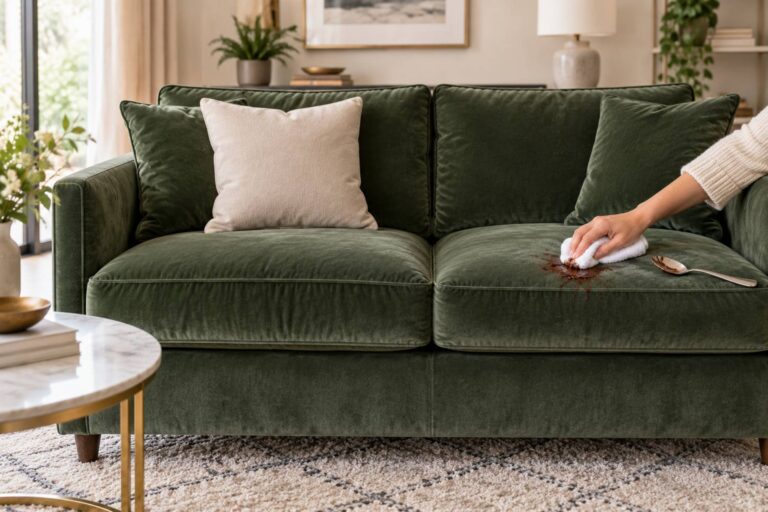
- Remove any excess dye carefully. If the product is thick, lift it with a spoon or another blunt-edged item. Do not scrape it across the fabric.
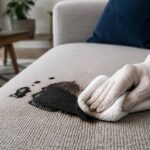
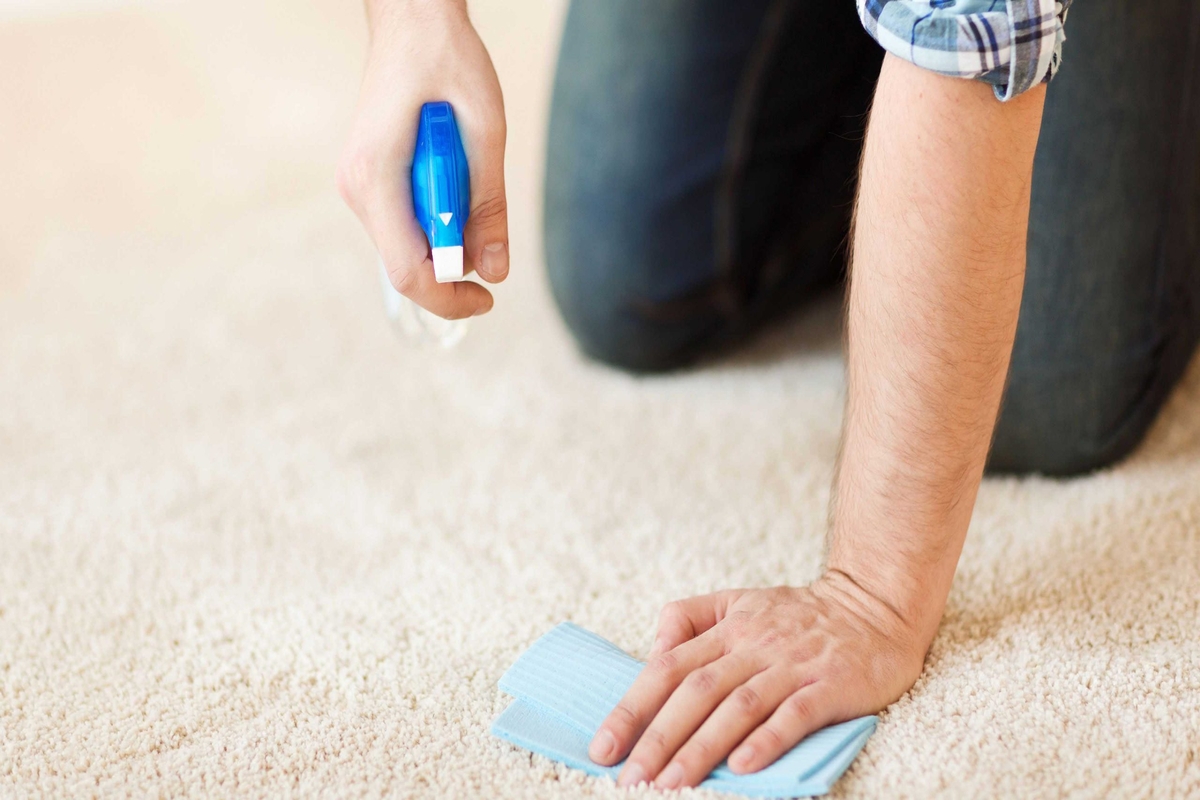
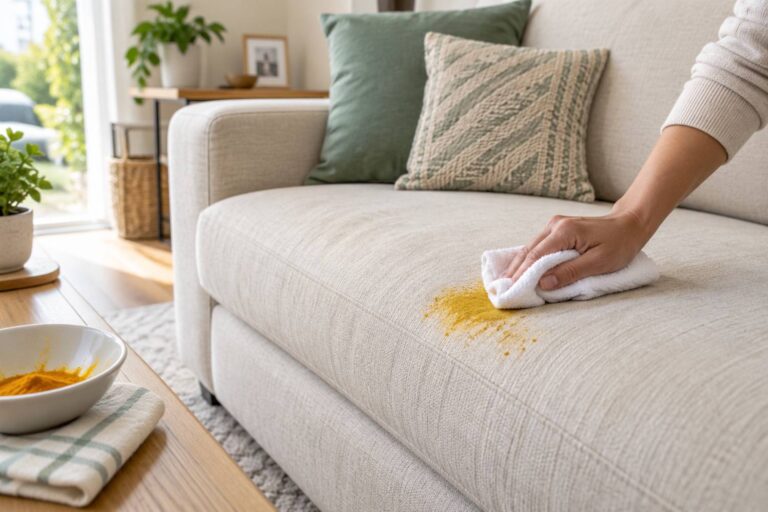
- Blot the affected area with a white cloth. Use a clean, dry and absorbent cloth or plain white paper towel. A white material makes it easier to see whether the hair dye—or the sofa’s own colour—is transferring.
- Work from the outside towards the centre. This helps prevent the mark from spreading into a larger area.
- Change to a clean section of the cloth regularly. Reusing an already stained part of the cloth may transfer the dye back onto the upholstery.
- Do not rub or scrub. Friction can push the pigment further into the fabric and disturb the weave or pile.
Avoid pouring water directly over the stain. Excess liquid may carry the dye into the cushion filling or spread it beyond the original mark.
Check the Sofa Cleaning Code Before Applying Anything
Before using water, washing-up liquid or a stain remover, look for the manufacturer’s care label. It may be attached beneath a seat cushion, under the sofa or along an internal seam.
The label may include one of the following upholstery cleaning codes:
| Cleaning code | What it generally means |
|---|---|
| W | A suitable water-based upholstery cleaner may be used. |
| S | The fabric should only be cleaned with an approved solvent-based product. |
| WS or SW | Either a water-based or suitable solvent-based method may be permitted. |
| X | Liquids should not be used. Vacuuming or light brushing is normally the only recommended home care. |
A cleaning code indicates the general category of product that may be used. It does not mean that every cleaner within that category will be safe for the upholstery or its colour.
If the care label is missing or you cannot identify the fabric, treat the sofa as high-risk. Contact the manufacturer or seek professional advice before applying a liquid product.
For a more detailed explanation of these codes, read our guide on how to clean a fabric sofa at home without damaging it.
How Do You Test a Cleaner Without Fading the Sofa?
Even when the care code permits a particular type of cleaner, complete a patch test before treating the visible stain.
Choose a hidden area, such as the back of the sofa, the underside of a cushion or a concealed section near the base. Test the exact product, dilution and application method you intend to use.
Apply a small amount with a white cloth and blot gently. Check the cloth for colour transfer, then allow the test area to dry completely. Inspect it in natural light for:
- Colour fading or darkening
- Dye transferring onto the white cloth
- Water rings or a visible outline
- Changes in texture or sheen
- Stiff or sticky residue
- Flattening or distortion of the pile
Do not assume that a fabric is safe simply because it looks normal while wet. Certain rings, texture changes and variations in colour only become visible after the area has dried.
If the sofa’s own colour appears on your cloth or the test area changes in any way, stop.
How to Remove Fresh Hair Dye from a W or WS Fabric Sofa
If the sofa has a W or WS code and has passed the hidden-area test, you can make one cautious attempt using a water-based method.
1. Continue blotting the stain
Remove as much of the fresh product as possible using a clean white cloth. Apply gentle pressure rather than rubbing backwards and forwards.
2. Prepare a weak cleaning solution
Add a very small amount of clear, mild washing-up liquid to cool water. Avoid strongly coloured, fragranced or bleaching products.
Alternatively, use an upholstery stain remover specifically approved for your sofa’s fabric and cleaning code. Follow the product instructions rather than increasing the recommended concentration.
3. Apply the solution to a cloth
Do not pour or spray the solution directly onto the sofa. Lightly dampen a white cloth so that it is moist but not wet enough to saturate the fabric.
4. Blot from the outside inwards
Work gradually from the outer edge of the mark towards its centre. Use a fresh part of the cloth each time the dye transfers.
Do not scrub the stain, even if it is not disappearing immediately. Hair dye may require specialist treatment, and aggressive rubbing is more likely to damage the upholstery than improve the result.
5. Remove cleaning residue
If the care label permits water, use a separate white cloth lightly dampened with clean, cool water to blot away the remaining detergent. Keep the amount of moisture controlled.
Detergent left in the fabric can attract dirt, stiffen the upholstery or contribute to a visible ring.
6. Dry the area naturally
Press a clean, dry towel against the treated section to absorb moisture. Allow the sofa to dry with good natural airflow.
Do not use a hairdryer, radiator or steam cleaner. Heat can affect certain fibres, alter the sofa’s colour or make the dye more difficult to remove.
Wait until the fabric is completely dry before deciding whether another treatment is needed.
How Do You Remove Dried Hair Dye from a Fabric Sofa?
Dried hair dye is usually more difficult to remove than a fresh spill, particularly when it is permanent or oxidative hair colour. Once the colour has developed and bonded with the upholstery, increasing the strength of a DIY treatment may remove the sofa’s original dye before it removes the stain.
Begin by checking whether any dry product is sitting on the surface. If it is, lift it very gently with a blunt edge. Do not scrape or pick at the fibres.
Next, check the care code and complete a hidden patch test. For a W or WS fabric, you may make one controlled attempt with a suitable upholstery spot cleaner or the mild method described above.
Stop if:
- No dye transfers after several gentle blots
- The mark begins to spread
- The sofa’s colour appears on the cloth
- The fabric develops a ring
- The texture, sheen or pile starts to change
- You are tempted to use progressively stronger chemicals
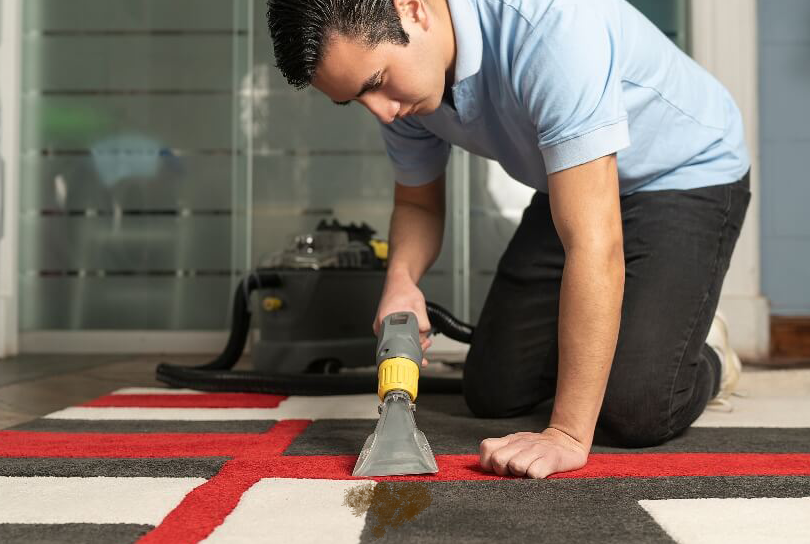
A dried stain may improve without disappearing completely. Continuing to treat it repeatedly can turn a contained hair dye mark into a larger area of fading or permanent texture damage. A persistent dye mark may need professional spot and stain removal rather than further DIY treatment.
Can You Use Rubbing Alcohol on Hair Dye Stains?
Rubbing alcohol may dissolve certain types of pigment, which is why it appears in many stain-removal instructions. However, it is not automatically safe for a fabric sofa.
Alcohol can affect fabric finishes, dissolve adhesives or cause the upholstery’s own dye to bleed. It should not be used simply because another online method recommends it.
Only consider an alcohol-based product if the sofa manufacturer’s instructions and cleaning code permit an appropriate solvent treatment. Complete a hidden test and apply a minimal amount with a white cloth.
For an S-code sofa, it is generally safer to use a professionally approved upholstery solvent or contact a specialist instead of experimenting with household rubbing alcohol.
Will Hydrogen Peroxide Remove Hair Dye from a Sofa?
Hydrogen peroxide may lighten some hair dye stains, but it can also lighten the sofa itself. It is an oxidising agent rather than a universally colour-safe upholstery cleaner.
The risk is particularly high on dark, brightly coloured, natural or delicate upholstery. Even if no immediate fading is visible, a pale patch may appear as the area dries.
For this reason, hydrogen peroxide should not be treated as the default method for removing hair dye from a coloured fabric sofa.
What Products Should You Avoid?
Hair dye can be stubborn, but using a more powerful household chemical does not necessarily produce a safer or better result.
Bleach
Chlorine bleach can cause permanent colour loss and may weaken or discolour upholstery fibres. Never use it on a coloured fabric sofa.
Acetone or nail-varnish remover
Acetone may damage synthetic fibres, finishes, adhesives and nearby components. It can also spread dissolved pigment into a larger area.
Neat ammonia
Ammonia is unsuitable as a general DIY treatment because fabric and dye reactions vary considerably. It also presents ventilation and handling concerns and should never be mixed with other cleaning chemicals.
Hairspray
Hairspray is often recommended because some formulas contain alcohol. However, formulations vary and may also contain fragrances, oils and resins that leave an additional sticky mark.
Bicarbonate of soda paste
Bicarbonate of soda may leave a pale residue, and rubbing a paste into the sofa can alter the surface texture. It does not selectively distinguish between transferred hair dye and the upholstery’s own colour.
Hot water or steam
Heat may set certain components of the stain, affect finishes or cause uneven drying. A steam cleaner can also spread the pigment and force moisture into the cushion filling.
Never mix different stain removers. Chemical combinations can release dangerous fumes or cause an unpredictable reaction on the fabric.
Why Can Spot Cleaning Leave a Water Ring?
A ring can appear when moisture spreads beyond the treated area and carries dissolved dye, soil or cleaning residue towards the drying edge. Uneven wetting and drying may then leave a visible outline larger than the original stain.
To reduce this risk:
- Use minimal moisture
- Apply cleaner to the cloth rather than directly to the sofa
- Work gradually and evenly
- Remove detergent residue where the care code permits
- Dry the section with natural airflow
- Avoid repeatedly wetting only the centre of the mark
Some fabrics are especially prone to tide marks and shading. If a ring has already appeared, avoid repeatedly soaking its edge. Read our guide to removing water stains from a fabric sofa without leaving rings before attempting further treatment.
Does the Sofa Fabric Affect the Removal Method?
Yes. Two sofas that look similar can respond very differently to the same cleaner.
Synthetic upholstery, such as some polyester fabrics, may tolerate controlled water-based cleaning when permitted by the label. However, printed patterns, protective finishes, backing materials and mixed fibres can still react unpredictably.
Extra care is needed with:
- Velvet
- Viscose or rayon
- Silk
- Wool
- Linen and linen blends
- Strongly coloured or printed upholstery
- Antique or designer furniture
- Fabrics with an unknown composition
Velvet can develop pile distortion or shading. Viscose may brown, stiffen or lose its original texture when wet. Natural fibres can experience colour movement, shrinkage or water marking.
These materials should not be treated with a generic online recipe simply because it worked on another sofa.
When Should You Call a Professional?
Yes. Two sofas that look similar can respond very differently to the same cleaner.
Synthetic upholstery, such as some polyester fabrics, may tolerate controlled water-based cleaning when permitted by the label. However, printed patterns, protective finishes, backing materials and mixed fibres can still react unpredictably.
Extra care is needed with:
- Velvet
- Viscose or rayon
- Silk
- Wool
- Linen and linen blends
- Strongly coloured or printed upholstery
- Antique or designer furniture
- Fabrics with an unknown composition
Velvet can develop pile distortion or shading. Viscose may brown, stiffen or lose its original texture when wet. Natural fibres can experience colour movement, shrinkage or water marking.
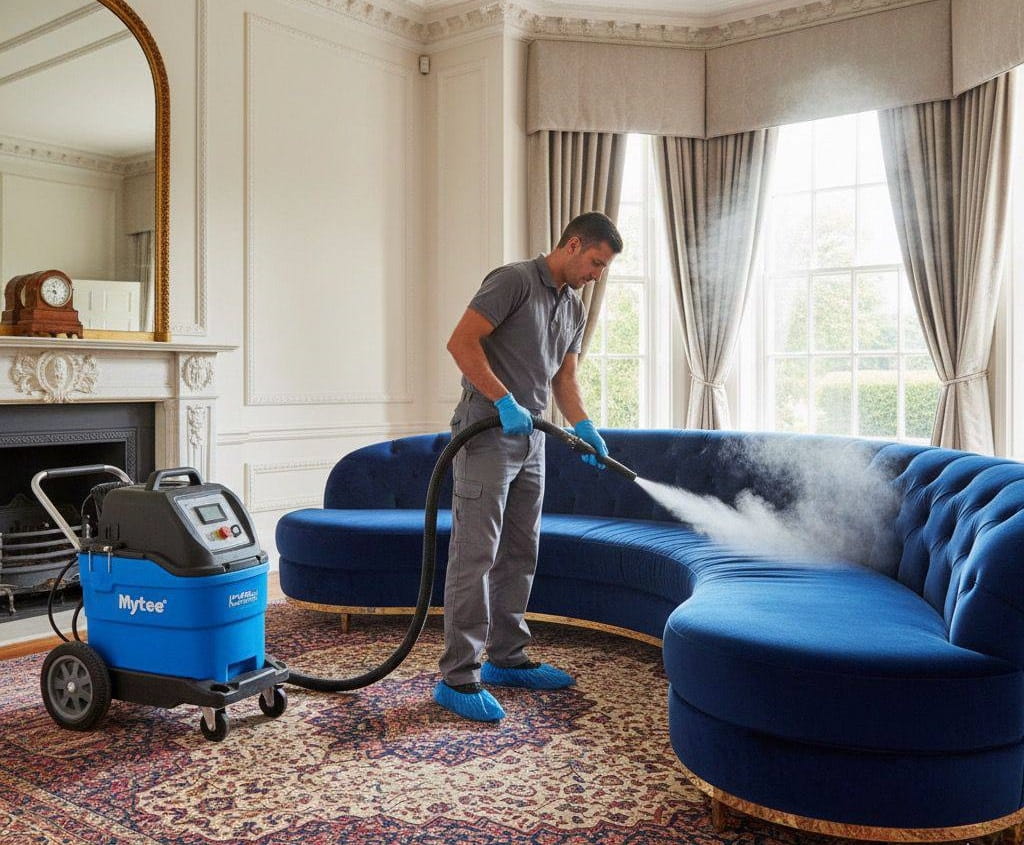
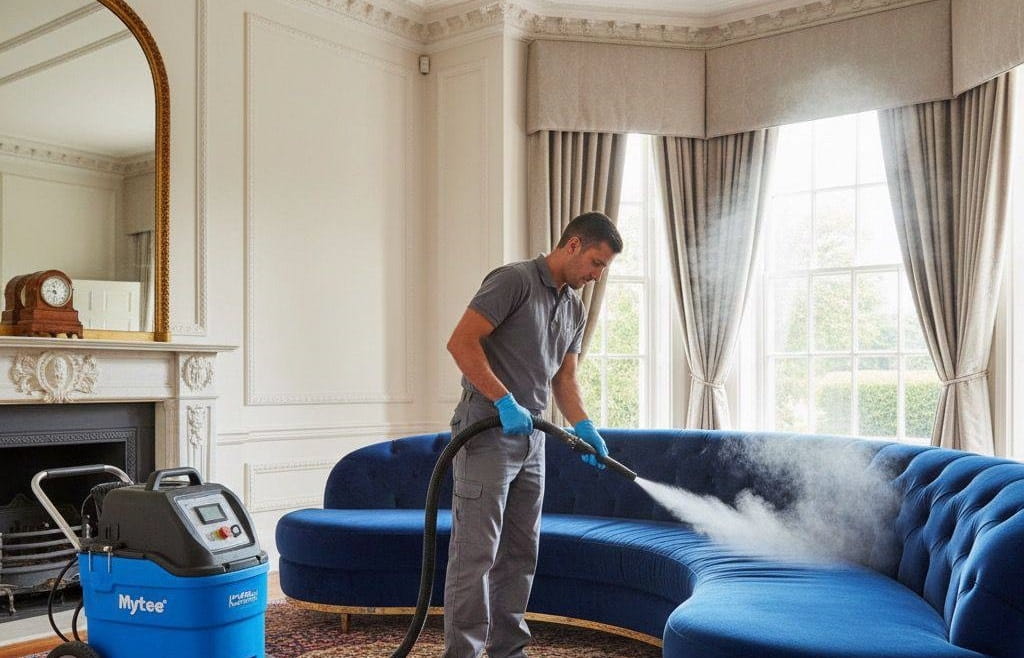
These materials should not be treated with a generic online recipe simply because it worked on another sofa. If home treatment is unsuitable, arrange professional upholstery cleaning in London before applying more products.
How Can You Prevent Hair Dye from Staining the Sofa?
Prevention is much easier than removing developed hair colour from upholstery.
When applying or waiting for hair dye to develop:
- Stay away from upholstered furniture
- Place a waterproof sheet beneath any towels
- Wear a protective cape that covers your shoulders and back
- Keep dye bottles upright with their caps secured
- Wipe the bottle nozzle before placing it on a surface
- Avoid leaning your head against cushions until your hair has been rinsed and dried
- Blot any splashes immediately rather than allowing them to develop
An ordinary towel may not provide enough protection because liquid can soak through it and reach the sofa underneath.
Frequently Asked Questions
Can permanent hair dye be removed from a fabric sofa?
Permanent hair dye can sometimes be reduced or removed, particularly when treated immediately. However, the result depends on the sofa fibre, its original colour, the dye formulation and any previous treatments. Removing every trace may not be possible without risking colour loss.
Can I use washing-up liquid on the stain?
A small amount of mild, clear washing-up liquid may be suitable for certain W or WS fabrics. Check the manufacturer’s instructions and complete a hidden patch test first. Do not use it on S- or X-code upholstery.
How do I remove dried black hair dye from a sofa?
Check the care code, remove loose surface residue gently and make only one controlled attempt with a compatible upholstery cleaner. Avoid escalating to bleach, peroxide or acetone. Dried black dye often requires professional assessment.
Does hairspray remove hair dye from upholstery?
Hairspray is not recommended. Different formulas contain varying combinations of alcohol, fragrance, oils and resins, which may fade the fabric or leave a sticky secondary stain.
Should I remove the cushion cover and wash it?
Only if the manufacturer explicitly states that the cover is washable. Removable does not necessarily mean machine-washable. Separate washing can cause shrinkage, colour variation and difficulty refitting the cover.
Should the whole cushion be cleaned?
Treating a wider section may sometimes be necessary to achieve an even finish, but this is not a safe universal DIY solution. The correct approach depends on the fabric, construction and likelihood of water marking.