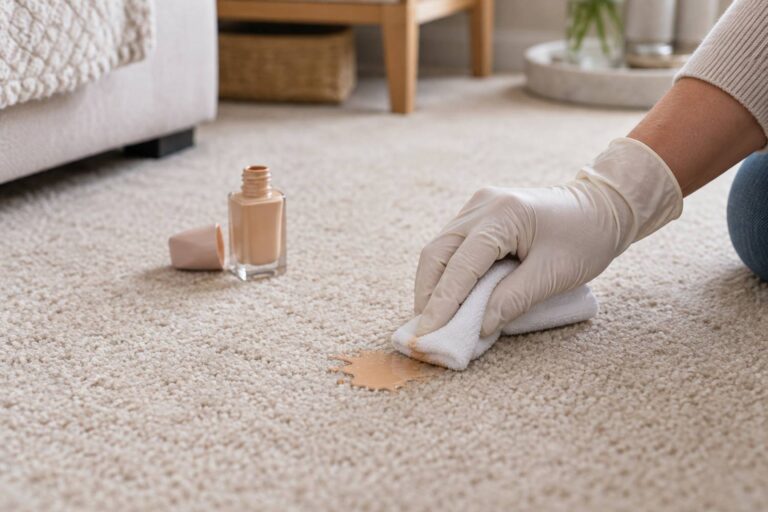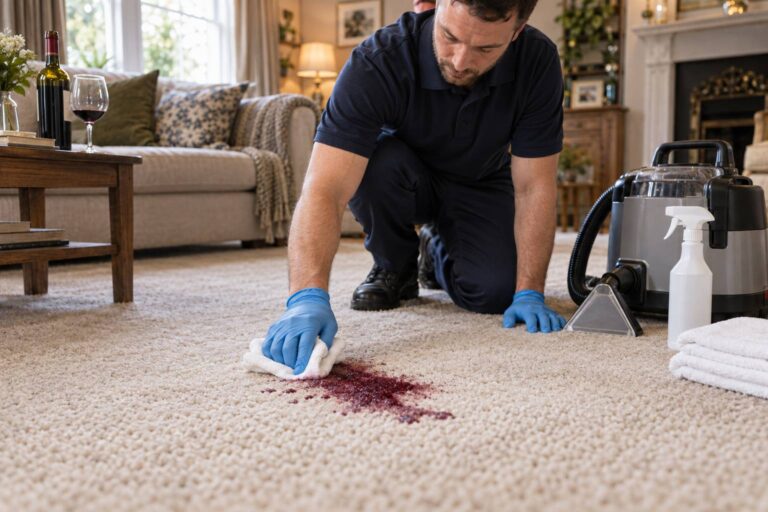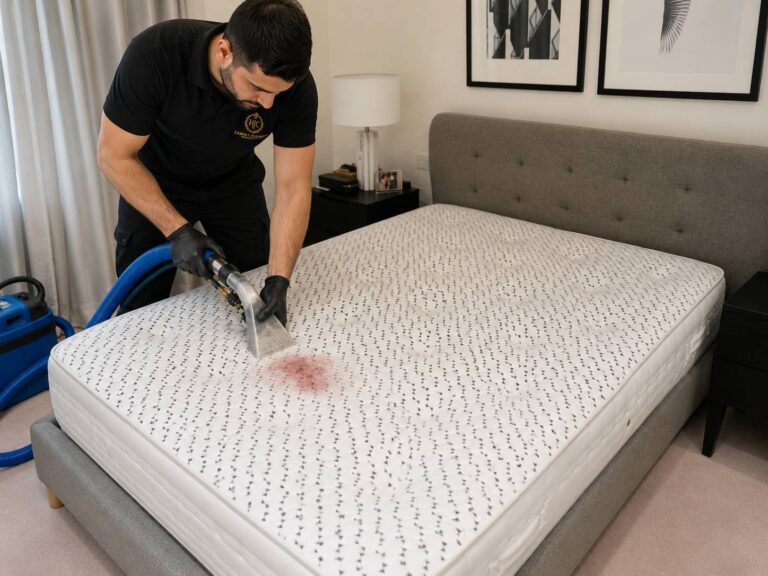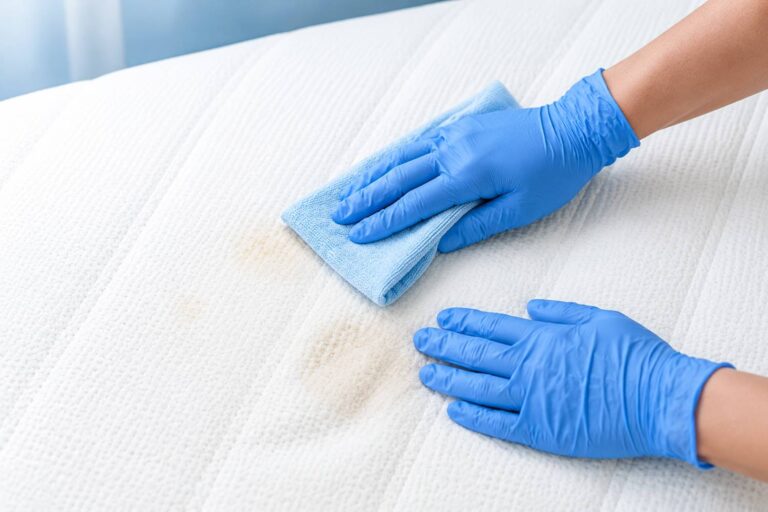
A stain that reappears after cleaning is usually caused by one of two things: wicking, where contamination trapped in the backing or underlay rises to the surface as the carpet dries, or resoiling, where leftover cleaning residue attracts fresh dirt. The timing and appearance of the mark can help you work out which one you’re dealing with, and what to do next.
Why Do Carpet Stains Come Back After Cleaning?
When a carpet stain seems to return, it’s rarely because the visible pile wasn’t cleaned properly. More often, the problem lies elsewhere in the carpet system, below the surface fibres you can see and touch.
There are two main mechanisms at play. If the same mark reappears in the same shape while the carpet is still drying, or within a day or two of cleaning, wicking is the more likely cause. If the area looks clean when dry but gradually turns grey or dirty again over days or weeks, cleaning-product residue is the more probable culprit.
| What you notice | Likely cause | Typical timing | Best next step |
|---|---|---|---|
| Same mark returns as carpet dries | Wicking from deeper contamination | Hours to 1–2 days | Keep the area dry and arrange deeper extraction/assessment |
| Area gradually darkens and attracts dirt | Cleaning-product residue | Days to weeks | Rinse extraction by a trained cleaner |
| Odour or mark returns after pet accident | Contamination in backing or underlay | Variable, often after dampness | Subsurface assessment and targeted treatment |
| Colour remains lighter or texture looks different | Fibre, dye, or pile damage | Immediate or persistent | Professional inspection; cleaning may not restore it |
Not sure whether the mark is wicking or attracting new soil? Send us a clear photo and tell us when it returned for an initial assessment.
For a treatment built to actually last, book our spot & stain removal service.
What Is Carpet Wicking?
Wicking is a straightforward result of capillary action. When a spill happens, liquid doesn’t always stay in the visible pile, it can travel down into the backing or even the underlay beneath. During cleaning, that lower layer is re-wetted. As the carpet then dries from the surface downward, moisture is drawn back up through the fibres, carrying dissolved contamination with it. Once the moisture evaporates near the tips of the pile, the residue is left behind and the mark becomes visible again, often looking exactly like the original stain.
Wick-back is more likely when the original spill was large, when it involved coffee, wine, or other strongly coloured liquids, or after pet urine. It’s also more common where the carpet has been overwetted during cleaning, where extraction wasn’t thorough, or where drying was slow, giving moisture more time to carry contamination upward.
How Cleaning-Product Residue Causes Resoiling
Resoiling is a different problem with a similar-looking result. If too much detergent or spot-remover is used, or if a product isn’t rinsed and extracted properly, a sticky film can be left behind on the fibres. The original stain may well have been removed, but that residue acts like a magnet for dust, soil, and foot traffic, gradually building a new mark in the same spot.
The key distinction is timing. Residue-related darkening tends to develop gradually, becoming noticeable over several days or weeks after the carpet has fully dried. Wicking, by contrast, usually shows up during drying or shortly after. Neither outcome means a particular cleaning method always leaves residue, it depends on the product used, the amount applied, and how thoroughly it was rinsed out.
Other Reasons a Mark May Reappear
A handful of other factors can also explain a returning mark:
- Pet urine or other contamination has reached the backing or underlay.
- Too much moisture, or slow drying, allowed deeper material to migrate upwards.
- A DIY product interacted with the original stain or left residue that wasn’t fully extracted.
- Soil from footwear is sticking to a previously treated area.
- The issue is actually permanent colour loss, bleaching, pile distortion, or fibre damage, not removable soil at all.
How to Tell Wicking from Resoiling
Use this short framework as a practical guide, not a substitute for an in-person assessment:
- Did the same outline return before or soon after the carpet fully dried?
Wicking is more likely. - Did the carpet look clean when dry, then collect dirt over the following days or weeks?
Residue-related resoiling is more likely. - Does moisture reactivate an odour or mark, particularly after a pet accident?
Deeper contamination may still be present. - Is the area lighter, rougher, flattened, or visually different even when clean?
This points towards permanent appearance change rather than a returning stain.
The construction of the carpet, the backing, the fibre type, previous products used, and the depth of contamination can all affect the outcome, which is why some cases genuinely need an in-person look rather than a remote diagnosis.
Before arranging a visit, review current carpet cleaning prices in London and the factors that can affect the final quote.
What Should You Do When a Carpet Stain Comes Back?
- Don’t repeatedly soak, scrub, or layer additional household products over the area — this often makes wicking or residue problems worse.
- Blot surface moisture with a clean white absorbent cloth; avoid rubbing.
- Note what caused the original spill and every product that’s already been applied.
- Allow adequate ventilation and avoid walking over the damp patch.
- Contact the previous cleaner promptly if the mark returned after a professional service.
- Arrange an assessment if the stain is large, recurrent, linked to pet urine or odour, or likely to have reached the backing or underlay.
Carpet fibres and dyes react differently to different chemicals, and combining products can create further residue, colour change, or complications, so it’s best to avoid mixing treatments yourself.
When home treatment is unsuitable or the problem affects a larger area, professional carpet cleaning services in London can provide fibre-appropriate hot water extraction and targeted pre-treatment.
Can Professional Cleaning Stop the Stain from Returning?
It can, but the outcome depends on the cause. Professional treatment reduces the chance of recurrence when the cleaner correctly identifies the source of the problem, treats the affected depth where appropriate, controls moisture throughout, rinses and extracts residues thoroughly, and supports fast, even drying afterwards.
That said, no responsible cleaner can promise complete removal without first assessing the carpet, any previous products used, the depth of contamination, and whether the dye, fibre, backing, or underlay has been affected. In more severe cases, particularly where contamination has reached the underlay or subfloor, remedial work or underlay replacement may be the more realistic solution rather than repeated surface cleaning.
Alse read: What Types of Stains Can Professional Carpet Cleaning Remove
How to Prevent Carpet Stains from Coming Back
- Blot spills promptly instead of scrubbing them.
- Avoid overwetting the carpet during cleaning.
- Use the correct amount of a carpet-compatible product, and make sure residue is properly removed afterwards.
- Don’t combine multiple DIY products on the same area.
- Ensure effective extraction and fast, controlled drying.
- Address pet contamination at the depth it has actually reached, rather than masking it at the surface.
- Tell your professional cleaner about the original spill and any previous treatments, it helps them target the right depth and product.
DIY attempts are often the culprit, compare DIY carpet cleaning vs hiring a pro.
When Should You Call a Professional Carpet Cleaner?
It’s worth arranging a professional assessment if the same mark has returned more than once, the original spill was large, pet urine or odour is involved, the area has stayed damp, you’re not sure what products were used previously, the carpet is wool or otherwise delicate, the mark may extend into the backing or underlay, or the affected area shows signs of possible fibre or colour damage.
Stop treating the same patch repeatedly. Request a free quote for professional carpet stain treatment in London.

Frequently Asked Questions
Why did the same carpet stain return after it dried?
This is most often caused by wicking, contamination left below the visible pile is drawn upward as moisture evaporates during drying. In some cases, an in-person assessment is needed to confirm the depth of the original contamination.
How long does carpet wicking take to appear?
Wicking commonly becomes visible during drying or shortly afterwards. The exact timing varies depending on how much moisture was used, how deep the contamination sits, airflow in the room, and the carpet’s construction.
Does a returning stain mean the carpet cleaner did a bad job?
Not automatically. The depth of the original spill, any products used before professional cleaning, contamination in the underlay, extraction quality, and drying conditions all play a part. If a stain returns after a professional visit, it’s worth contacting the cleaner promptly so they can assess what’s happened.
Can detergent residue make a carpet look dirty again?
Yes. Leftover detergent or spot-remover can leave a sticky film that attracts fresh dirt over time, creating what looks like a returning stain. This is resoiling, and it’s a separate process from the original stain wicking back to the surface.
Can a recurring pet stain be removed permanently?
It depends on how deep and how old the contamination is, and whether it has affected the fibre, dye, backing, or underlay. An in-person assessment is usually necessary, and in some cases, replacing the affected underlay is the only way to fully resolve the issue.