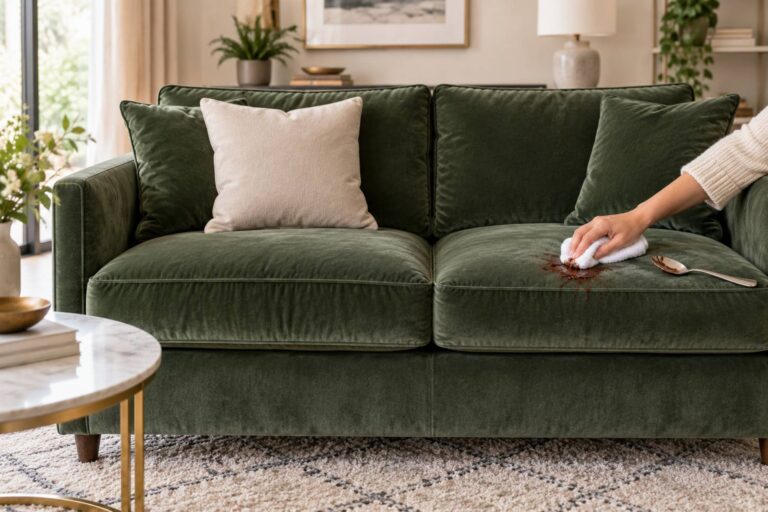
A suede sofa looks inviting, but the wrong cleaning method can leave permanent water rings, faded patches or a flattened nap. The first task is to identify the upholstery and check what its manufacturer actually permits.
QUICK ANSWER First, check whether your sofa is genuine suede or synthetic microsuede and read its care label. Gently lift surface dust with an approved soft brush or upholstery vacuum attachment. Blot fresh spills with a dry white cloth; never rub. Use a stain product only when the instructions allow it and a hidden patch test is successful. Do not soak the fabric or use steam by default.
A simple decision rule: Unknown fabric or missing label? Keep to permitted dry care. Genuine suede? Start with dry methods. Confirmed microsuede with a suitable W or WS code? A carefully tested compatible product may be an option. Stop if colour, texture or pile changes.
Before You Clean: Is Your Sofa Genuine Suede or Microsuede?
Genuine suede is leather made from the underside of animal hide. It has a distinctive soft nap, but liquid may darken, stiffen or mark its finish. Microsuede (sometimes called faux suede) is a synthetic, suede-like upholstery, often made using fine polyester or other man-made fibres. Its cleaning requirements depend on its construction, backing, dyes and finish—not its appearance alone.
Check the sales paperwork, product page or upholstery label, usually beneath a seat cushion or on the sofa frame. A velvety feel does not prove that a sofa is real suede, and the word “suede” in a product name is not a cleaning instruction. If the material cannot be identified, avoid experimenting with water, vinegar or solvent.
For ordinary water-compatible fabric sofas, see our separate guide to cleaning a fabric sofa at home. Suede and suede-look upholstery need their own material-specific checks.
What Do the W, S, WS and X Cleaning Codes Mean?
The manufacturer’s full instructions take priority over general advice. Upholstery codes, also explained in Ashley’s care guidance, indicate the broad category of cleaner that may be suitable—not permission to use any product or machine.
| Care code | What it generally permits | What to do at home |
|---|---|---|
| W | A compatible water-based upholstery cleaner | Use only the maker-approved product, in small amounts; do not soak or assume steam is safe. |
| S | A suitable water-free upholstery solvent | Do not use water. Solvent use requires product-specific safeguards; seek trained advice if unsure. |
| WS / SW | Compatible water-based or solvent-based treatment | Choose by fibre and manufacturer guidance; always patch-test and avoid saturation. |
| X | Vacuuming or very light brushing only | No liquid, foam, home stain remover or steam treatment. |
If there is no label, contact the retailer or manufacturer with the model number. Never infer a W code from the fact that a sofa is synthetic. Before any approved spot treatment, test an unseen patch and allow it to dry fully. Stop immediately if a white cloth picks up dye or the test leaves a ring, stiffness, fading or a change in nap.
What Tools Are Safe for Routine Suede Sofa Cleaning?
Start with a small, low-risk kit rather than household cleaning mixtures:
- A suede-specific or soft upholstery brush, only if suitable for the material and finish.
- A vacuum with a clean, soft upholstery attachment and gentle, adjustable suction.
- Dry, white, lint-free cloths and absorbent white towels for fresh spills.
- The manufacturer’s instructions and a product expressly approved for that upholstery, if treatment is allowed.
Avoid stiff scrub brushes, coloured rags, ordinary carpet shampoo, multipurpose sprays and abrasive pads. Even a cleaning product sold for “suede” may be intended for shoes rather than upholstery; check that its use on your particular sofa is approved.
How to Clean a Natural Suede Sofa Without Damaging It
For genuine suede, gentle dry maintenance is the safest general starting point. The aim is to remove loose soil and protect the nap—not to promise a deep clean with household ingredients.
Step 1: Remove loose dust gently
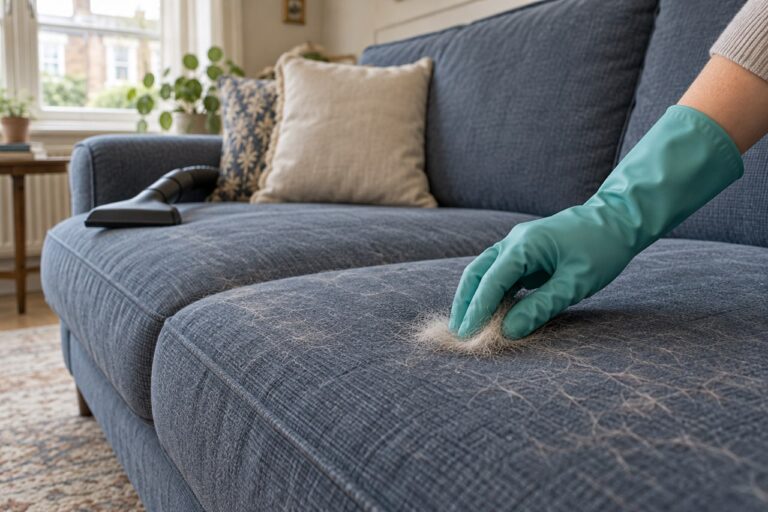
Inspect seams, worn areas and any existing marks. If the manufacturer permits vacuuming, use a clean upholstery attachment with low suction and keep pressure light. Work slowly around stitching and piping. Stop if the attachment pulls at the surface or releases visible fibres.
Step 2: Brush with the nap
Use a suitable soft suede brush in the direction of the nap. Begin in a hidden area to check whether brushing changes the colour or sheen. Do not scrub backwards and forwards or try to erase a mark with sandpaper; friction can permanently create a lighter patch.
Step 3: Dry-blot fresh spills
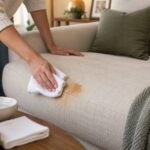
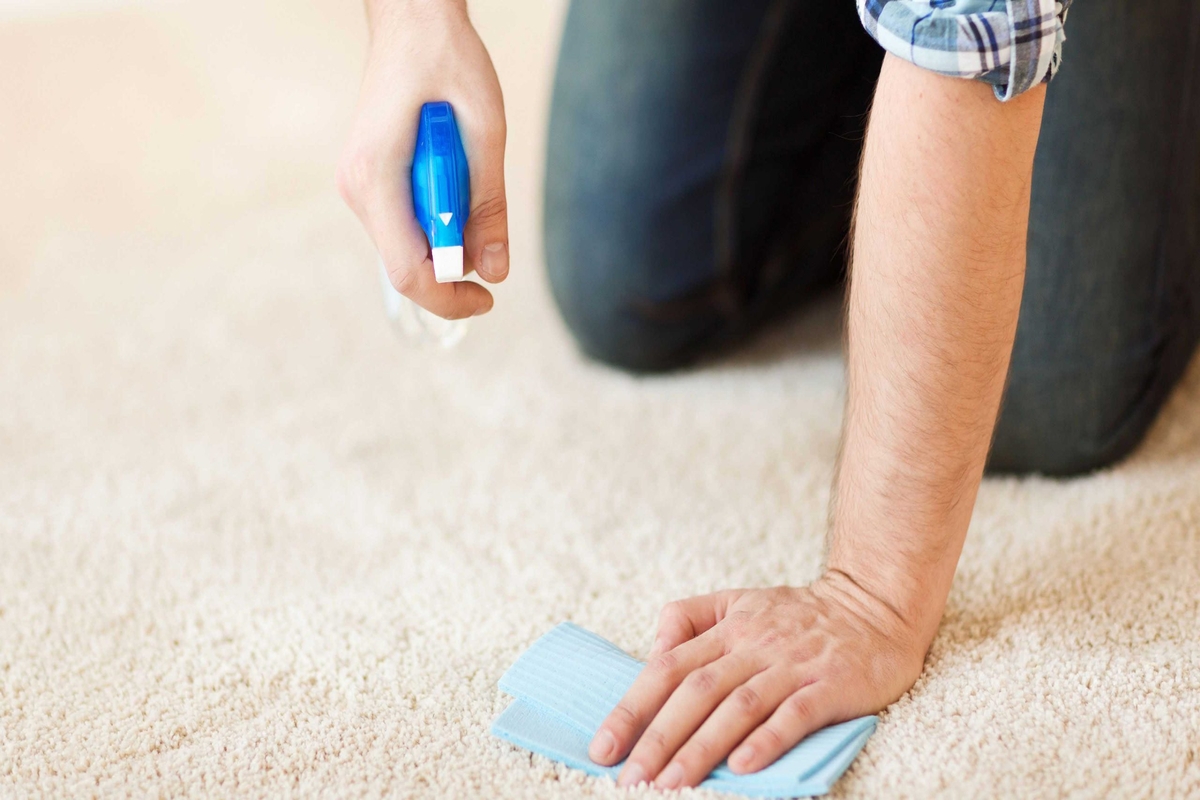
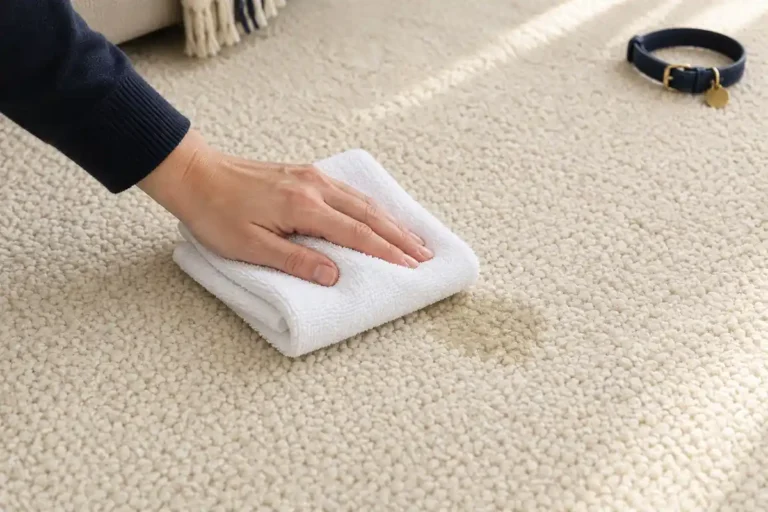
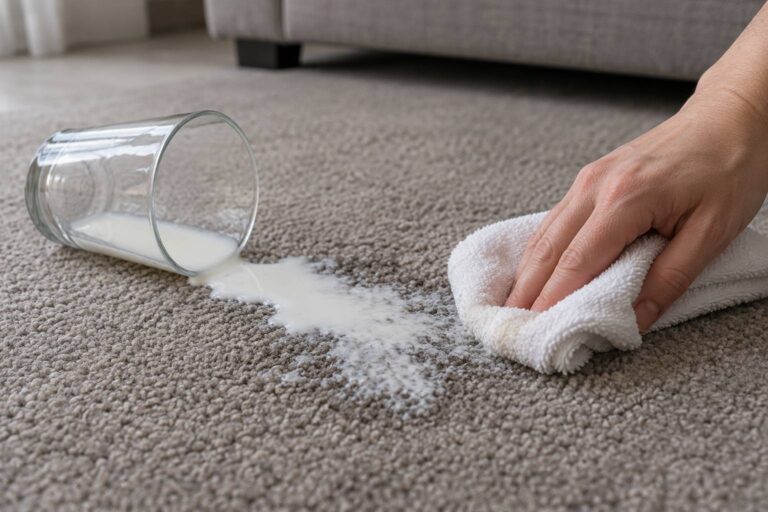
For a fresh spill, press a clean, dry white towel onto the wet area and lift it away. Repeat with a dry section of the towel, without rubbing or squeezing liquid into the cushion. Do not pour on water to dilute a drink or spread the moisture across a whole panel to “blend” the mark.
Step 4: Treat only when specifically authorised
Use a specialist product only if the sofa maker confirms it is suitable for this suede finish and the hidden patch test dries without damage. Do not substitute an online vinegar, alcohol or soap recipe. If the label requires professional cleaning or the product is uncertain, leave the stain untreated and request an assessment.
Step 5: Air-dry and restore texture carefully
Let any remaining dampness dry naturally in a ventilated room, away from radiators, hairdryers and strong sunlight. Once fully dry, a gentle pass with an approved brush may help align the nap. A stiff or glossy patch, colour transfer or a spreading ring is a reason to stop, not to repeat the process.
How Do You Spot Clean and Remove Stains From a Suede Sofa?
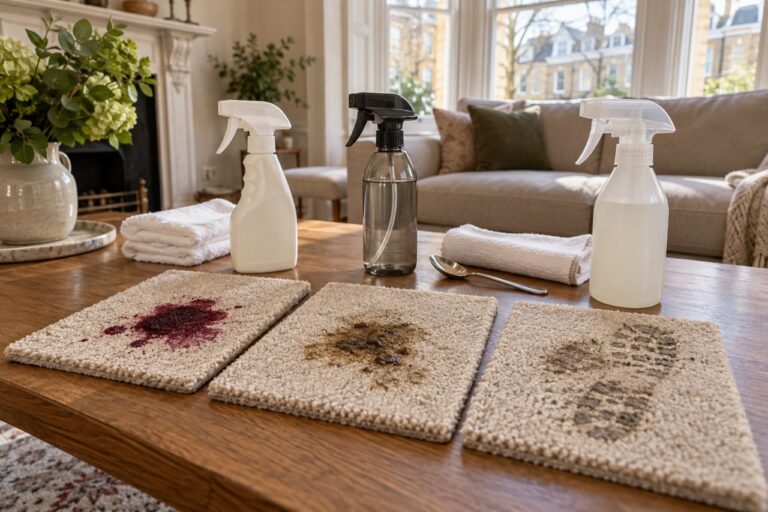
The safest first response depends on what caused the stain and whether the sofa is genuine suede or microsuede. Use this quick triage table before considering a product:
| Stain or problem | Lower-risk first action | Stop / seek assessment when… |
|---|---|---|
| Fresh drink or other liquid | Press and lift with a dry white cloth. Do not rub. | A ring forms, dye transfers or the upholstery is unidentified. |
| Dry dust, crumbs or scuff | Once completely dry, brush or vacuum gently if permitted. | Fibres lift, the nap changes or the scuff is actually worn material. |
| Oil or grease | Lift any excess without pressing it deeper; do not scrub. | The mark has soaked in or is old; do not apply a universal powder or paste recipe. |
| Watermark or drying ring | Leave to dry completely; check material and instructions. | The ring remains, spreads or appears on natural suede—do not add water to blend it. |
| Ink, make-up or dye transfer | Avoid smearing. Photograph the mark and identify the fabric. | Colour has migrated, the item is valuable or the mark contains an unknown chemical. |
| Food or pet-related spill | Carefully lift solids and dry-blot remaining surface moisture. | Urine or odour has reached the foam, or staining persists after drying. |
For example, oil needs a different treatment from water-soluble drinks, while dark dye transfer may not be removable without affecting the upholstery’s original colour. If a stain remains after one suitable, low-moisture attempt, escalating to stronger DIY chemicals often makes subsequent professional work more difficult.
Some online guides recommend diluted white vinegar or re-wetting water rings, while others warn against water on suede. Those approaches are not interchangeable across leather suede, microsuede and different finishes. Follow the specific care instructions and a fully dried patch test; never use a household recipe simply because it worked on another sofa.
Our article about water rings on fabric upholstery covers water-safe fabrics; its wet-treatment steps should not be transferred automatically to genuine suede or S/X-coded upholstery.
Can You Steam Clean a Suede Sofa?
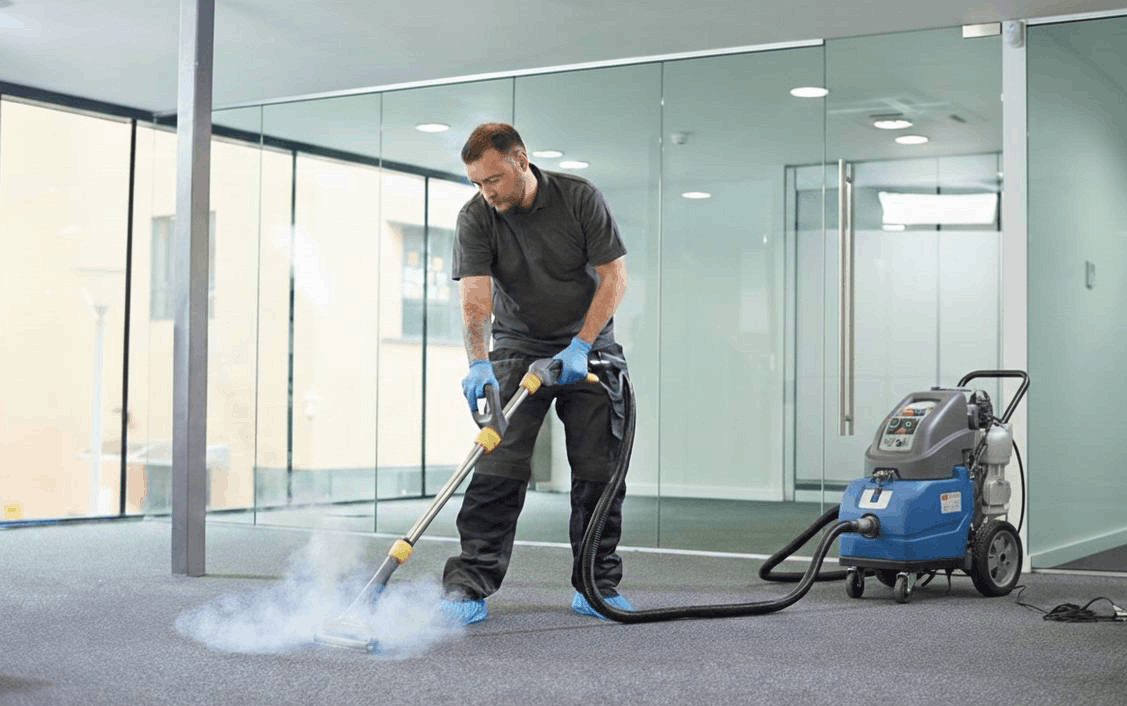
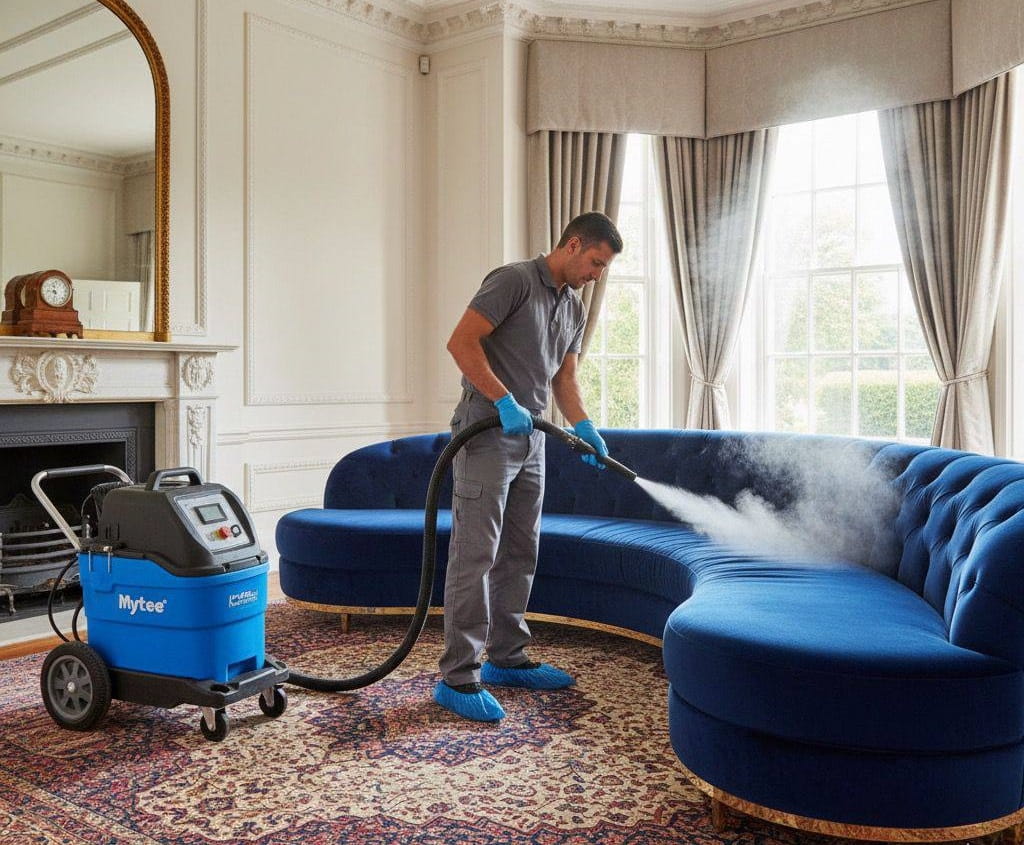
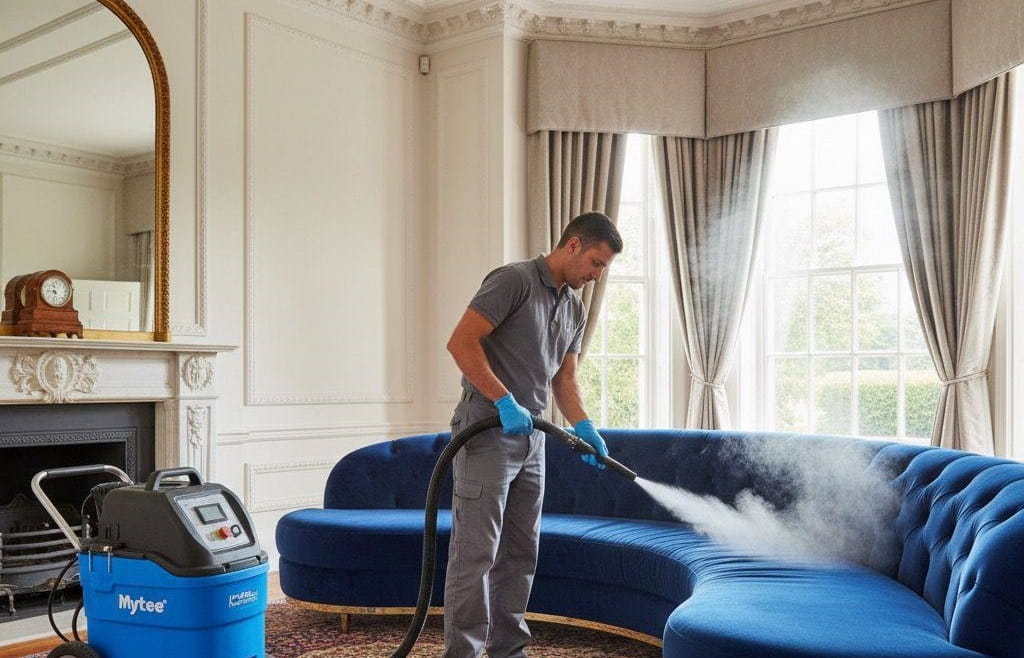
Do not steam genuine suede by default. Heat and moisture may stiffen the leather, alter the nap, change colour or leave rings. A synthetic microsuede sofa also needs explicit manufacturer approval and an assessment of the backing, dyes, seams and cleaning code before any machine method is considered.
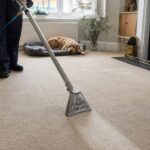
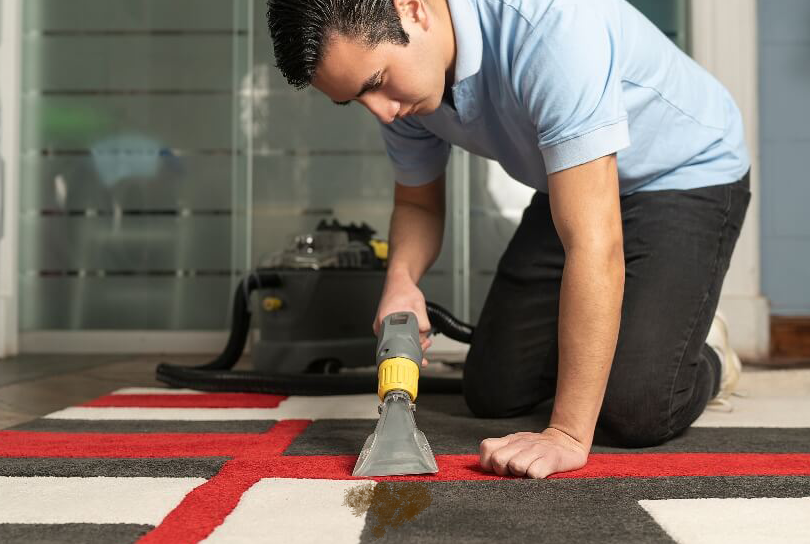
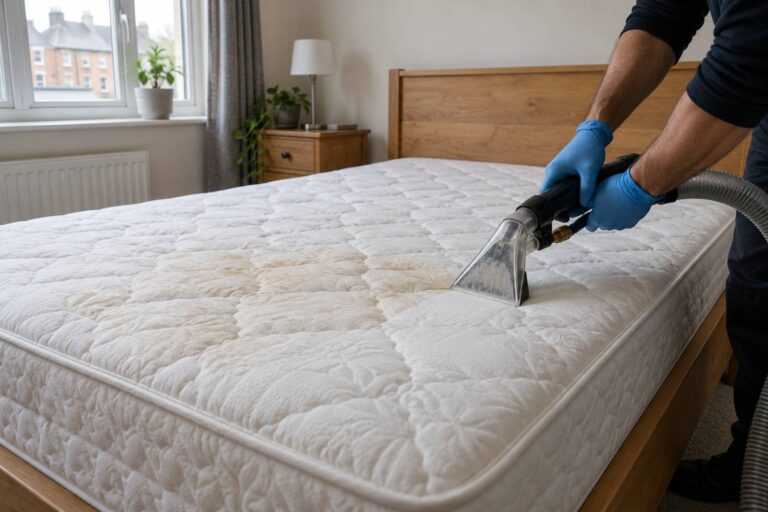
The phrase “steam cleaning” is often used for both hot vapour and hot-water extraction. Extraction uses liquid and suction; actual steam applies hot vapour. They involve different exposures, and neither is automatically permitted by a W or WS label. Read our explanation of steam versus hot-water extraction before considering equipment. A carpet machine should never be used on a suede sofa merely because it has a handheld attachment.
What Should You Never Use on Suede Upholstery?
Avoid common shortcuts that can turn a cleanable mark into damage:
- Soaking or automatic machine extraction: excess moisture can cause rings and reach the padding.
- Bleach, ammonia or household degreasers: these may damage dyes and finishes.
- Rough brushing, sandpaper or hard scrubbing: friction can abrade the nap or expose a different-looking surface.
- Direct heat or strong sunlight: these may stiffen, fade or distort delicate upholstery.
- Unapproved vinegar, soap, alcohol or solvent mixtures: compatibility cannot be guessed from the fabric’s name. Solvent labels may require ventilation and fire precautions.
A protection spray is not automatically suitable either. Ask the manufacturer before applying any stain guard, waterproofing treatment or other finish.
When Should You Choose Professional Suede Sofa Cleaning?
Arrange advice rather than further DIY treatment when the care label is missing, the sofa is valuable or genuine suede, a stain is set in, colour transfers to a cloth, the nap has changed, or odour suggests liquid has entered the cushion foam. A professional should first confirm the material, assess dye stability and existing damage, and explain which techniques—if any—are appropriate. Not every stain or fabric can be treated safely or fully restored.
Hi Carpet Cleaner provides professional upholstery cleaning in London for sofas, armchairs, dining chairs and other fabric furnishings. Its published booking process invites customers to send clear sofa and stain photographs plus a postcode through WhatsApp for assessment and a quotation. For suede or microsuede, include a photo of the care label and ask the team to confirm material suitability and the proposed method before booking.
How to Maintain a Suede Sofa Between Cleans
A few careful habits can reduce the need for risky stain removal:
- Vacuum or brush lightly at the interval recommended by the maker, using an attachment appropriate for the nap.
- Blot accidental spills immediately with a clean white towel; keep food and coloured drinks away where practical.
- Limit prolonged direct sunlight and keep the sofa away from radiators and other concentrated heat sources.
- Rotate or reposition removable cushions if their construction allows, so wear and light exposure are more even.
- Keep a copy of the care instructions and details of any approved products, particularly if the sofa is under warranty.
There is no universal schedule for wet cleaning a suede sofa. Routine dry care, prompt response to spills and professional assessment when warranted matter more than a fixed deep-cleaning calendar.
Frequently Asked Questions
Can you use water to clean a suede sofa?
Not as a general rule. Natural suede can mark or stiffen when wet. Certain W or WS microsuede fabrics may allow a manufacturer-approved water-based product, but only with controlled moisture and a successful patch test.
Can you use white vinegar on suede?
Do not apply vinegar automatically. Published advice varies, and the acidity and added moisture may affect some finishes or dyes. Follow the sofa manufacturer’s instructions rather than a universal mixing ratio.
How often should you brush a suede sofa?
Follow the sofa maker’s care guidance and the level of dust and use. Gentle, periodic dry maintenance is preferable to vigorous brushing or frequent wet cleaning, especially on natural suede.
Can you steam clean a suede couch?
Avoid steaming genuine suede unless an appropriate specialist has confirmed a specific authorised method. For microsuede, a care code alone is not enough; the manufacturer must approve the machine process and its heat and moisture levels.
What if my suede sofa has no care label?
Look for the model information, ask the retailer or manufacturer, and use only gentle dry care while the material remains uncertain. For persistent stains, request a fabric assessment instead of testing random products.