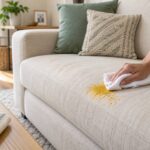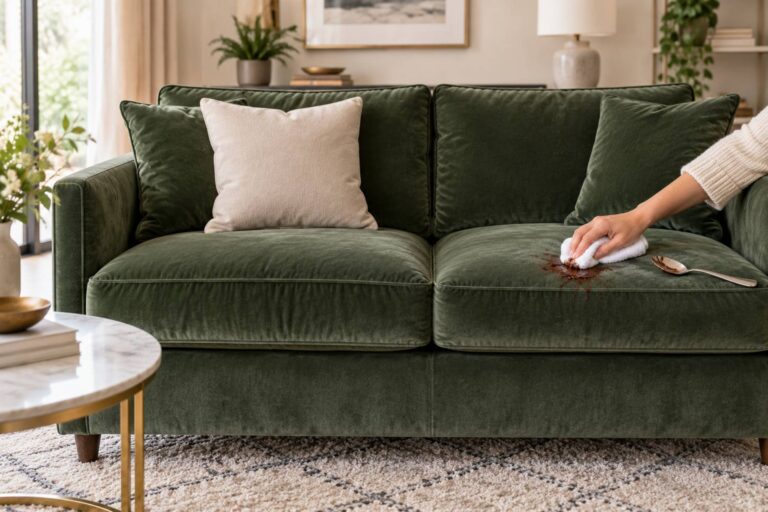
A glass of water, an overfilled plant pot or an unsuccessful attempt at spot cleaning can leave a surprisingly noticeable ring on a fabric sofa. Although the liquid may have been clear, minerals, cleaning residues and dirt carried towards the edge of the damp area can remain visible after the upholstery dries.
To remove a light water stain from a water-safe fabric sofa, check the care label, vacuum the affected area and test distilled water on a hidden section. Lightly dampen the entire ring rather than treating only its centre, then blot it evenly with a clean white microfibre cloth. Use as little moisture as possible and let the sofa dry completely with good airflow. Do not apply water to upholstery marked S or X.
Before booking, you can review typical sofa cleaning costs in London and the factors that affect a quotation.
Why Does Water Leave a Stain on a Fabric Sofa?
Water does not normally contain coloured pigments, but it can still leave a visible outline on upholstery. In many cases, what appears to be a water stain is material carried by the moisture and deposited at the edge as it dries.
Minerals in tap water
Tap water contains dissolved minerals. When the water evaporates, these minerals may remain on the upholstery and create a pale, grey or cloudy outline. This is why distilled water, which contains significantly fewer mineral impurities, is usually preferable for permitted spot treatment.
Dirt moving through the fabric
Even a sofa that appears clean may contain dust, body oils and fine particles within its fibres. Moisture can dissolve or move this material towards the outside of the wet area. As the upholstery dries, the displaced soil collects at the boundary and creates a darker ring.
Cleaning-product residue
A mark that develops after DIY sofa cleaning may be caused by detergent rather than water. Using too much washing-up liquid, failing to rinse a product properly or spraying cleaner directly onto the upholstery can leave a sticky or cloudy edge.
Uneven drying
If one small part of a cushion becomes much wetter than the surrounding fabric, it may dry unevenly. The visible boundary between the treated and untreated areas can remain even after the upholstery no longer feels damp.
Dye or material movement
Water can affect unstable dyes and delicate fibres. A brown, yellow, blue or reddish mark may indicate colour migration, contamination from the filling or another issue that cannot be corrected safely by repeatedly adding more water.
Check the Sofa’s Cleaning Code Before You Start
Before attempting to remove the mark, check the care label underneath the sofa, beneath a loose cushion or on the manufacturer’s product information.
Cleaning code | Meaning | Appropriate approach |
W | Water-based upholstery products are permitted | Controlled treatment with distilled water may be suitable |
S | Solvent-based cleaning only | Do not use water; use an approved solvent or contact a professional |
W/S or S/W | Water- or solvent-based products may be permitted | Select the product carefully and patch-test it first |
X | Vacuuming or light brushing only | Do not attempt wet cleaning at home |
A W code does not mean that the sofa can be soaked or that its removable covers can be machine-washed. Excess moisture can still penetrate the filling, cause shrinkage or create a larger water ring.
If you cannot locate a label, check the original product information or contact the manufacturer. When the material and its cleaning requirements cannot be confirmed, restrict home treatment to gentle vacuuming and seek professional advice before applying liquid.
Our complete guide to cleaning a fabric sofa at home without damaging it explains cleaning codes and general upholstery-care precautions in more detail.
What You Will Need
For a light water ring on W- or W/S-coded fabric, prepare:
- A vacuum cleaner with a clean upholstery attachment
- Distilled water
- Two or three clean white microfibre cloths
- White absorbent towels
- A small bowl
- A fan or good natural ventilation
- A fabric-approved upholstery cleaner, only if necessary
Use white cloths because coloured towels may transfer dye when damp. They also make it easier to see whether colour or dirt is being lifted from the sofa.
Avoid preparing a large bucket of water. Water-stain treatment requires controlled moisture rather than thoroughly washing the cushion.
How to Remove a Water Stain from a Fabric Sofa Step by Step
The following method is intended for a small, light water ring on upholstery that permits water-based cleaning. It is not suitable for S- or X-coded sofas or delicate materials that require specialist treatment.
Step 1: Vacuum the affected area
Vacuum the water mark and the surrounding upholstery using an appropriate attachment and low or moderate suction. This removes loose dust that could otherwise become wet and produce a darker outline.
Work carefully around seams, piping, loose threads and textured areas. Avoid pressing the attachment firmly against velvet, chenille, bouclé or loosely woven fabrics.
Step 2: Test the method on a hidden section
Lightly dampen a white cloth with distilled water and press it against an inconspicuous area, such as the back of the sofa or beneath a cushion.
Let the test area dry completely before proceeding. Check for:
- Colour transfer onto the cloth
- Fading or darkening
- Shrinkage or puckering
- Stiffness
- Changes in texture or pile direction
- A new drying ring
Do not continue if the test changes the colour, texture or appearance of the upholstery.
Step 3: Lightly dampen the complete ring
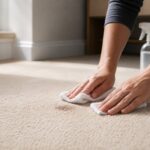
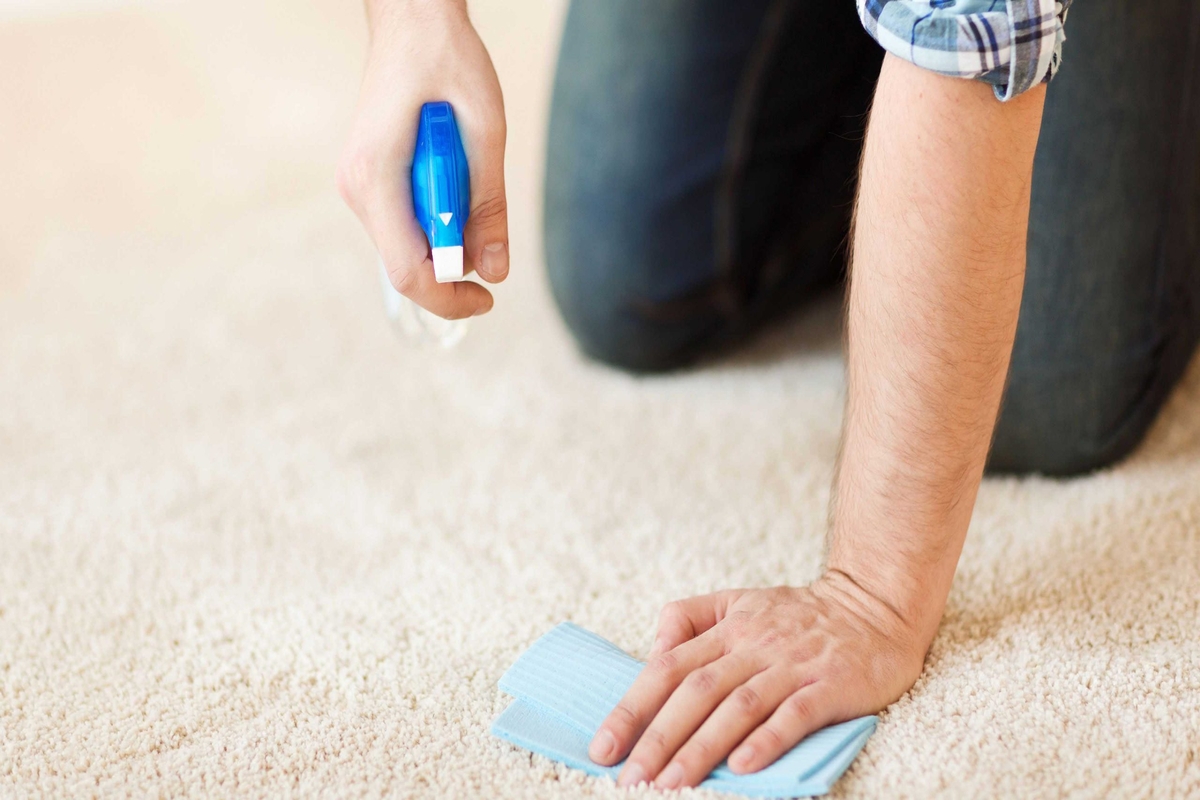
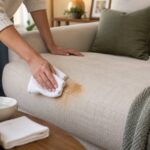
Pour a small amount of distilled water into a bowl and dampen a clean white microfibre cloth. Wring it out thoroughly; the cloth should be slightly damp, not dripping.
Start just outside the visible boundary and press the cloth gently across the complete ring. Treating a slightly wider, even area helps dissolve and redistribute mineral or soil residue without creating another hard edge.
Apply the water to the cloth rather than spraying it directly onto the sofa. Spraying makes the amount of liquid more difficult to control and may push moisture into the cushion filling.
Step 4: Blot instead of scrubbing
Use a press-and-lift motion, working gradually from the outside of the mark towards its centre. Move to a clean section of the cloth whenever dirt transfers onto it.
Do not rub vigorously or scrub in circles. Friction can distort the fibres, spread the residue and change the way pile fabrics reflect light. In some cases, the resulting texture change may look like another stain even after the area is clean.
Step 5: Absorb the remaining moisture
Press a clean, dry white towel over the treated area to absorb surface moisture. Avoid twisting, rubbing or placing enough weight on the cushion to force liquid deeper into the filling.
Continue blotting with dry sections of the towel until very little moisture transfers.
Step 6: Let the area dry evenly
Allow the upholstery to dry with normal room airflow. Open a window where appropriate or position a fan several feet away from the sofa.
Avoid sitting on the cushion or replacing throws until it is completely dry. Do not assess the result while the upholstery is still damp because wet fabric naturally appears darker.
Drying time varies according to the upholstery, filling, ventilation and amount of moisture used. Our guide explaining how long sofas take to dry after cleaning provides further practical advice.
How to Treat an Old or Stubborn Water Stain
An old ring may contain mineral deposits, embedded dirt or cleaning-product residue. It may therefore require more than one careful treatment, but this does not mean the sofa should be repeatedly soaked.
Begin with the distilled-water method and allow the area to dry completely. If the mark becomes lighter, the treatment may be repeated once without increasing the amount of moisture.
If the boundary feels sticky or stiff, it may contain detergent residue. On W- or W/S-coded fabric, a cleaner specifically approved for that upholstery may be appropriate. Follow its instructions exactly and apply it to a cloth rather than directly to the cushion.
Do not apply several household products one after another. Combining detergent, vinegar, bicarbonate of soda and commercial stain removers can leave additional residue and makes it more difficult for a professional to identify what caused the remaining mark.
If the stain does not improve after one or two controlled attempts, stop. Continued wetting can move more soil towards the edge, spread unstable dye or saturate the cushion filling.
Is It Really a Water Stain?
The appearance and feel of the mark can provide useful clues.
What you can see or feel | Possible cause | Safest initial response |
A pale ring with normal-feeling fabric | Mineral residue or uneven drying | Controlled distilled-water treatment |
A cloudy or sticky edge | Previous cleaner or soap residue | Check the care code and use only an approved rinse method |
A brown or yellow outline | Soil migration, internal contamination or rust | Avoid repeated DIY wetting |
A dark patch that changes when viewed from another angle | Flattened or disturbed pile | Let it dry fully and gently reset the pile if permitted |
Colour transferring onto a white cloth | Unstable dye | Stop immediately |
Dampness or a musty smell | Moisture inside the filling | Arrange professional assessment |
A coloured mark should not automatically be treated as a simple water stain. Professional spot and stain removal in London may be more appropriate when soil, previous cleaning chemicals or colour movement is involved.
Can You Use Vinegar, Baking Soda or a Hairdryer?
Household cleaning advice often recommends the same products for every sofa, but upholstery materials react differently.
White vinegar
Diluted white vinegar may help dissolve certain mineral or soap residues on some water-safe synthetic fabrics. However, it is not suitable for every sofa and may affect colour, texture or fibre strength.
Do not use vinegar without manufacturer approval on silk, wool, viscose, velvet, suede, linen with unstable dyes or unidentified upholstery. Even on W-coded fabric, complete a hidden patch test and use very little liquid.
Baking soda
Bicarbonate of soda may absorb mild surface moisture and odours, but it does not necessarily remove mineral deposits or correct dye migration. Fine powder may also become trapped inside textured upholstery or combine with moisture to leave a pale residue.
It should therefore not be treated as the automatic solution for a water ring.
Washing-up liquid
Washing-up liquid can produce excessive foam and leave sticky residue in upholstery. Unless the sofa manufacturer permits it and the product is heavily diluted, a fabric-specific cleaner is a safer choice.
Using more detergent will not improve the result. It may simply replace the original water mark with a soap ring.
Hairdryer
If the manufacturer permits it, a hairdryer may be used on its cool setting and held well away from the fabric. Concentrated heat can shrink fibres, affect adhesives, flatten the pile or produce another drying boundary.
Natural ventilation or a fan positioned at a safe distance is generally easier to control.
Domestic spot-cleaning machines
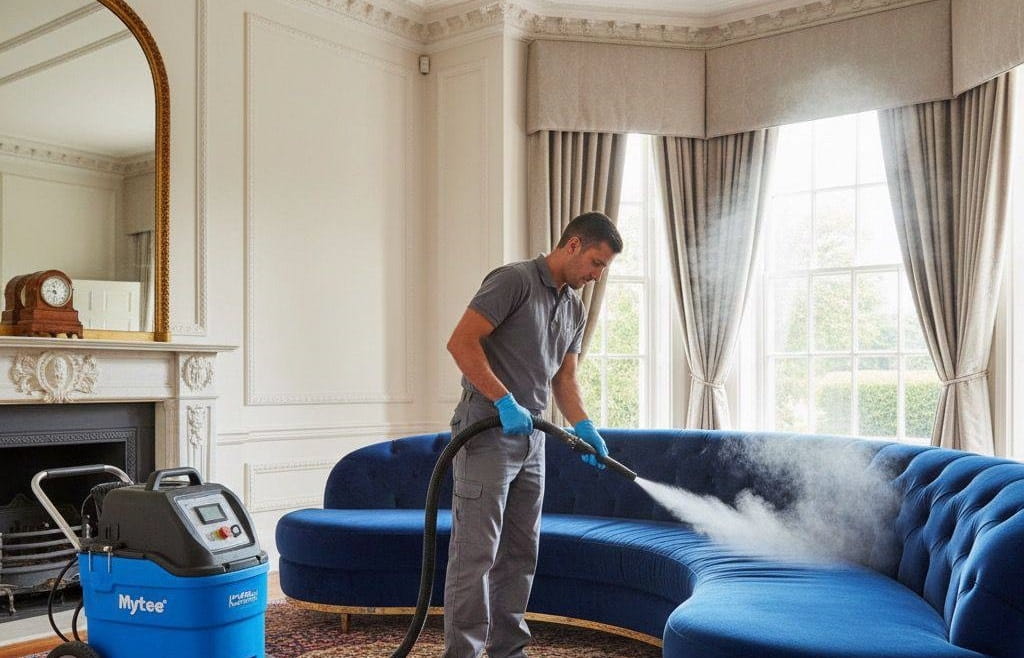
A portable upholstery machine may help with certain washable fabrics, but it can also oversaturate the cover and foam if it applies more water than it extracts.
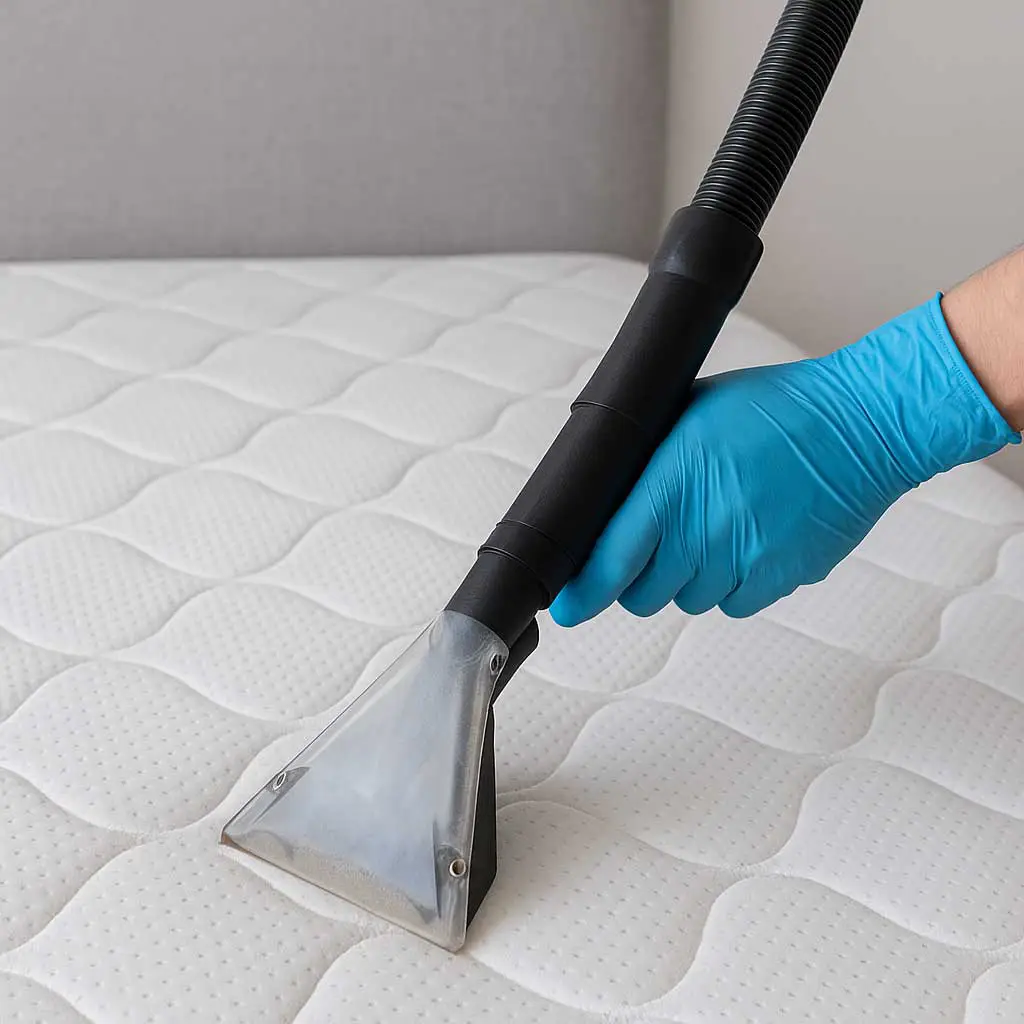
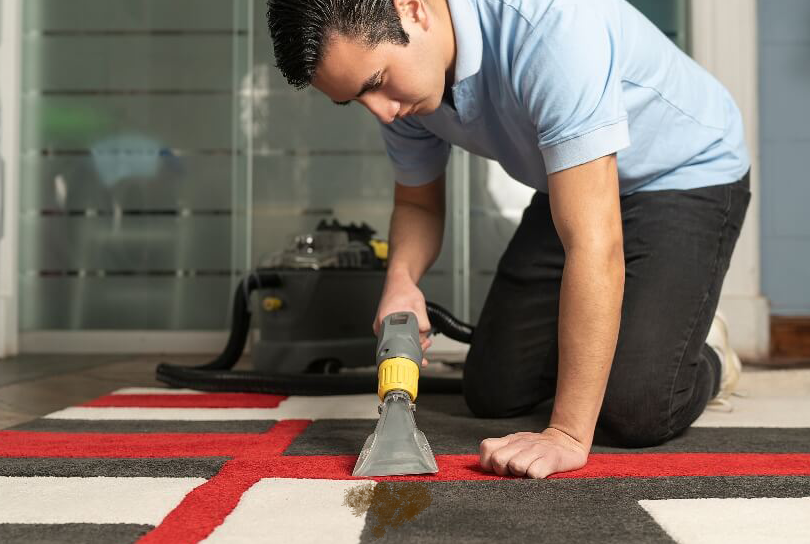
Do not use a carpet or spot-cleaning machine unless the sofa manufacturer and equipment instructions confirm that it is suitable. One small ring does not always require deep extraction across the cushion.
Mistakes That Can Make a Water Mark Worse
Avoid the following common mistakes:
- Wetting only the darkest part of the ring
- Soaking the cushion in an attempt to rinse the stain
- Spraying cleaner directly onto the upholstery
- Scrubbing with a brush or textured sponge
- Repeatedly using mineral-rich tap water
- Mixing different cleaning products
- Applying high heat to wet fabric
- Treating the area again before it has dried
- Wet-cleaning an S- or X-coded sofa
- Assuming every brown or yellow ring was caused by clean water
The safest approach is usually the least aggressive one. One controlled attempt followed by complete drying provides more useful information than several increasingly wet treatments.
When Should You Call a Professional Upholstery Cleaner?
Home treatment is most appropriate for a small, light surface ring with a known cause on water-safe upholstery. Consider professional treatment when:
- The sofa is marked S or X
- The material is silk, wool, viscose, velvet, suede or another delicate fabric
- The sofa has no visible care label
- The ring is brown, yellow or coloured
- Dye transfers onto a white cloth
- The mark grows after cleaning
- The cushion remains damp
- A stale or musty smell develops
- Previous DIY products have left sticky residue
- The stain is old, extensive or repeatedly returns
- The fabric or seams have become distorted
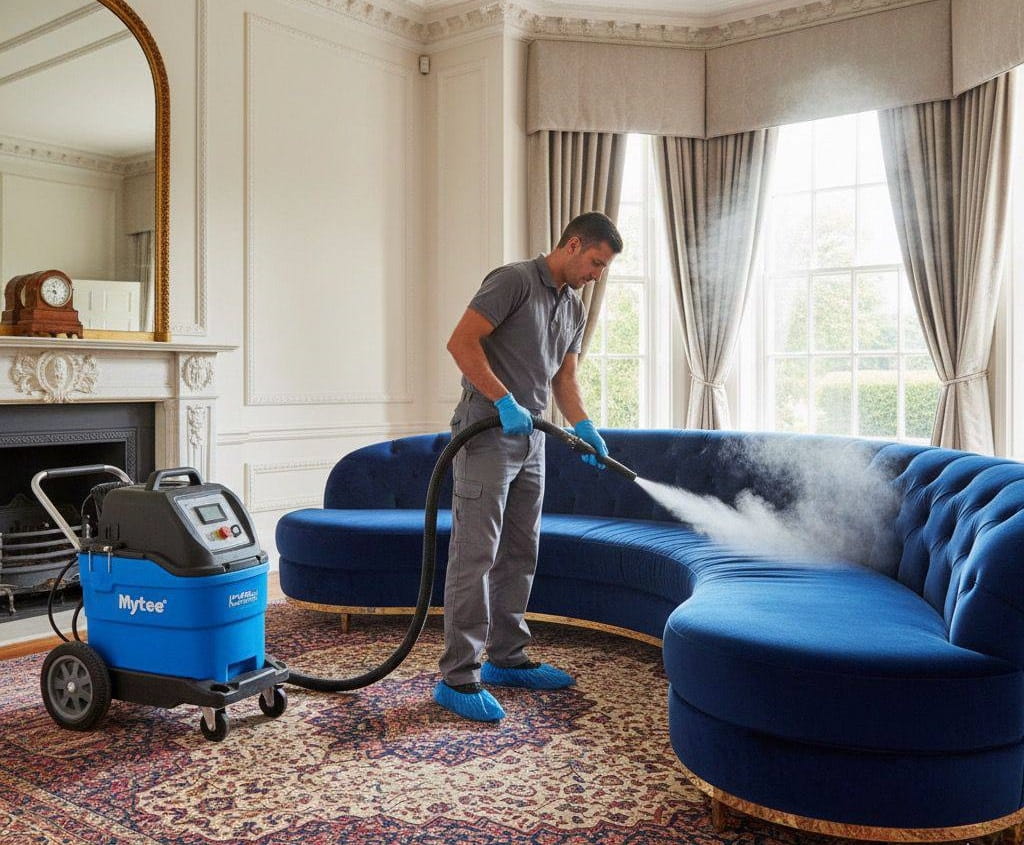
Persistent rings and delicate fabrics may require controlled professional upholstery cleaning in London. A technician can inspect the material, identify previous residues and select a method that limits moisture while extracting loosened contamination.
If you are unsure what caused the mark, send clear photographs of the sofa, its care label and the affected area, together with your postcode, via WhatsApp. Hi Carpet Cleaner will provide a free initial assessment and advise whether professional upholstery cleaning or targeted stain treatment is appropriate before any work begins.

How to Prevent Water Rings on a Fabric Sofa
Blot liquid spills immediately with a clean white towel. Press and lift instead of rubbing so the moisture is absorbed without spreading through the fabric.
When home spot treatment is permitted, use distilled water and apply it through a lightly dampened cloth. Keep the treated area even and avoid saturating seams or cushion edges.
Allow every cleaned area to dry completely with good ventilation. Do not cover it, sit on it or place the cushion against another surface while it is damp.
Finally, follow the manufacturer’s instructions rather than relying on a single household remedy for every fabric. A method that works on a polyester sofa may permanently alter silk, viscose, velvet or an unstable dye.
Frequently Asked Questions
Can water stains be removed from a fabric sofa?
Many light surface water rings can be reduced or removed from water-safe upholstery using a controlled distilled-water treatment and even drying. Results depend on the fabric, source of the mark, length of time it has been present and whether previous cleaning products were applied.
Why does my sofa have a ring after cleaning?
A ring can form when moisture carries dirt, minerals or detergent towards the edge of the cleaned area. It may also result from uneven drying or using too much cleaning solution in one spot. Treating only the centre can make the boundary more noticeable.
Can I use tap water to remove a water mark?
Distilled water is generally preferable because tap water contains minerals that may remain after evaporation. If tap water contributed to the original mark, repeatedly applying it could create further residue. Always check the sofa’s care code before using either.
Will vinegar remove water stains from upholstery?
Diluted vinegar may help with some mineral or detergent residues on compatible water-safe fabrics, but it is not universally safe. It can affect delicate fibres and unstable dyes. Check the manufacturer’s instructions and patch-test a hidden area before considering it.
How do you remove an old water stain from a sofa?
Begin with a controlled distilled-water treatment if the sofa is marked W or W/S. Treat the complete ring evenly, blot it and allow it to dry fully. If the stain remains, avoid repeatedly soaking it or layering household products; professional treatment may be safer.
Can a water ring become permanent?
Yes. Mineral deposits, dye migration, fibre distortion and staining carried from inside the cushion may become difficult or impossible to reverse. Early treatment improves the likelihood of a good result, but no method can guarantee complete removal from every fabric.
Why does the water stain return after the sofa dries?
A returning ring usually means minerals, soil or cleaning residue remain in the fabric and have moved back towards the edge during drying. Moisture may also be rising from the cushion filling. Repeated surface wetting can worsen this problem.
How long should a sofa take to dry after spot cleaning?
A lightly treated area may dry within several hours, but the exact time depends on fabric type, filling, ventilation, temperature and the amount of liquid used. Do not use the sofa until the treated section is completely dry.