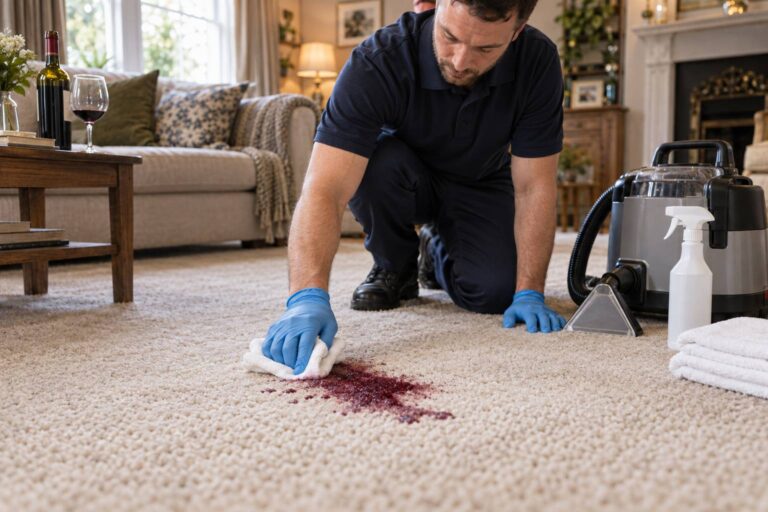
Dried blood can become firmly attached to carpet fibres, making it more difficult to remove than a fresh spill. However, many small surface stains can still be reduced or removed if you work carefully, use cold water and avoid aggressive scrubbing.
To remove dried blood from carpet, put on disposable gloves and gently loosen the dry residue with the back of a spoon. Vacuum up the particles before applying moisture, then blot the stain with a white cloth dampened with cold water. If the mark remains, apply a carpet-safe enzyme cleaner according to its instructions, blot again, rinse lightly and dry the area completely. Never use hot water or scrub the carpet.
Why Is Dried Blood Harder to Remove from Carpet?
Blood is a protein-based substance. As it dries, its proteins and pigments become attached to the carpet fibres and may penetrate further into the pile. This makes an old stain less responsive to simple blotting than a fresh spill.
Adding water without first removing the dry surface residue may also rehydrate the blood and spread it into the surrounding fibres. This is why dried particles should be loosened and vacuumed before wet treatment begins.
Heat creates another problem. Warm or hot water can make protein stains more difficult to remove, particularly if the stain has already been exposed to heat from a steam cleaner or hairdryer. Cold water is therefore the safer starting point.
The depth of the stain also affects the result. A small mark sitting near the top of a synthetic carpet is very different from a large spill that has reached the backing and underlay. Surface treatment may improve the visible area without removing contamination held underneath it.
Before arranging a visit, review current carpet cleaning prices in London and the factors that can affect the final quote.
Before You Start: Check the Carpet and the Stain
Before applying water or a cleaning product, inspect the carpet carefully. The safest treatment depends on its material, construction, colour and existing condition.
The likely result depends on the substance and fibre, as explained in our overview of which carpet stains professional cleaning can remove.
Identify the carpet material
Synthetic carpets made from nylon, polypropylene or polyester may tolerate a wider range of compatible cleaning products than wool or other natural fibres. However, this does not mean that every household remedy is safe for synthetic carpet.
Wool requires careful control of moisture, temperature and cleaning-product pH. Strong alkaline products, unsuitable enzyme cleaners, ammonia and excessive agitation may damage the fibres or affect the colour.
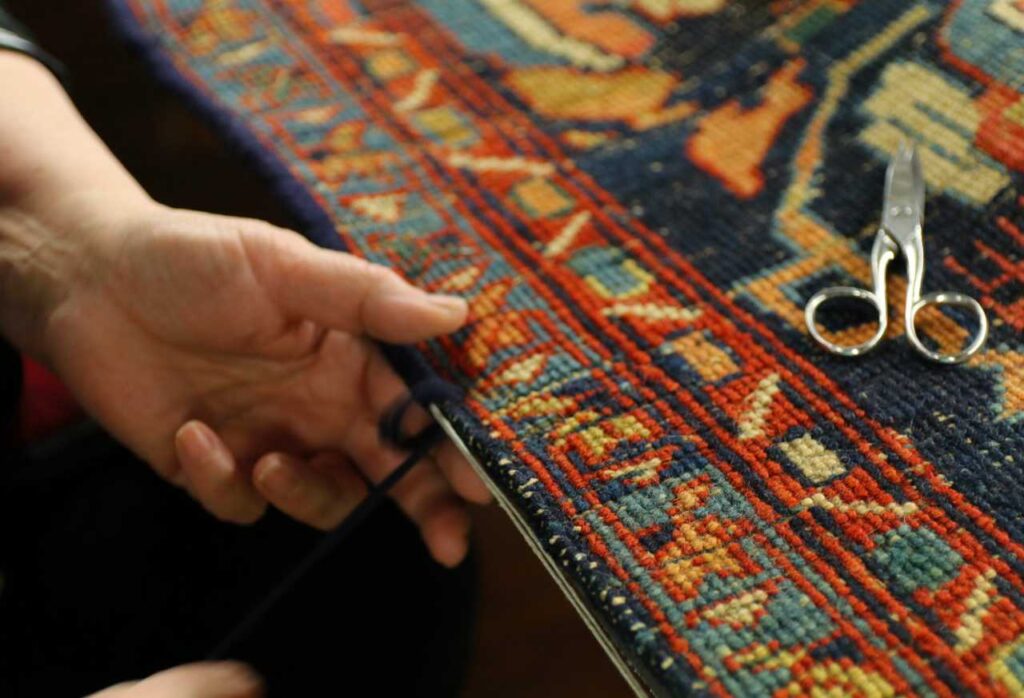
Loop-pile carpets also need special care. Stiff brushes, forks and sharp scraping tools can catch individual loops and create permanent pulls. Handmade rugs and floor coverings containing silk, viscose or unstable dyes should not be treated as ordinary fitted carpet.
If you cannot identify the material, check the manufacturer’s label or product information. When the fibre type remains unknown, use only the least aggressive method or contact a professional.
Check the size and depth of the stain
A small, dry surface mark may be suitable for careful home treatment. A large stain, repeated contamination or a mark that has penetrated the backing is less likely to respond fully to blotting alone.
Do not repeatedly soak the area in an attempt to reach deeper contamination. Excess moisture may spread the stain, damage the floor beneath the carpet or create a drying ring.
Consider whether the source is known
Wear disposable gloves even when the stain resulted from a known household accident such as a cut or nosebleed.
Do not handle a large blood spill or blood from an unknown source without appropriate precautions. If there may be broken glass, needles or another sharp object in the area, stop and arrange specialist assistance rather than vacuuming or touching the stain.
Patch-test every product
Apply a small amount of the proposed cleaner to a hidden area, such as inside a cupboard or beneath furniture. Let the test area dry completely before using the product on the visible stain.
Check for colour transfer, fading, bleaching, stiffness, sticky residue or changes in texture. A product may look harmless while the carpet is wet but leave visible damage after drying.
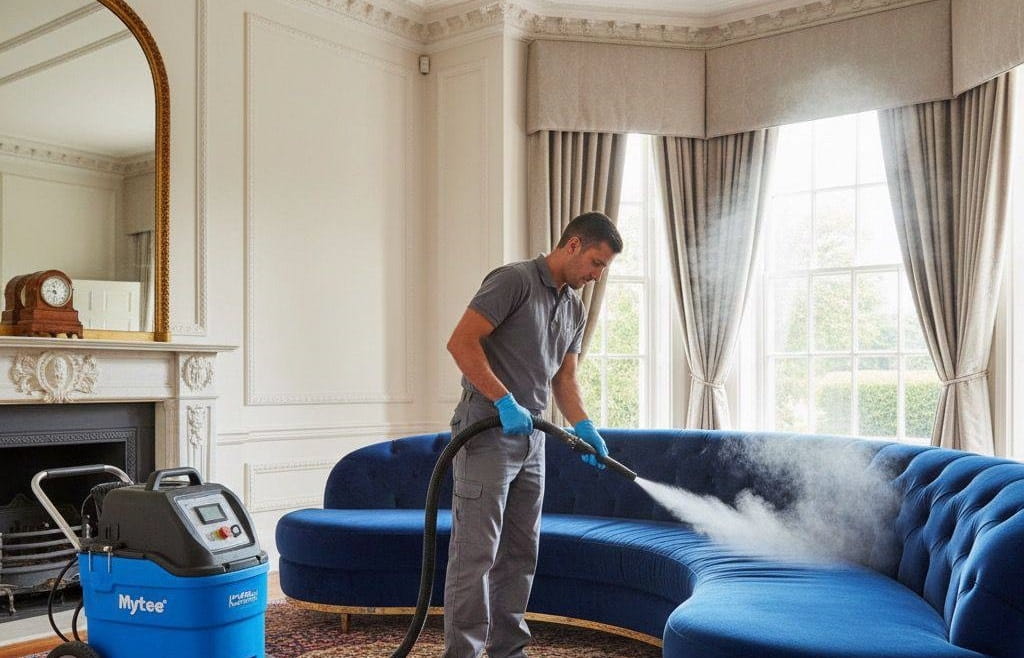
When home treatment is unsuitable or the problem affects a larger area, professional carpet cleaning services in London can provide fibre-appropriate hot water extraction and targeted pre-treatment.
What You Will Need
Prepare the following items before beginning:
- Disposable gloves
- A spoon or blunt plastic scraper
- A vacuum cleaner
- Clean white microfibre cloths
- White absorbent towels
- A small bowl of cold water
- A carpet-safe enzyme cleaner, if required
- A plastic bag for loose residue and used materials
- A fan or good room ventilation
Use white cloths because coloured towels can sometimes transfer dye when damp. They also allow you to see whether blood or carpet colour is transferring during treatment.
Avoid using a wire brush, stiff brush, fork or sharp knife. These tools may damage the pile before the stain has even been treated.
How to Remove Dried Blood from Carpet Step by Step
The following method is intended for a small dried blood stain on a carpet that permits water-based spot cleaning. Check the manufacturer’s care instructions before proceeding.
Step 1: Put on gloves and inspect the area
Wear disposable gloves and check the surrounding carpet for sharp objects, damaged fibres or previous cleaning residue.
If another product has already been applied, identify it before adding anything else. Do not assume that layering a second chemical over the first will improve the result.
Step 2: Gently loosen the dried residue
Use the back of a spoon or a blunt plastic scraper to break up blood sitting on top of the fibres. Work slowly and apply only enough pressure to loosen the dry material.
Do not scrape aggressively. On loop-pile carpet, move particularly carefully to avoid catching or pulling the loops.
Place the loosened material into a plastic bag rather than brushing it across the carpet.
Step 3: Vacuum up loose particles
Vacuum the affected area carefully to remove the particles you have loosened. This step is important because dry residue can become liquid again and spread when water is introduced.
Use an appropriate vacuum setting and stop if the attachment begins pulling loose loops or damaged fibres. Dispose of the vacuum contents hygienically according to the appliance instructions.
Step 4: Blot with cold water
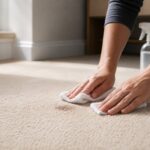
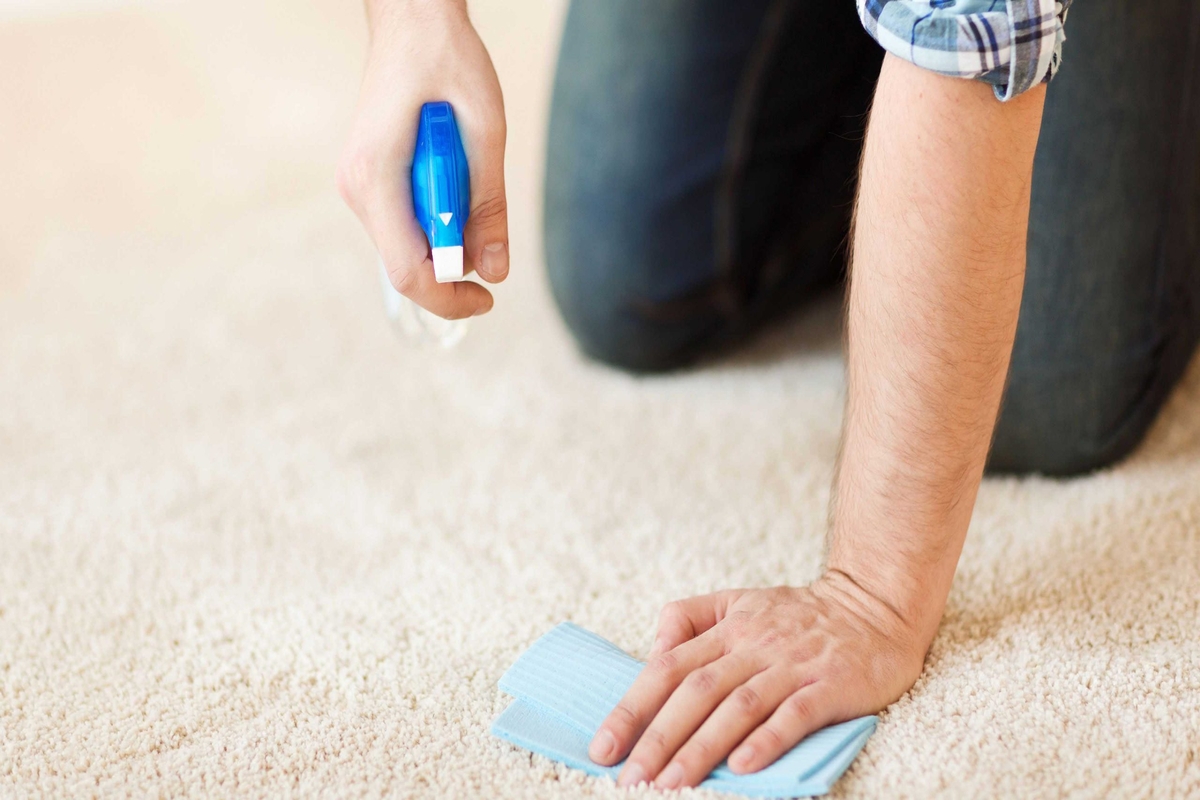
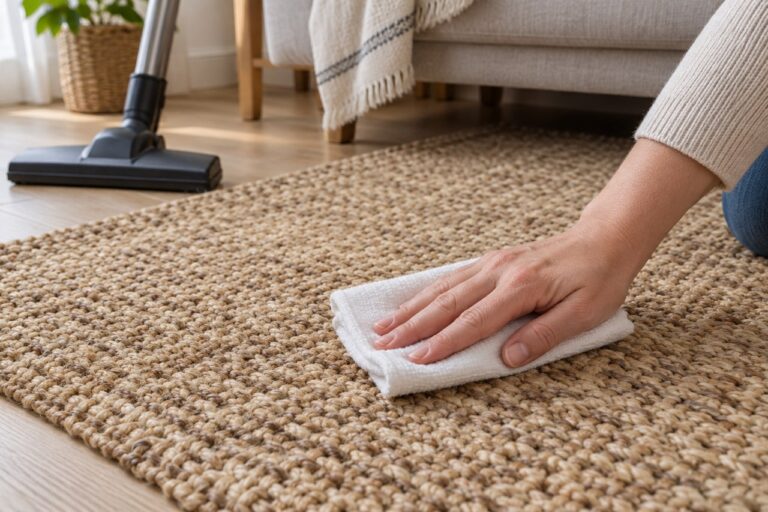
Pour a small amount of cold water into a bowl. Dampen a clean white microfibre cloth and wring it out thoroughly; the cloth should be damp rather than dripping.
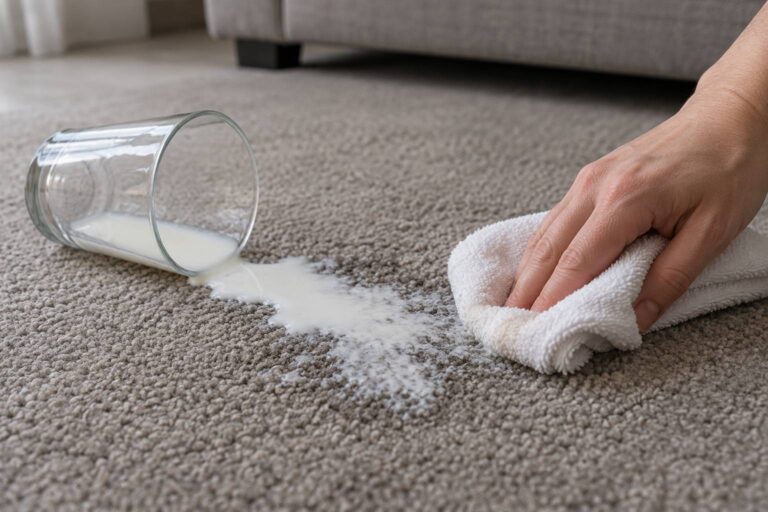
Begin at the outside edge of the stain and use a press-and-lift motion towards the centre. Move to a clean section of the cloth as blood transfers from the carpet.
Do not pour water directly onto the stain. Saturating the carpet can carry the contamination further into the backing and increase the risk of the mark returning as it dries.
Continue blotting patiently until no more blood transfers or the stain stops improving.
Step 5: Apply a carpet-safe enzyme cleaner if needed
If cold water alone does not remove the remaining mark, a carpet-safe cleaner designed for protein-based stains may help break down the residue.
Check that the product is suitable for both the carpet fibre and colour. Not every enzyme cleaner is appropriate for wool or other natural materials. Complete a patch test and follow the manufacturer’s dilution, application and dwell-time instructions exactly.
Apply the product in a controlled amount. Depending on the instructions, it may be safer to apply it through a cloth rather than spraying it heavily across the carpet.
Do not leave the cleaner on the fibres for longer than recommended. More product and a longer dwell time do not necessarily produce a better result.
Step 6: Blot until no more colour transfers
Use a fresh white cloth to blot the treated area. Work from the outside towards the centre and regularly turn the cloth to a clean section.
Avoid rubbing backwards and forwards. Scrubbing may push contamination further into the pile, spread the visible mark and distort the fibres.
If carpet dye starts transferring onto the cloth, stop immediately and do not continue adding product.
Step 7: Remove the cleaning residue
Once the stain has improved, lightly dampen another white cloth with clean cold water. Blot the area to lift away the remaining cleaning product.
This rinsing stage is important. Detergent or enzyme residue left in the carpet may dry sticky, attract soil and make the treated area look darker over time.
Avoid trying to rinse the carpet by pouring water over it. Controlled blotting introduces less moisture and makes drying easier.
Step 8: Absorb moisture and dry the carpet
Press a clean, dry white towel against the treated area to absorb as much moisture as possible. Do not rub or twist the pile.
Improve airflow by opening a window when appropriate or positioning a fan several feet away. Keep people and pets away from the area until it is completely dry.
Do not use direct high heat or assess the final result while the carpet is still damp. Wet fibres naturally appear darker and may conceal remaining residue.
What If the Blood Stain Is Still Visible?
Allow the carpet to dry completely before deciding whether another treatment is necessary. Applying more product while the first treatment is still wet makes it difficult to judge the result and increases the risk of oversaturation.
If the stain has clearly improved and the carpet shows no colour or texture change, the same compatible treatment may be repeated once. Use the same controlled quantity rather than making the carpet wetter.
Stop home treatment if:
- The stain begins to spread
- Carpet colour transfers onto the cloth
- The fibres become lighter, stiff or distorted
- The area remains wet for an extended period
- The mark returns after drying
- A noticeable odour remains
- More than one cleaning chemical has already been used
An old blood stain may have permanently affected the dye or penetrated below the visible fibres. Complete removal cannot be guaranteed, even with professional treatment.
Can Hydrogen Peroxide Remove Dried Blood from Carpet?
Hydrogen peroxide is frequently recommended for dried blood because it can react with and help break down remaining organic pigments. However, it is also an oxidising and potential bleaching agent.
On some light, colourfast synthetic carpets, a compatible peroxide-based carpet product may reduce the stain. On dark, coloured or delicate carpet, it may remove carpet dye along with the blood and leave a permanently pale patch.
Do not treat hydrogen peroxide as a universal home remedy. Before considering it:
- Check the carpet manufacturer’s instructions.
- Confirm that the product is intended for carpet.
- Test it on a hidden area and let the test dry.
- Avoid using it on wool, silk, handmade rugs or unknown fibres unless specifically approved.
- Do not apply large quantities directly to the carpet.
- Never mix it with bleach, ammonia, vinegar or another cleaner.
If an enzyme cleaner has already been used, remove its residue and let the carpet dry before deciding what to do next. Mixing or layering products can create unpredictable results.
For colour-sensitive or valuable carpet, professional assessment is safer than experimenting with peroxide.
Can You Use Baking Soda, Vinegar or Washing-Up Liquid?
Many online guides offer long lists of household ingredients, but using several methods one after another often creates more residue than it removes.
Baking soda
Bicarbonate of soda may absorb mild surface moisture or odour, but it is not necessarily the most effective treatment for dried protein residue. Fine powder can settle deep into the pile and may be difficult to vacuum completely, particularly after it becomes wet.
It should not be mixed into a paste and left on a delicate or unidentified carpet without manufacturer approval.
White vinegar
Vinegar may affect some residues, but its acidity is not suitable for every carpet fibre or dye. It should not be treated as a stronger replacement when cold water does not work.
Avoid combining vinegar with peroxide, bleach or other cleaning products. On wool, handmade rugs and carpets with unstable dyes, professional advice is preferable.
Washing-up liquid
A very small amount of mild detergent may help on some water-cleanable synthetic carpets, but ordinary washing-up liquid can create excessive foam. If it is not rinsed thoroughly, the remaining residue may feel sticky and attract dirt.
A carpet-specific enzyme cleaner designed for protein stains is generally a more targeted option for dried blood.
Methods You Should Not Use
Hot water
Hot or boiling water can make protein stains harder to remove. Use cold water throughout the initial treatment.
Steam cleaning before stain treatment
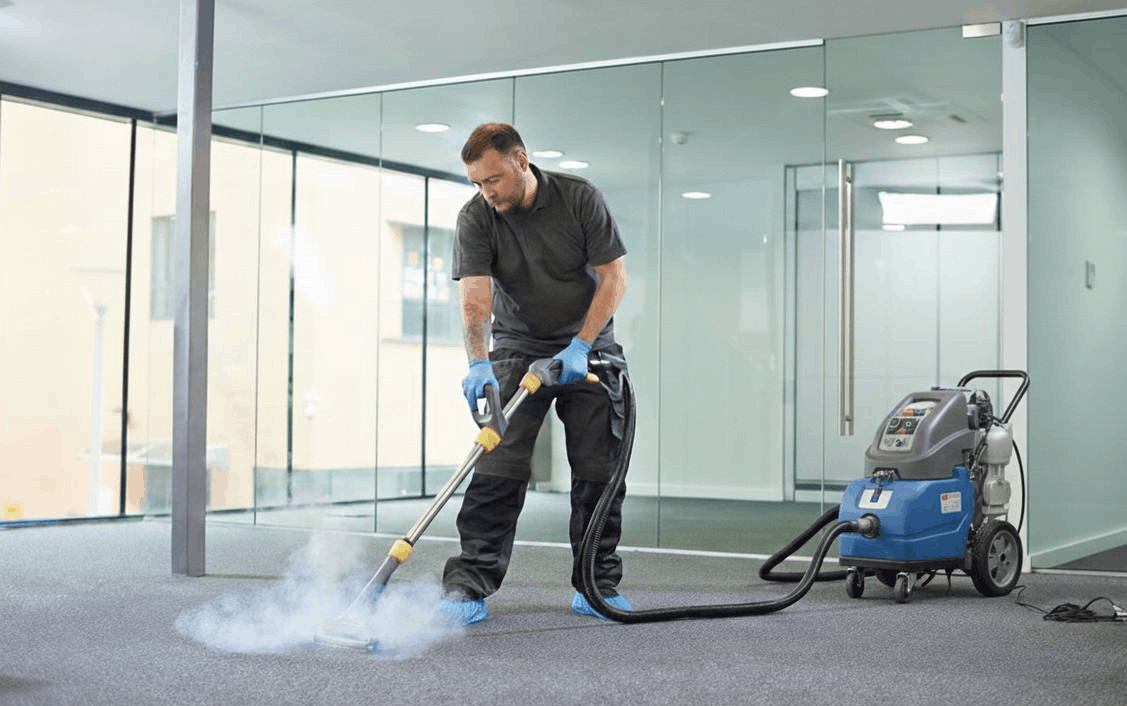
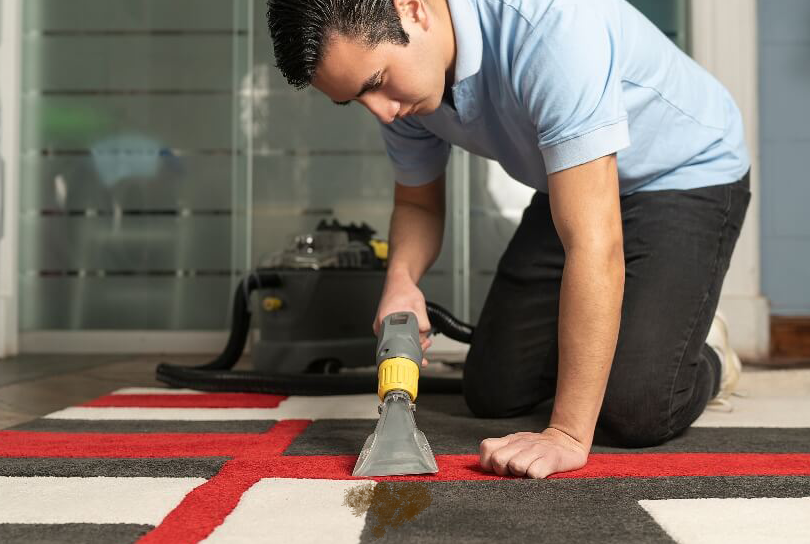
Do not apply steam or high heat to an untreated blood stain. Heat may set the remaining proteins into the fibres. Professional hot-water extraction, where appropriate, should only follow proper inspection and pre-treatment.
Aggressive scrubbing
Scrubbing may spread the stain, damage the pile and create a visibly worn patch. Blotting is slower but safer.
Bleach
Household bleach can permanently remove carpet colour and weaken fibres. It should not be used as an ordinary blood-stain remover.
Ammonia on unknown or natural fibres
Ammonia can damage wool and other sensitive materials. It also creates a serious safety hazard when mixed with chlorine bleach.
Safety warning: Never mix bleach with ammonia, vinegar, acidic cleaners or other household chemicals. Dangerous fumes may be produced. If one product has already been applied, do not add another without identifying and fully removing the previous residue.
How Treatment Changes by Carpet Type
Carpet type | Main concern | Safer approach |
Synthetic carpet | Spreading and detergent residue | Cold-water blotting followed by a compatible enzyme cleaner |
Wool carpet | Heat, alkalinity and excess moisture | Use only a wool-safe product or arrange professional treatment |
Light-coloured carpet | Visible staining and bleaching risk | Patch-test every oxidising product |
Dark or coloured carpet | Permanent colour loss | Avoid unverified peroxide and bleach treatments |
Loop-pile carpet | Snagging and pulled loops | Use a spoon or blunt scraper rather than a stiff brush |
Handmade rug | Dye bleeding and structural damage | Avoid DIY chemical treatment and request specialist assessment |
A product described as carpet-safe is not automatically safe for every carpet. Always check whether the instructions specifically mention the relevant fibre.
Why Does a Blood Stain Come Back After Cleaning?
A stain that initially disappears but returns after drying may be caused by wicking. Moisture can dissolve residue held deeper in the pile or backing and carry it back towards the surface during evaporation.
The mark may also reappear because too much detergent was used or the product was not rinsed away. Sticky residue attracts surrounding soil, making the treated area gradually look darker.
Other possible causes include incomplete extraction, moisture trapped in the underlay and treating only the visible surface of a deeper stain.
Our guide to why carpet stains come back after cleaning explains how residue and contamination below the surface can cause a mark to return.
When Should You Call a Professional Carpet Cleaner?
Consider professional treatment when:
- The carpet is made from wool, silk or another delicate fibre.
- The affected item is a handmade or valuable rug.
- The stain is large, old or deeply absorbed.
- Blood may have reached the backing or underlay.
- The source of the blood is unknown.
- Previous cleaning products have already been applied.
- The carpet becomes pale, sticky, stiff or distorted.
- The stain returns after the area dries.
- A persistent odour remains.
- The stain is in a rental property, hotel or commercial environment requiring controlled treatment.
Old blood stains may require fibre-specific chemistry and controlled extraction through a professional spot and stain removal service in London.
If you are unsure which treatment is safe, send clear photographs of the stain, the surrounding fibres and any available carpet label, together with your postcode, via WhatsApp. Hi Carpet Cleaner can provide a free initial assessment and advise whether specialist stain treatment is appropriate before any work is booked.
Treatment results depend on the carpet fibre, colour stability, age and depth of the stain and any products previously applied. Permanent dye loss or fibre damage cannot be removed through cleaning.

Frequently Asked Questions
Can dried blood be completely removed from carpet?
Many dried blood stains can be reduced or removed, particularly when they are small and have not penetrated the carpet backing. The final result depends on the carpet material, stain age, previous cleaning attempts and whether heat has already been applied. Complete removal cannot be guaranteed.
What dissolves dried blood on carpet?
Cold water can rehydrate dried surface residue, while a compatible enzyme cleaner may help break down the remaining protein-based stain. Remove loose dry particles before adding moisture, and check that the product is suitable for the carpet fibre and colour.
Why should you use cold water on blood stains?
Blood contains proteins that can become more firmly attached to fibres when exposed to heat. Cold water is therefore a safer starting point. Hot water, steam and high-temperature drying should be avoided until the stain has been properly assessed and treated.
Does hydrogen peroxide bleach carpet?
Yes, hydrogen peroxide may lighten or remove carpet dye, particularly on dark or colour-sensitive fibres. It should not be applied without checking the manufacturer’s guidance and completing a hidden patch test. Delicate and natural-fibre carpets may require professional treatment.
Can dried blood be removed without hydrogen peroxide?
Not every enzyme cleaner is safe for wool. Some products may affect natural protein fibres or use unsuitable chemistry. Only use a cleaner that specifically confirms wool compatibility, and always follow the manufacturer’s instructions and conduct a hidden patch test.
Is an enzyme cleaner safe for wool carpet?
Not every enzyme cleaner is safe for wool. Some products may affect natural protein fibres or use unsuitable chemistry. Only use a cleaner that specifically confirms wool compatibility, and always follow the manufacturer’s instructions and conduct a hidden patch test.
Can I steam-clean a blood stain?
Do not apply steam directly to an untreated blood stain because heat may make the remaining protein more difficult to remove. The stain should be identified and pre-treated first. Professional extraction may be used later when appropriate for the carpet.
Why did the stain return after the carpet dried?
The stain may have penetrated deeper into the pile or backing and moved back towards the surface as the carpet dried. Remaining detergent can also attract dirt and recreate a dark mark. Repeated surface wetting may make this problem worse.
Can professional carpet cleaning remove old blood stains?
Professional treatment may significantly improve many old blood stains using fibre-specific products and controlled extraction. Success depends on the age and depth of the stain, carpet type, colour stability and any previous chemicals or heat used on the area.