Quick answer
To clean a shag rug safely, remove loose debris first, vacuum gently with suction only and the beater bar switched off, then blot stains instead of scrubbing. Deep cleaning depends on the rug’s fibre, backing and care label, so avoid soaking delicate or unknown materials. Dry the rug completely with good airflow, then gently restore the pile once it is fully dry.
Shag rugs feel soft and luxurious because their fibres are longer than those of a typical low-pile rug, but that same construction makes cleaning more demanding. Dust can settle near the base of the pile, rotating vacuum brushes can catch long fibres, stains can spread when scrubbed, and thick backing may stay damp long after the surface feels dry. The safest way to clean a shag rug is therefore to start with the least aggressive method and only add moisture when the fibre, backing and care instructions allow it.
Why Shag Rugs Need a Different Cleaning Method
A high pile can trap crumbs, grit, hair and fine dust below the visible surface. If those particles are left in place, foot traffic works them deeper into the fibres. At the same time, aggressive cleaning can create a different problem: tangling, fuzzing, shedding, matting or distortion of the pile.
Moisture also behaves differently in a thick rug. The top of the pile may feel dry while the lower fibres or backing are still damp. Putting the rug back too early can encourage musty odours and slow drying. For this reason, shag rug cleaning is as much about controlled handling and drying as it is about removing dirt.
Before You Clean: Check the Fibre, Backing and Care Label
Before using any cleaning product or wet method, check the care label and identify the fibre if you can. Synthetic polypropylene and polyester shag rugs are often more tolerant of routine home care than wool, viscose or handmade rugs, but the backing, dyes and manufacturer’s instructions still determine what is safe. Cotton rugs may sometimes be washable, but only where the label specifically allows it and the rug fits the machine and drying instructions.
Next, test any cleaning solution on a hidden area. Press a clean white cloth onto the test area after applying the product as directed. If colour transfers, the texture changes or the fibres react unexpectedly, stop. A colourfastness test does not make every method safe, but it can reveal an obvious dye-stability problem before you treat a visible area.
Situation | Home care? | Best next step |
Dry surface dirt on a synthetic shag rug | Usually | Shake gently and vacuum with suction only. |
Small fresh spill on a colourfast rug | Usually | Blot promptly and use minimal fibre-compatible treatment after testing. |
Small rug clearly labelled machine-washable | Yes, if the label permits | Follow the stated load, water-temperature and drying instructions. |
Wool, viscose, handmade, antique or unknown rug | Limited | Routine gentle vacuuming may be suitable; avoid full wet cleaning without assessment. |
Old stain or pet urine that has reached the backing | Prefer professional help | Surface cleaning may not reach the contamination. |
Dye transfer, loose edges, damaged fringe, holes or persistent musty smell | No | Stop DIY cleaning and arrange an assessment. |
If you are dealing with a handmade or Persian rug rather than an ordinary synthetic shag rug, use Hi Carpet Cleaner’s guide to How to Wash a Persian Rug instead of applying a general shag-rug washing method.
How to Clean a Shag Rug at Home Step by Step
For a rug that is in good condition and suitable for home maintenance, work through the following steps from dry cleaning to more involved treatment. Do not jump straight to shampooing or soaking simply because the rug looks heavily soiled.
1. Shake Out Loose Dirt and Debris
If the rug is small and easy to handle, take it outside and shake it gently to release loose crumbs, grit and dust. Support the rug rather than pulling from the fringe or a weak edge. A very large, delicate or damaged rug should not be aggressively beaten, as the force can stress the backing, edges or fringe.
2. Vacuum the Shag Rug Without Pulling the Pile
The safest answer to how to vacuum a shag rug is to avoid a rotating beater bar or brush roll. Long fibres can wrap around the brush, causing pulls, fuzzing or damage. Switch the rotating brush off where possible and use suction-only cleaning with a bare-floor or upholstery attachment. If your vacuum has adjustable suction, start lower rather than using maximum power.
Move slowly in the direction of the pile and avoid repeatedly dragging the attachment against the fibres. If the rug construction is stable and the care instructions allow it, vacuuming the reverse can help remove dry soil that has worked down towards the base. Always make sure the rug is completely dry before vacuuming after any wet treatment.
3. Spot-Clean Fresh Spills and Stains
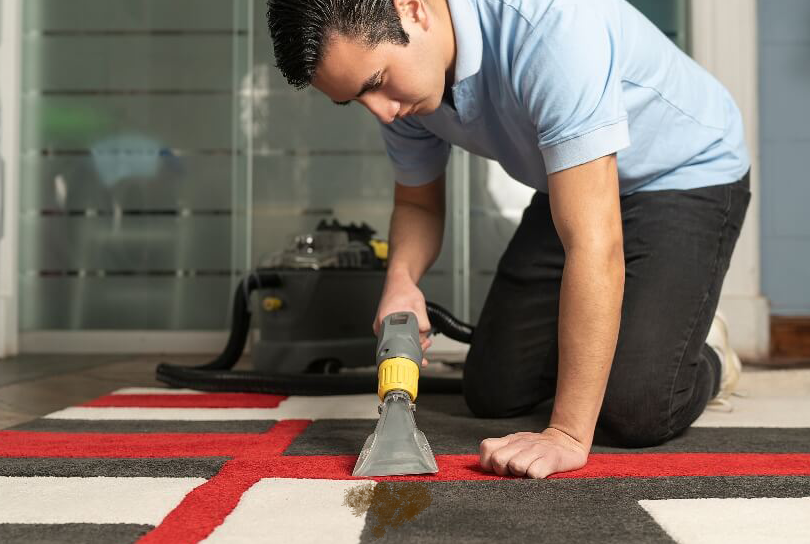
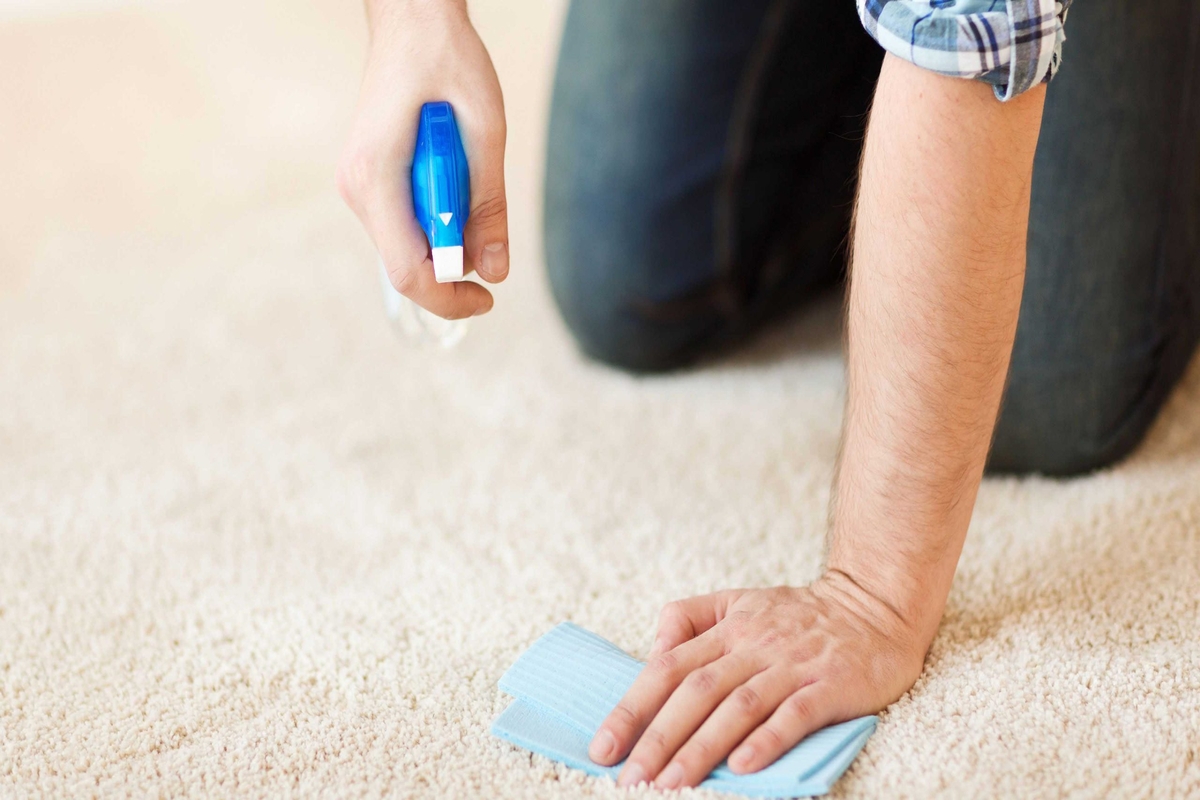
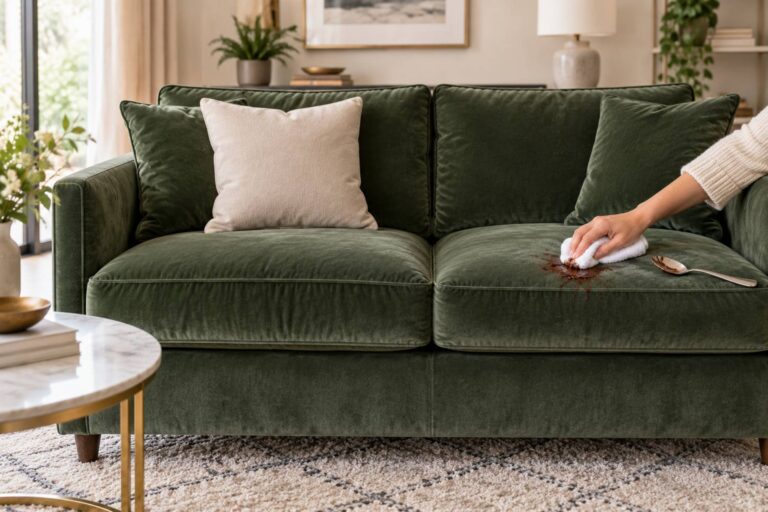
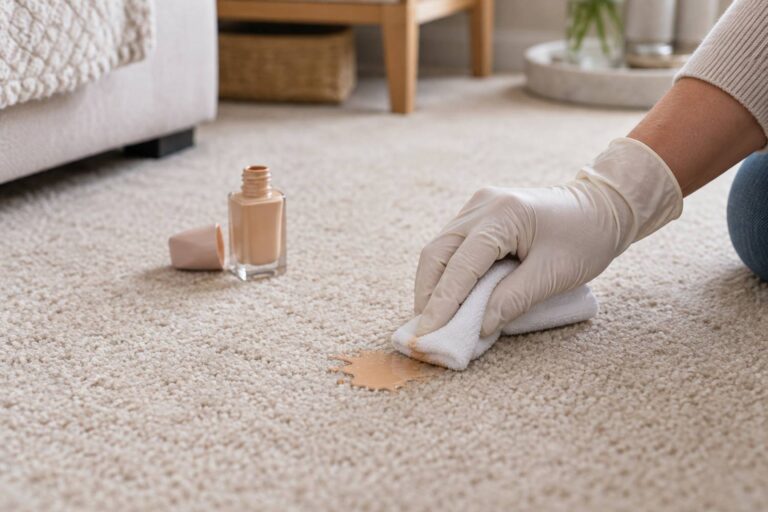
For a fresh spill, lift any solids first with a spoon or blunt edge. Then press a clean white cloth or absorbent towel onto the liquid. Blot rather than rub. Scrubbing pushes contamination across the pile and can tangle or roughen the fibres.
Work from the outside of the mark towards the centre so you do not spread it. Use only a rug-appropriate product that is compatible with the fibre, and test it in a hidden area first. Apply as little moisture as needed and continue blotting with a clean section of cloth.
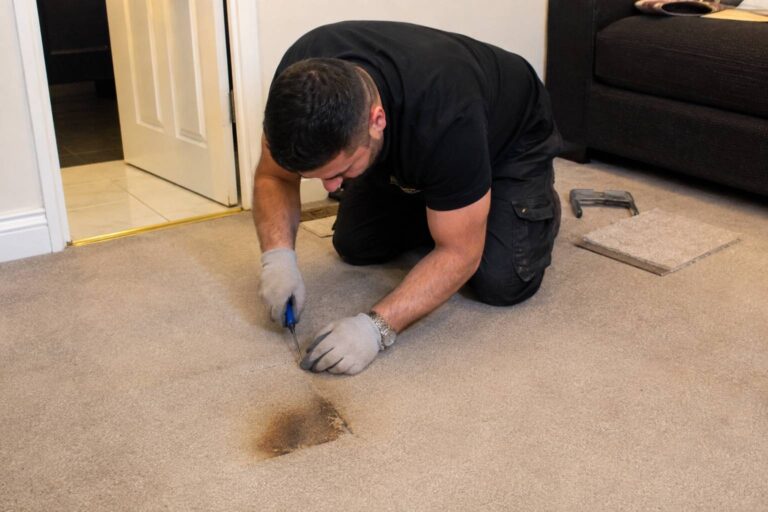
If the stain is old, large, unknown, has been treated with several products already, or appears to have reached the backing, it is safer to stop experimenting. Hi Carpet Cleaner offers Professional Spot & Stain Removal Services for localised stains where a controlled, fibre-appropriate treatment is needed.
4. Deep Clean Only If the Rug Is Suitable for Wet Cleaning
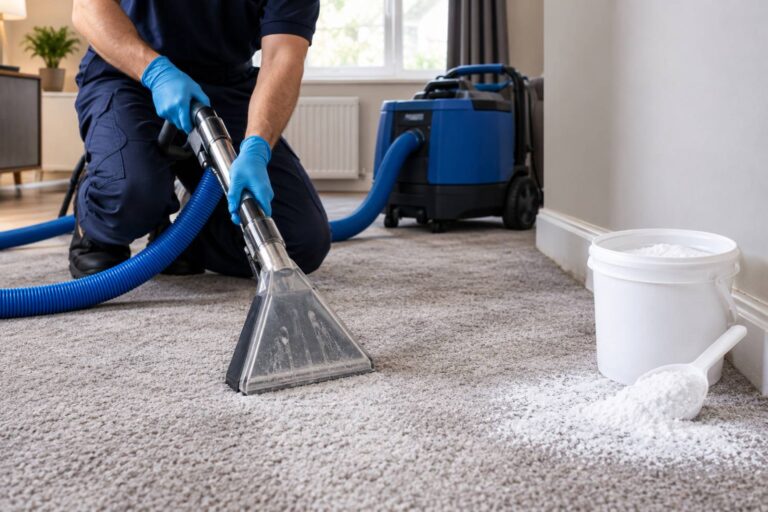
How to deep clean a shag rug depends on the care label, fibre, dyes and backing. There is no single safe wet-cleaning recipe for every shag rug. If the label permits wet cleaning and the rug is an ordinary colourfast synthetic construction, use minimal moisture, gentle agitation and a rug-compatible cleaning product. The aim is to loosen soil without flooding the backing or leaving heavy product residue behind.
Do not assume a washing machine, steam cleaner, carpet washer or full soak is safe simply because the rug is synthetic. The backing may contain materials or adhesives that react badly to saturation, and a heavy wet rug can be difficult to rinse and dry evenly.
For wool, viscose, handmade, antique, high-value, unstable-dye or unknown rugs, full DIY wet cleaning is a much higher-risk choice. A professional cleaner can inspect the rug and decide whether on-site cleaning or more controlled workshop treatment is appropriate.
5. Dry the Rug Completely
Drying is one of the most important stages of shag rug cleaning. Long fibres can feel dry at the tips while moisture remains near the base or in the backing. Improve ventilation, create steady airflow and, where appropriate, elevate the rug so air can reach both sides. Avoid direct high heat, which can affect fibres, dyes or backing materials.
Do not put the rug back on the floor, place furniture on it or walk heavily over it until it is dry all the way through. If the rug develops a persistent damp or musty smell after cleaning, the issue may be deeper than the surface. See the separate guide on how to get smells out of a rug for the next steps and signs that deeper treatment may be needed.
6. Fluff and Restore the Pile
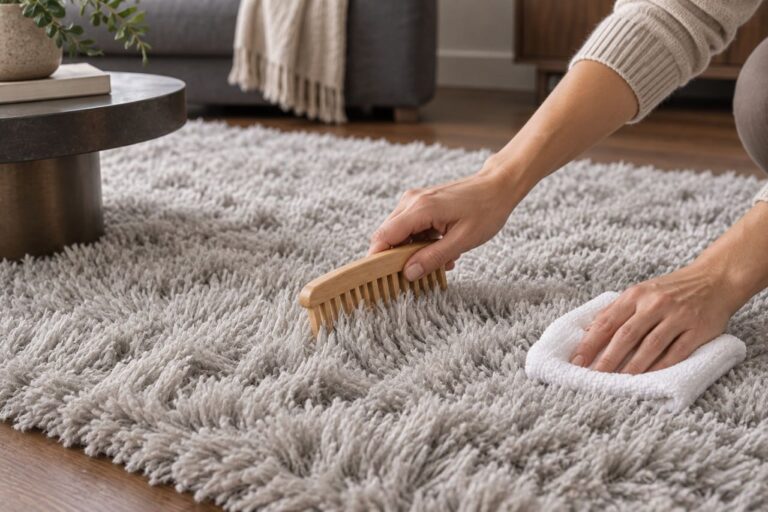
Once the rug is fully dry, use your fingers, a wide-tooth comb or a suitable rug rake very gently to separate flattened fibres. Work in small sections and follow the natural direction of the pile. Do not pull on loose tufts or try to “brush out” a damaged area with force. If the pile, fringe or edges are physically damaged, cleaning will not repair the structure.
For frayed fringes, worn pile, holes, loose edges or other structural problems, see Hi Carpet Cleaner’s rug repair service in London rather than continuing to clean the damaged area.
Can You Wash a Shag Rug?
Only wash a shag rug if its care label and construction allow it. Some small machine-made rugs are specifically designed for machine washing; many others are not. A label that permits washing should be followed exactly, including temperature, cycle, load capacity and drying instructions.
For a non-machine-washable shag rug, full immersion can create several problems at once: the saturated rug becomes very heavy, detergent may be difficult to rinse from the deep pile, dyes can move, backing materials may distort, and slow drying can lead to persistent odour. If the label is missing or unclear, treat that uncertainty as a reason to use a less aggressive method—not as permission to wash it.
How Cleaning Changes by Shag Rug Material
The best way to clean a long-pile or high-pile rug depends heavily on fibre type. Use these distinctions as a starting point, then defer to the manufacturer’s care instructions.
Material | Home-care approach | Main risk to avoid |
Polypropylene / polyester | Gentle vacuuming and careful spot cleaning are often manageable; wet cleaning only if the label/backing permits. | Beater-bar damage, over-wetting and residue. |
Wool | Gentle suction and prompt blotting; use low agitation and avoid generic strong detergents. | Felting, dye movement, shrinkage and slow drying. |
Cotton / labelled washable rugs | Follow the care label, machine capacity and drying instructions exactly. | Overloading the machine, distortion and incomplete drying. |
Viscose / delicate fibres | Keep DIY treatment minimal and seek assessment for staining or deep cleaning. | Texture change, browning, water marks and distortion. |
Handmade / antique / unknown construction | Routine dry maintenance only unless the correct method is known. | Dye bleed, structural damage and irreversible fibre changes. |
What Not to Do When Cleaning a Shag Rug
- Do not use a rotating beater bar or brush roll on long pile unless the manufacturer specifically states it is safe.
- Do not scrub stains aggressively; blotting is less likely to spread the mark or mat the fibres.
- Do not flood or soak the rug unless the care label clearly permits that method.
- Do not use high heat to force faster drying.
- Do not mix cleaning chemicals or layer several household remedies on the same stain.
- Do not put a damp rug back on the floor or replace furniture before the backing is fully dry.
- Do not assume a method that works for fitted synthetic carpet is automatically suitable for a removable shag rug.
When Professional Shag Rug Cleaning Is the Safer Choice
Home maintenance is useful for ordinary dry soil and small fresh spills, but there is a point where further DIY treatment adds risk rather than value. Professional assessment is the safer choice when:
- colour transfers during testing or you can see dye bleed;
- the rug is wool, viscose, handmade, antique, high-value or of unknown construction;
- pet urine or another liquid has penetrated into the backing and the smell returns after surface cleaning;
- a stain is old, set in, large or chemically unknown;
- the rug is too large or heavy to rinse and dry evenly at home;
- there is a mould or persistent musty-smell concern;
- the fringe, edges, backing or pile is already damaged.
Hi Carpet Cleaner provides professional rug cleaning in London for rugs that need assessment-based cleaning. If you want to understand likely pricing before booking, see the current rug cleaning cost in London guide. For an initial assessment, you can send clear photographs of the full rug, its reverse/backing, the care label and any stains or damaged areas.
Shag Rug Maintenance Between Deep Cleans
Regular maintenance reduces how often a shag rug needs intensive cleaning. Vacuum gently according to traffic levels, pets and household conditions rather than following a rigid calendar. Rotate the rug periodically so wear is shared more evenly, and deal with spills as soon as they happen.
Keep both the rug and the floor beneath it dry. If a rug has been moved for cleaning, check the underside before replacing it. In homes with pets, frequent dry soil and hair removal can also stop debris becoming compacted near the base of the pile. The key is consistency: light, safe maintenance is preferable to repeated aggressive deep cleaning.
Frequently Asked Questions
What is the best way to clean a shag rug without damaging the pile?
Start with dry methods: shake out loose debris and vacuum gently with suction only, keeping the rotating brush switched off. Blot fresh spills rather than scrubbing. Only use wet cleaning if the care label, fibre and backing allow it, then dry the rug completely before gently restoring the pile.
Can you vacuum a shag rug with a normal vacuum cleaner?
Yes, provided you can use it without a rotating beater bar or aggressive brush roll. Use a suction-only, bare-floor or upholstery attachment and lower suction if the machine allows it. Stop if the fibres are being pulled, wrapped around the head or visibly distorted.
Should the beater bar be used on a shag or high-pile rug?
Usually not. A rotating brush can catch and pull long fibres, leading to fuzzing, tangling or damage. Switch it off where possible and use suction-only cleaning. If the rug manufacturer gives different instructions for a specific construction, follow those instructions.
Can you wash a shag rug in a washing machine?
Only if the care label specifically states that the rug is machine-washable and the rug fits safely within the machine’s load capacity. Many shag rugs are too large, too heavy when wet or contain backing materials that should not be saturated.
How do you deep clean a shag rug at home?
First identify the fibre and check the care label. For a suitable colourfast synthetic rug, use minimal moisture, gentle agitation and a rug-compatible cleaner, then remove residue and dry thoroughly. Avoid full DIY wet cleaning on wool, viscose, handmade, antique or unknown rugs.
How do you remove a stain from a shag rug without matting the fibres?
Lift solids, then blot liquid with a clean white cloth from the outside of the stain inward. Do not scrub. Test a fibre-compatible product in a hidden area and use as little moisture as needed. Old, large or unknown stains are better assessed professionally.
How do you make a shag rug fluffy again after cleaning?
Wait until the rug is completely dry. Then separate flattened fibres gently with your fingers, a wide-tooth comb or a suitable rug rake, working in small sections. Do not tug loose fibres or force a comb through areas that are matted or structurally damaged.
How often should a shag rug be cleaned?
There is no single schedule for every shag rug. Vacuuming frequency should reflect foot traffic, pets, dust levels and the manufacturer’s guidance. Deep cleaning should be based on actual soiling and fibre suitability rather than a fixed number of months.
When should a shag rug be professionally cleaned?
Use professional help when dyes transfer, odour returns after cleaning, urine has reached the backing, the stain is old or unknown, the rug is large and difficult to dry, or the rug is wool, viscose, handmade, antique, high-value or structurally damaged.