Viscose rugs have a soft, silk-like sheen, but their appearance can change surprisingly quickly after a spill or an unsuitable cleaning attempt. Routine maintenance and treating a stain are two very different jobs: the first is usually manageable at home; the second may need specialist advice.
Quick answer: The safest way to clean a viscose rug at home is to follow its care label, vacuum gently without a rotating brush and blot fresh spills with a dry white cloth. Do not scrub, soak, steam clean or use ordinary carpet shampoo as a default. For an existing watermark, stubborn stain or deep clean, have the rug assessed before applying anything else.
Viscose rug cleaning: what is safe, what needs caution and when to stop
| Decision | What it means |
|---|---|
| SAFE | Gentle suction-only vacuuming; removing accessible loose debris; blotting fresh liquid with a clean, dry white cloth. |
| CAUTION | Any care-label-approved spot treatment; handling damp fringes or an uncertain blend; drying a patch when the backing may be wet. |
| STOP | Scrubbing, carpet-shampoo machines, home steam cleaning, soaking, unapproved stain removers, dye transfer or a spreading wet mark. |
Why does viscose need different care from other rug fibres?
Viscose, also called rayon, is a regenerated cellulose fibre often used to create a silky appearance at a lower cost than natural silk. It can be more vulnerable to rubbing and distortion when damp. Moisture may also alter how the pile reflects light, so an area can appear lighter, darker or flattened even after the liquid itself has gone.
Construction matters too. A rug might combine a viscose face pile with cotton, wool, synthetic materials or an adhesive-backed base, and each layer can react differently. Terms such as “art silk” or “bamboo silk” are not always precise descriptions of fibre composition. Lyocell and modal are related regenerated cellulose fibres, but should not be treated as identical to standard viscose. If the label is unclear, identify the material before any wet treatment.
How to Clean a Viscose Rug at Home: A Safe Routine
Step 1: Read the care label and inspect the rug
Check the sewn-in label and any instructions from the original retailer or maker. Look for the pile composition, backing, cleaning restrictions and warnings about water or mechanical agitation. Examine the rug for loose threads, unstable fringes, worn areas and previous water marks. If the rug is damaged or the material is uncertain, limit yourself to low-risk dry care until an expert can advise.
Step 2: Vacuum with minimal agitation
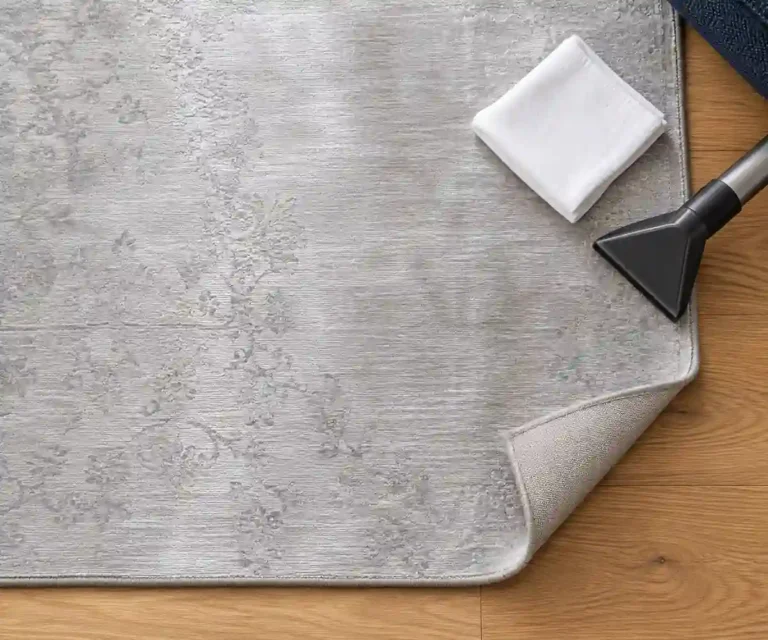
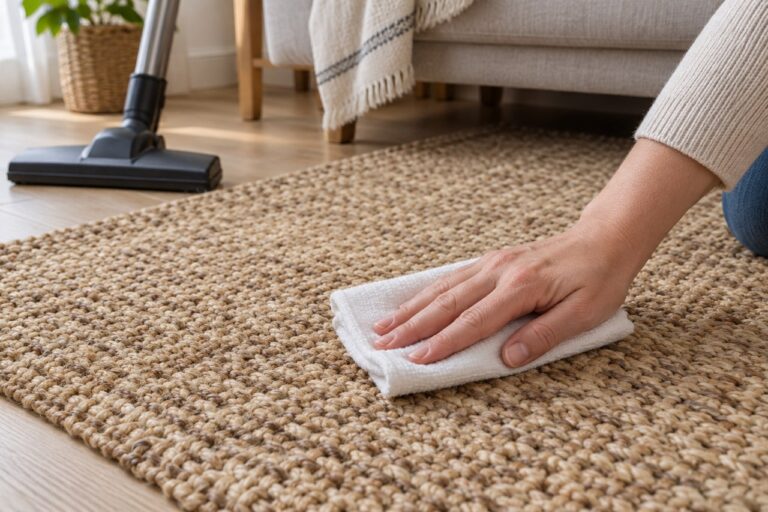
Use a suction-only attachment or a suitable vacuum setting without a rotating beater bar. Start with gentle suction, keep the head moving smoothly and avoid repeated hard passes. Do not drag the vacuum over delicate fringes or pull on loose yarns. For a valuable or visibly fragile rug, ask the maker or a rug specialist which attachment and level of suction are appropriate.
Step 3: Prevent soiling rather than washing it out
Remove surface dust before it is ground into the pile. Reduce grit tracked in from shoes, rotate the rug when its construction and placement allow, and use a suitable rug pad to limit slipping and friction. Avoid placing a viscose rug where spills, persistent dampness or heavy foot traffic are frequent. These steps maintain appearance; they do not remove set-in stains or deeply embedded contamination.
What Should You Do Immediately After a Spill?
The first minute is about preventing a small accident from becoming a larger wet patch. Work gently and avoid testing household mixtures while the rug is damp.
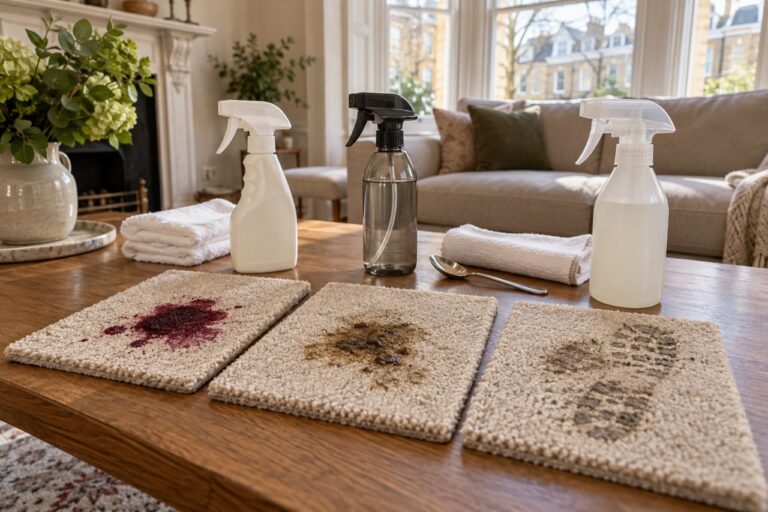
- Remove loose solids carefully. Lift food or other debris with the edge of a spoon or similar blunt tool; do not press it into the fibres.
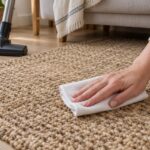
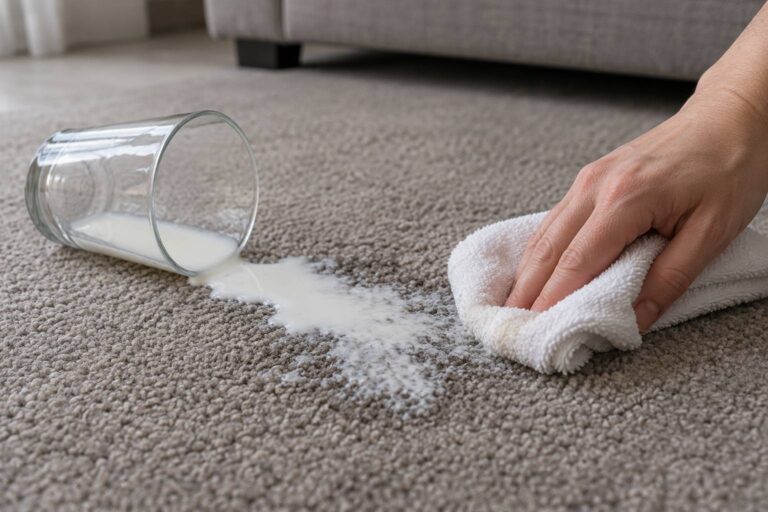
- Blot excess liquid. Press a clean, absorbent, dry white cloth or white paper towel onto the spill and lift it away. Repeat with a dry section as needed.
- Do not rub or scrub. Friction can distort damp viscose fibres and spread colour into surrounding pile.
- Protect the surrounding area. Keep shoes and furniture off the damp patch and protect the floor beneath if this can be done without dragging or damaging the rug.
- Stop and seek advice when necessary. If colour transfers to the cloth, the mark spreads, the backing is soaked or the spill is large, stop home treatment.
For a small fresh spill, blotting may be all that is appropriate without further instructions. It is first aid, not proof that the stain has been removed. If the rug is already wet over a wide area, do not continue handling it as though it were a routine spot.
How to Spot Clean Viscose Rug Stains Without Causing More Damage
Fresh spills and dried-on marks are not the same
On a fresh liquid spill, absorb what you can with a dry white cloth. If the spill has dried, resist re-wetting it to “loosen” the stain: the liquid may spread into the backing and leave a ring. Avoid trying several products in succession. Even an inconspicuous patch test cannot establish that a chemical or wet-cleaning method is safe for the entire rug.
Coffee, wine, grease and pet accidents: different risks
Tea, coffee and red wine may introduce colour as well as moisture; prompt gentle blotting can limit the amount absorbed, but it does not guarantee removal. Oily foods and cosmetics can leave residues that are difficult to lift without a fibre-appropriate product. Urine presents an additional concern because liquid may reach deeper layers and cause lingering odour or colour change. Blot accessible moisture but do not saturate the area with deodoriser or enzyme cleaner unless the exact rug-care instructions support it.
For a stubborn local mark, specialist spot and stain removal in London may be considered following an assessment of the material and previous treatments. Do not assume treatments used on ordinary synthetic carpet, wool or upholstery are suitable for viscose.
What Causes Water Stains and Dark Rings on Viscose Rugs?
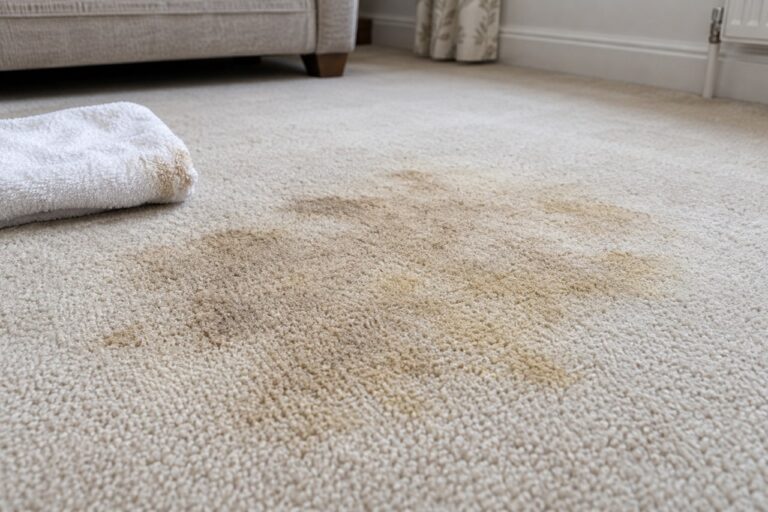
A water mark is not always dirt that can simply be washed away. Moisture can change the direction, texture or sheen of the pile, producing a visible outline where one area reflects light differently. Depending on the rug and what became wet, discoloration may also involve migrating dyes, old contamination, backing materials or cleaning-product residue.
Look at whether the mark appeared immediately, emerged as the area dried or followed the use of a cleaning solution. Those clues can help a specialist assess the cause, but appearance alone cannot reliably distinguish a removable deposit from permanent dye or fibre change.
Our explanation of why carpets and rugs can turn brown or yellow after cleaning covers related mechanisms such as wicking and cellulosic browning. The exact cause and treatment must still be checked for a viscose rug; advice for other fibres is not automatically transferable.
How to Dry a Viscose Rug After a Spill
After gently blotting accessible surface moisture, allow air to circulate around the affected area and keep people and furniture away from it. Ventilate the room when conditions are suitable and reduce excess indoor humidity if needed. Do not direct a hairdryer, space heater or concentrated hot air at the fibres, and do not brush or comb a damp patch aggressively.
Check whether the floor, underlay or backing may also be wet. If water has penetrated beneath the pile, if colours are moving or if the area is extensive, professional drying advice is safer than repeated blotting or attempting to lift and move a heavy wet rug. There is no reliable universal drying time: construction, humidity, ventilation and spill size all matter.
Can You Wash, Steam Clean or Deep Clean a Viscose Rug?
Can a viscose rug go in the washing machine?
Generally, no. Most viscose area rugs should not be machine washed: tumbling, immersion and mechanical agitation may alter the pile or backing. Only consider a method expressly authorised by the manufacturer for that exact rug, including its size and construction.
Is steam cleaning a viscose rug safe?
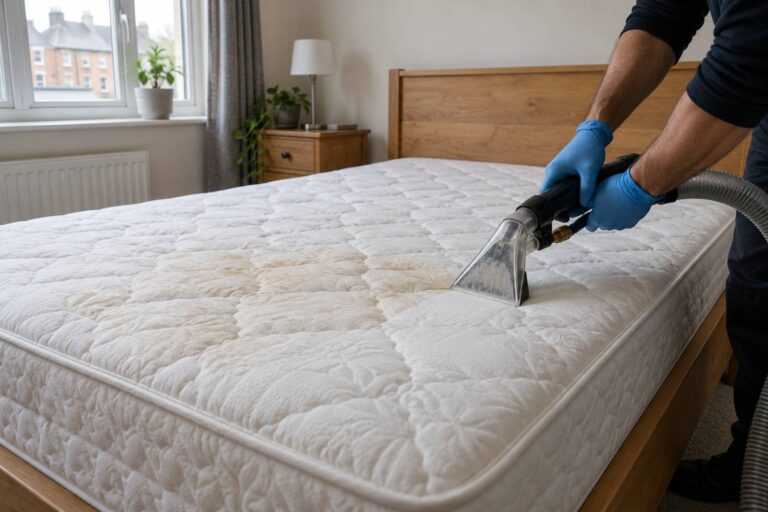
A domestic steam cleaner or hot-water extraction machine is not a safe default. Heat, moisture and repeated movement can increase the risk of water marks, texture change or colour movement. Do not hire a carpet-cleaning machine and assume a “delicate” setting makes the process suitable.
What if the rug needs a deep clean?
Deep cleaning is not the same as surface maintenance. A specialist may be able to select a controlled treatment after examining the fibre, dyes, backing and condition, but some rugs may not tolerate the proposed cleaning or may already have irreversible damage. It is not accurate to say that every professional method uses water or that every viscose rug is impossible to treat. The correct decision depends on the rug, not a universal recipe.
When Is Professional Viscose Rug Cleaning the Better Option?
Arrange an assessment rather than another DIY attempt when you notice any of the following:
- a yellow, brown or pale water ring that remains after drying;
- a large wine, coffee or greasy stain, or a stain that has already been treated unsuccessfully;
- pet urine, persistent odour or suspected moisture in the backing;
- dye transfer, a flattened or roughened pile, loose yarns or a fragile fringe;
- uncertain fibre content, an expensive designer rug or a rug with sentimental value.
What a careful professional assessment should involve
The process should begin with identifying the fibre and construction, checking the visible condition and previous treatments, and assessing the stability of the colour and pile. Appropriate testing can then inform whether localised treatment, controlled workshop cleaning or no further treatment is the safer recommendation. Drying requirements and the limits of stain removal should be discussed before work begins.
Hi Carpet Cleaner provides professional rug cleaning in London and assesses rugs individually to determine whether on-site care or workshop treatment may be suitable. You can request a rug assessment and share the label, stain history and clear photographs before any cleaning is agreed. The outcome depends on the rug’s condition; stain removal or restoration of the original sheen cannot be guaranteed.
Viscose Rug Maintenance: How to Protect the Pile
- Use gentle suction-only vacuuming where the care label allows; keep rotating brushes away from the pile.
- Keep outdoor grit and dirty footwear away from the rug, especially in busy walkways.
- Use a suitable rug pad and rotate the rug periodically if its shape and construction allow.
- Keep the rug away from spill-prone locations and sustained dampness.
- Blot fresh spills promptly with a dry white cloth; never rub wet fibres.
- Keep a record of any stain products previously used so a specialist can assess the risk.
FAQ
Can a viscose rug be washed at home?
Can you steam clean a viscose rug?
Can water stains be removed from viscose rugs?
Is it safe to use vinegar or bicarbonate of soda on viscose?
How do I know when my viscose rug needs professional cleaning?
The best way to care for a viscose rug is to minimise abrasion and unnecessary moisture: use careful dry maintenance, blot new spills without rubbing and stop when a mark needs more than first aid. For deep cleaning, recurring stains or a rug of uncertain construction, request a specialist assessment before trying a stronger method.