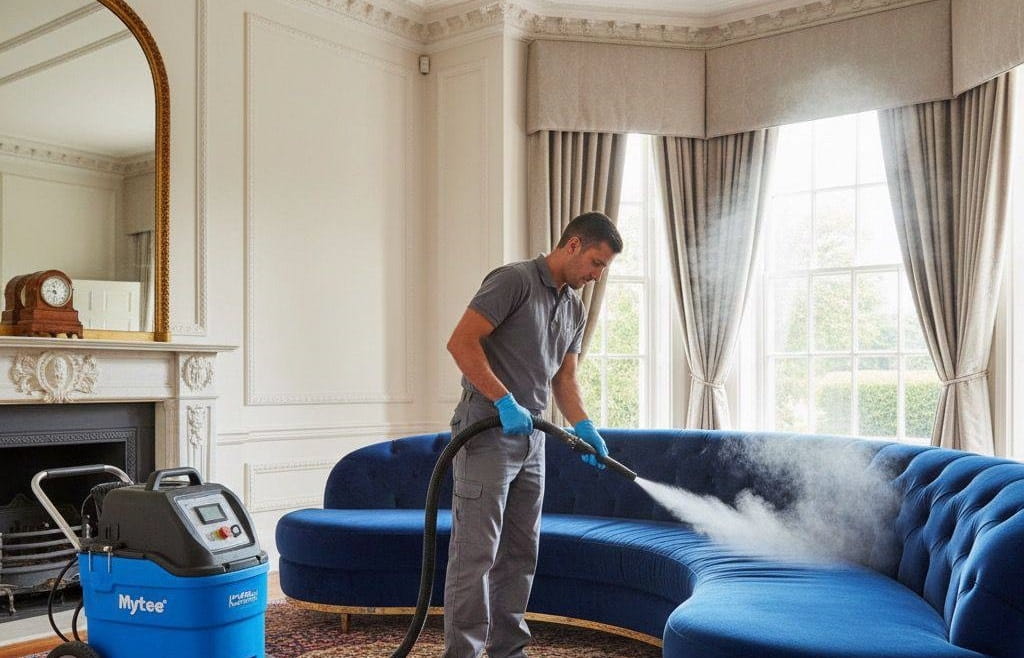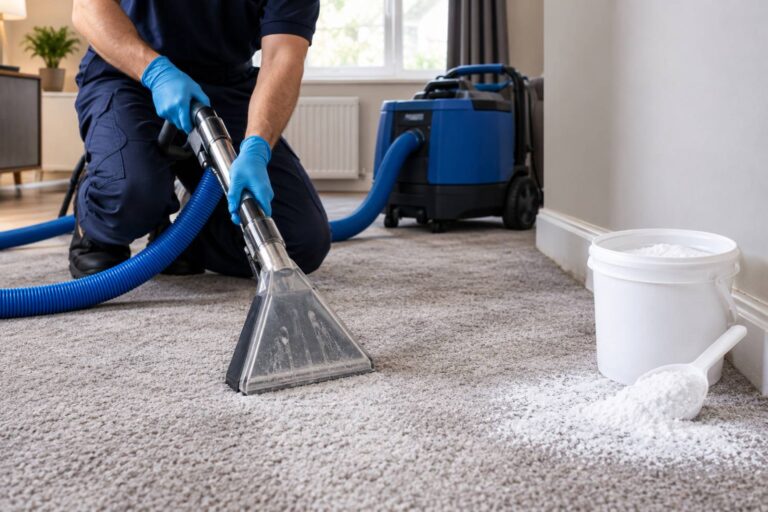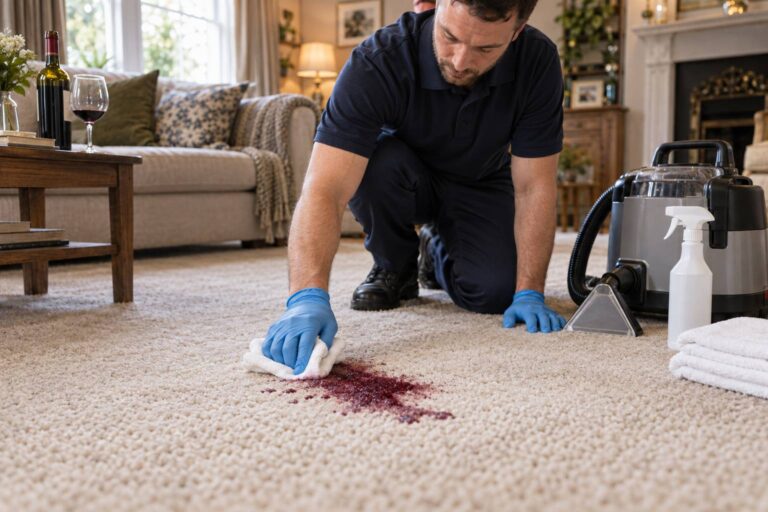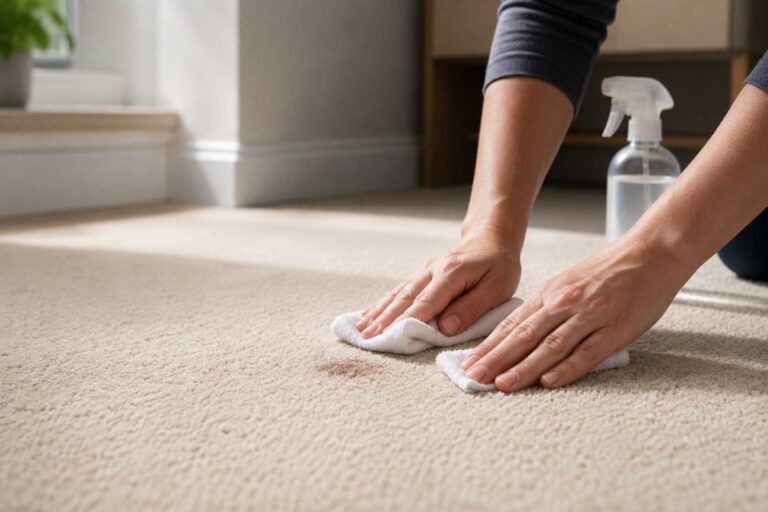
Most standard office carpet areas benefit from professional deep cleaning every 6–12 months, while entrances, receptions, corridors, stairs and other high-traffic zones often need attention every 3–6 months. There’s no single interval that suits an entire building, the right schedule depends on footfall, carpet type and how each area is used. Manufacturer maintenance instructions and warranty terms should always take priority over any general guideline. In London offices, wet weather, tracked-in grit and busy multi-tenant entrances can all shorten the interval further.
The Short Answer: Recommended Office Carpet Cleaning Frequency
As a practical starting point, standard office carpet, open-plan desk areas, meeting rooms and private offices, typically needs professional deep cleaning every 6–12 months. High-traffic zones such as entrances, lift lobbies, corridors and stairs commonly require professional attention every 3–6 months, with interim maintenance sooner if appearance declines quickly. “Professional cleaning” here means planned periodic or deep cleaning, not daily vacuuming or emergency spot treatment.
A yearly whole-office clean may be perfectly adequate for a quiet office with light footfall. Busy traffic lanes, however, often need targeted cleaning well before the rest of the floor is due.
Office Carpet Cleaning Schedule by Area and Footfall
Rather than working to one date for the whole premises, it’s usually more efficient to zone the office by traffic and soil exposure.
Office area | Typical traffic/soil exposure | Routine care | Suggested professional cleaning frequency | Review sooner when |
Entrances, reception, lift lobbies, main corridors | High — tracked-in dirt, moisture | Daily vacuuming, mat checks | 3–6 months (review appearance every 1–3 months) | Wet weather increases, matting is undersized, or soiling appears within weeks of a clean |
Open-plan desk areas | Medium — concentrated in walkways | Regular vacuuming | 6–12 months | Occupancy density rises, visible chair or walking lanes appear, hybrid peaks concentrate use |
Meeting and conference rooms | Medium, event-driven | Vacuuming, prompt spot treatment | 6–12 months | After client events, frequent use, or repeated drink spills |
Breakout areas and kitchen-adjacent carpet | Medium-high — food and drink exposure | Frequent vacuuming, immediate spill response | 3–6 months | Grease, food or drink soiling accelerates |
Private offices, boardrooms, low-use rooms | Low | Routine vacuuming | 12 months | Odour, staining or a warranty condition requires earlier attention |
Stairs and narrow funnel points | High at pinch points | Vacuuming, edge checks | 3–6 months | Footfall increases or edge wear becomes visible |
Treat these as planning ranges rather than guarantees, and remember that professional cleaning can’t reverse permanent wear, fibre damage or colour loss caused by age or foot traffic.
Ready to set a schedule? Explore our office carpet cleaning services.
What Changes How Often an Office Carpet Should Be Cleaned?
Daily footfall and traffic concentration
Total headcount matters less than where people actually walk. Entrances, routes from lifts, photocopier areas and paths to the kitchen tend to soil far faster than the rest of the floor.
Type of workplace and how the space is used
A quiet professional office differs considerably from a coworking floor, call centre, clinic reception or client-facing showroom. Some sectors have specific hygiene or contamination requirements that override a general schedule, check what applies to your workplace rather than assuming a standard interval fits.
Weather, location and entrance matting
Wet weather and tracked-in grit, a familiar issue for London offices, can shorten the interval considerably. Effective walk-off matting, properly maintained, reduces soil transfer but doesn’t remove the need for periodic professional cleaning.
Carpet construction, colour and manufacturer guidance
Carpet tiles, loop pile, light colours and different fibre types show and retain soil differently. Always check the manufacturer’s maintenance guide and warranty conditions before settling on a schedule, not every warranty requires the same interval.
Routine vacuuming and spill response
Effective vacuuming and fast spot treatment help control surface soil between professional visits. Poor routine care or repeated coffee spills should bring the next professional clean forward, regardless of the planned date.
Occupancy pattern
Hybrid working can reduce total traffic while concentrating it on particular days and routes, which may call for a more targeted rather than uniform schedule. If your workplace has specific indoor-environment policies, it’s worth arranging a site-specific maintenance assessment.
Compare that with residential guidance in how often carpets should be professionally cleaned.
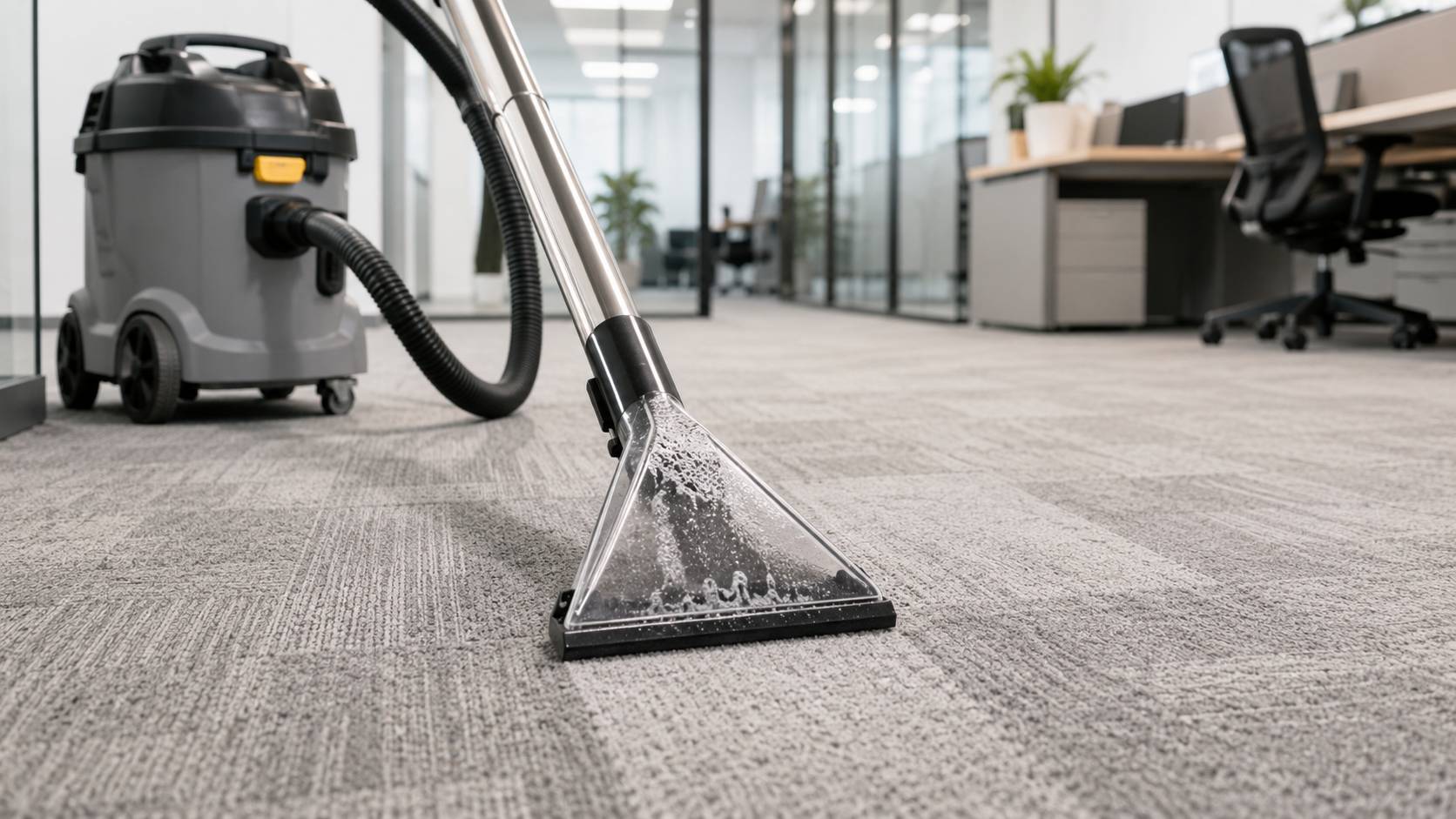
Deep Cleaning, Interim Cleaning and Spot Treatment, How They Fit the Schedule
A realistic schedule usually combines four layers of care rather than relying on one annual event:
- Routine vacuuming removes loose, dry soil and should happen daily or near-daily in busy areas.
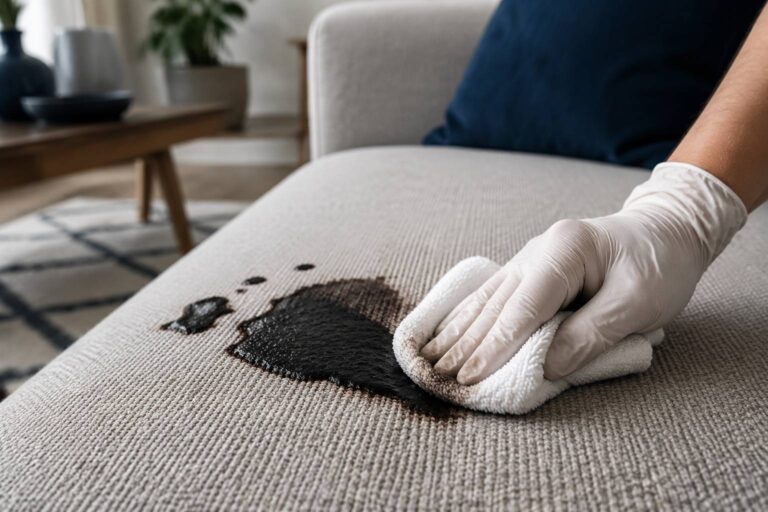
- Spot treatment addresses spills as soon as they happen, preventing them from setting.
- Interim (low-moisture) maintenance refreshes high-traffic zones between full deep cleans, extending the life of the carpet without treating the whole floor at the same frequency.
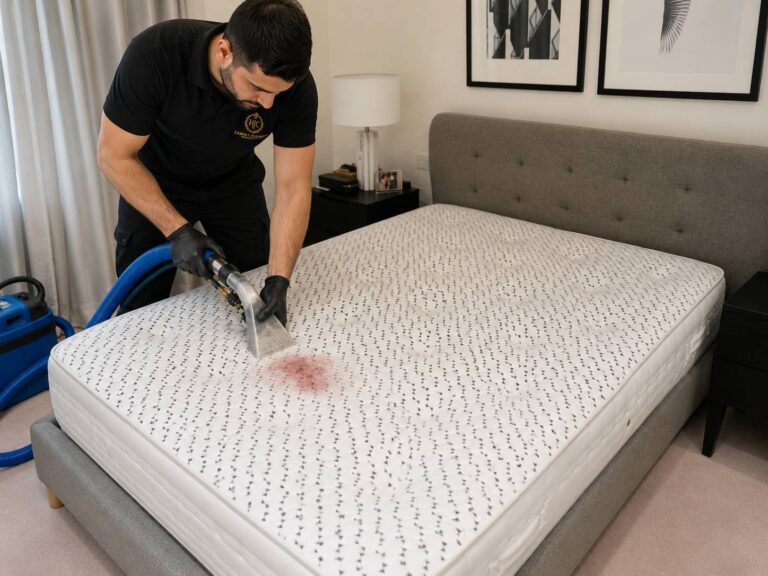
- Periodic professional deep cleaning addresses embedded, accumulated soil that vacuuming and spot treatment can’t reach.
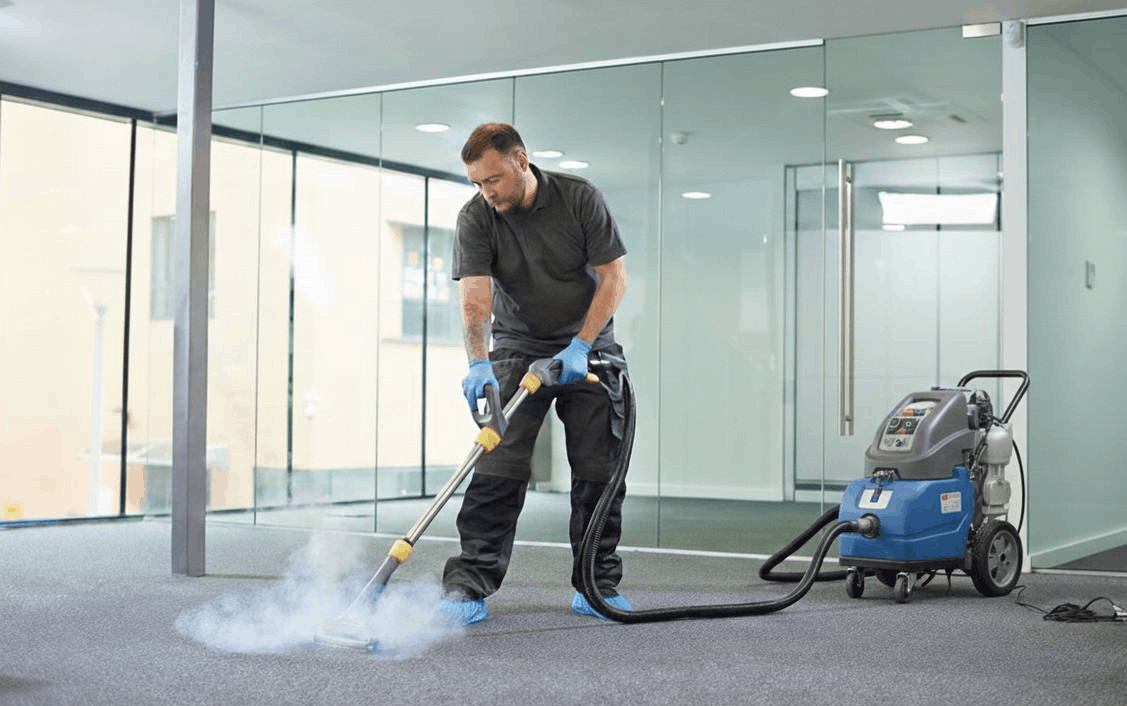
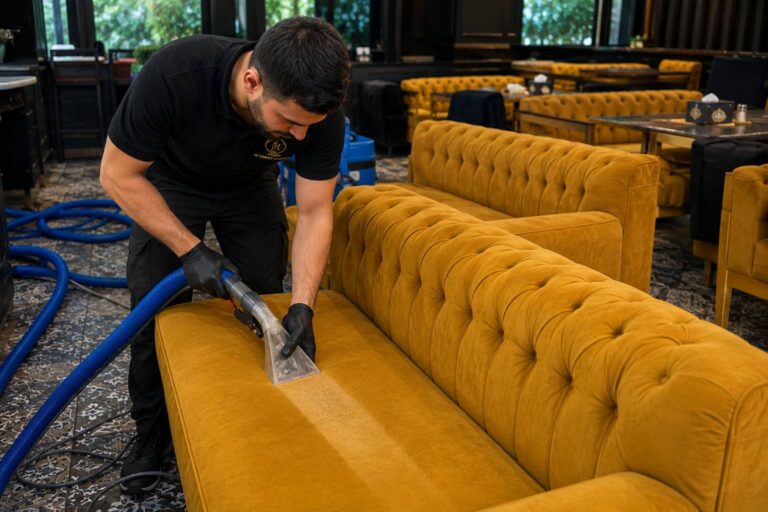
The right deep-cleaning method depends on carpet construction, backing, condition, access and the available drying window, hot-water extraction isn’t the only valid option, and the suitable process should be assessed on-site rather than assumed in advance.
Signs Your Office Carpet Should Be Cleaned Earlier
Watch for these indicators that a scheduled clean should move forward:
- Visible traffic lanes or worn paths
- Recurring or unresolved spots
- A dull, flattened appearance that vacuuming doesn’t improve
- Persistent odour once the source has been addressed
- Rapid resoiling after a recent clean
- Increased tracked-in mud during wet weather
- A major spill or leak
- Cleaning documentation needed for a warranty, lease, handover or facilities audit
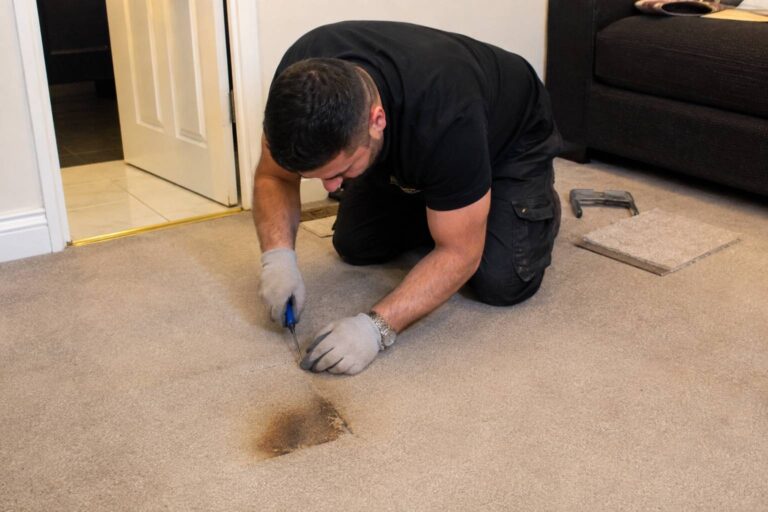
Bear in mind that fibre damage, colour loss or pile distortion may reflect wear rather than removable soil, professional cleaning won’t restore permanent damage.
When scheduling work around staff or customers, allow for how long carpets take to dry after cleaning.
How to Build a Practical Office Carpet Cleaning Schedule
A workable approach follows a few simple steps:
- Map the floor into traffic zones (entrances, desks, meeting rooms, breakout areas, low-use rooms).
- Check carpet type and warranty documentation for any manufacturer-specified intervals.
- Record occupancy patterns and known spill hotspots.
- Set separate routine, interim and deep-cleaning intervals for each zone.
- Inspect high-traffic areas monthly, even if the next clean isn’t due yet.
- Log every treatment for future reference and warranty purposes.
- Review the whole schedule after seasonal or occupancy changes.
For larger, multi-floor or mixed-use offices, a site survey is generally more reliable than applying a single interval across the building.
How to Schedule Professional Cleaning Without Disrupting Work
Most offices prefer cleaning to happen out-of-hours or over a weekend, and working zone by zone helps limit disruption to specific areas rather than closing the whole floor at once. Before booking, agree access and security requirements, and confirm a method suited to the available drying window — drying times vary by method, carpet type, ventilation, temperature and humidity, so it’s worth asking for a realistic estimate for your specific space rather than relying on a general figure. Treated areas should stay out of use until they’re confirmed safe and dry.

Offices are just one part of it, see our full commercial carpet cleaning offering.
Get a Site-Specific Office Carpet Cleaning Plan in London
As a starting point, plan for a 6–12 month baseline across standard office areas, shortened to 3–6 months for high-traffic zones such as entrances, corridors and breakout spaces. From there, adjust based on inspection findings and manufacturer guidance for your specific carpet.
Send details of your office size, carpeted areas, footfall and preferred access time for a tailored quote, or call us if you need faster advice.
Hotels face similar high-traffic demands, see our hotel carpet cleaning services.
Frequently Asked Questions
How often should high-traffic office carpets be professionally cleaned?
As a planning range, every 3–6 months, though entrances or particularly heavy-use zones may need interim attention sooner.
Is once-a-year professional cleaning enough for an office?
It may be adequate for quiet, low-traffic areas with strong routine maintenance, but this shouldn’t be applied blindly to entrances, corridors and breakout areas, which usually need more frequent attention.
Does daily vacuuming reduce how often office carpets need deep cleaning?
It helps control dry surface soil and can support a longer interval, but it doesn’t replace periodic professional cleaning.
Should every area of an office carpet be cleaned at the same time?
Not necessarily, a zoned schedule, matched to traffic and spill exposure, is usually more efficient than treating the whole floor uniformly.
When should an office carpet be cleaned sooner than scheduled?
Bring the date forward for spills, persistent odours, visible traffic lanes, leaks, seasonal soiling increases, or if a lease or warranty requires documented cleaning.