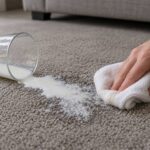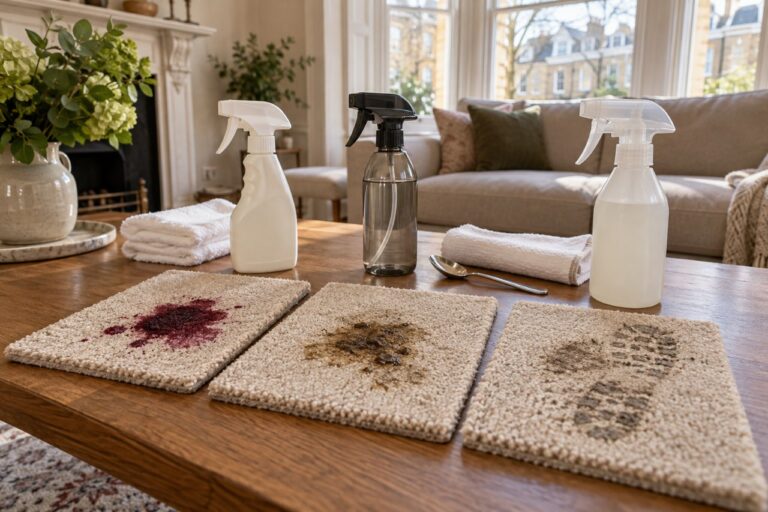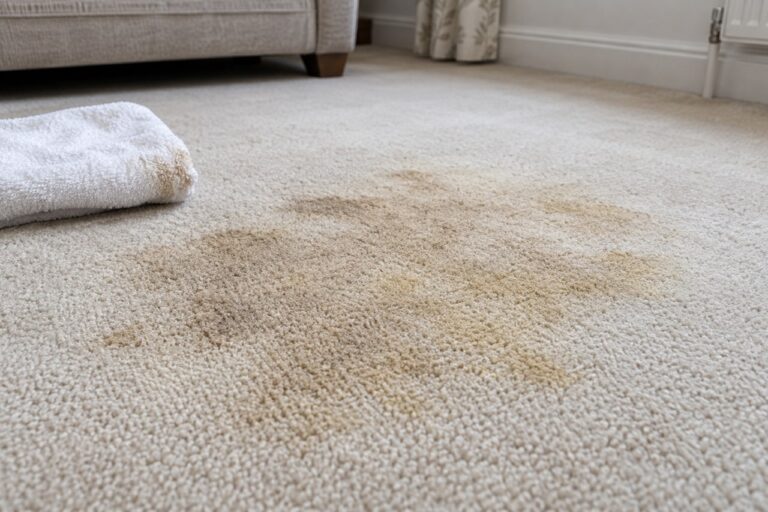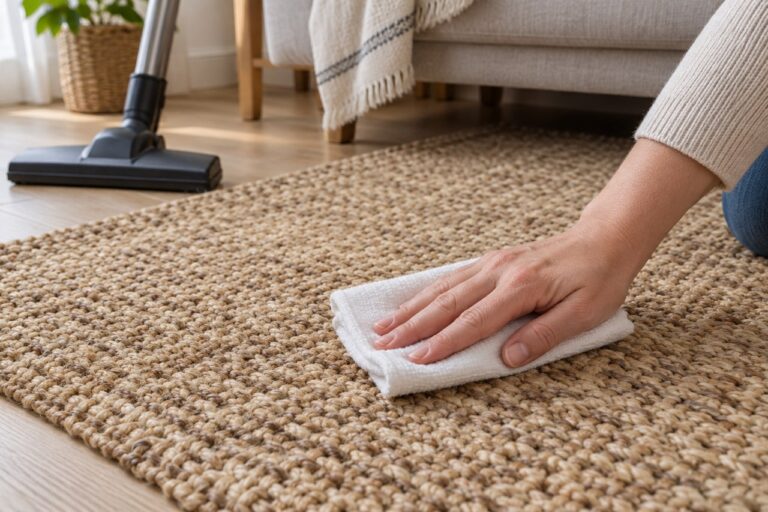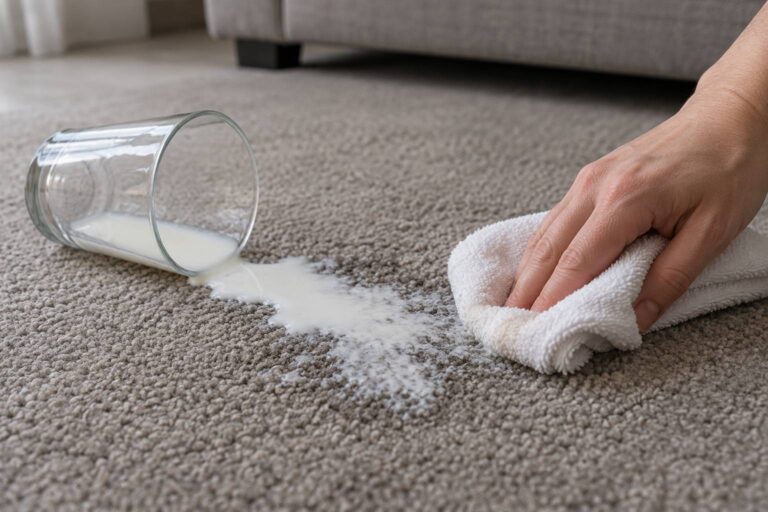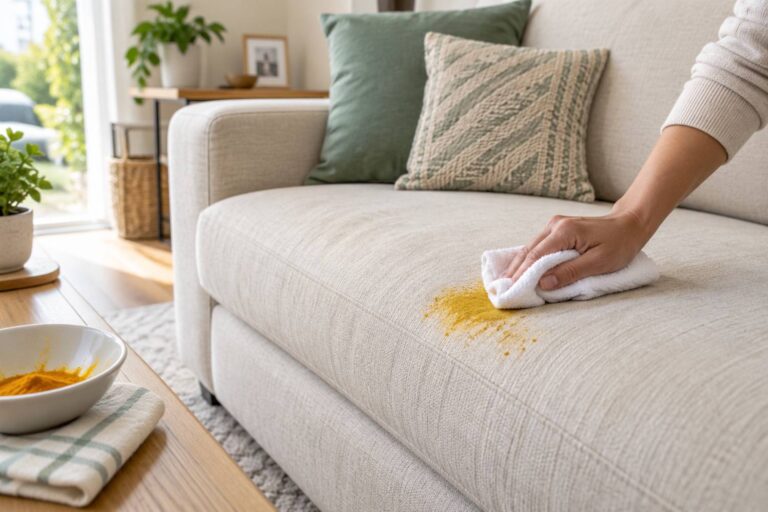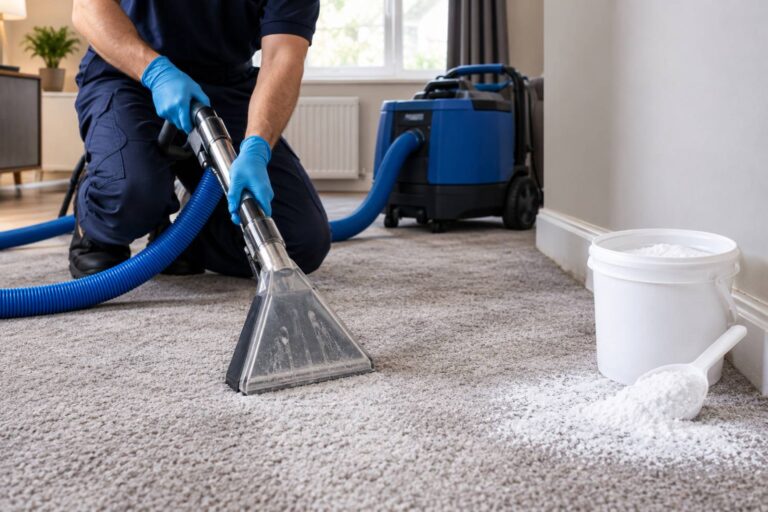
To remove carpet stains, lift away solids and blot liquids with a clean white cloth. Check the carpet’s care instructions, test a suitable cleaner in a hidden area, and work gently from the outside in. Keep moisture to a minimum and dry the area thoroughly. Stop if the carpet’s colour transfers, its texture changes or the mark spreads.
The right next step depends on what was spilt, the carpet material and any products already used. A fresh coffee spill needs a different approach from oily foundation, dried mud or a patch where bleach has removed the colour.
This guide explains safe first steps for common carpet stains, what to avoid and when further treatment is best left to a professional.
What Should You Do as Soon as Something Spills on the Carpet?
Before reaching for a stain remover, remove as much of the spill as possible. Quick, controlled action can reduce how much material travels through the pile and into the backing.
1. Lift solids and blot liquids
Use a spoon or another blunt utensil to lift food and other solid material. Work carefully so you do not press it deeper into the carpet.
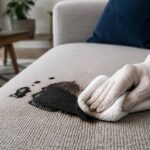
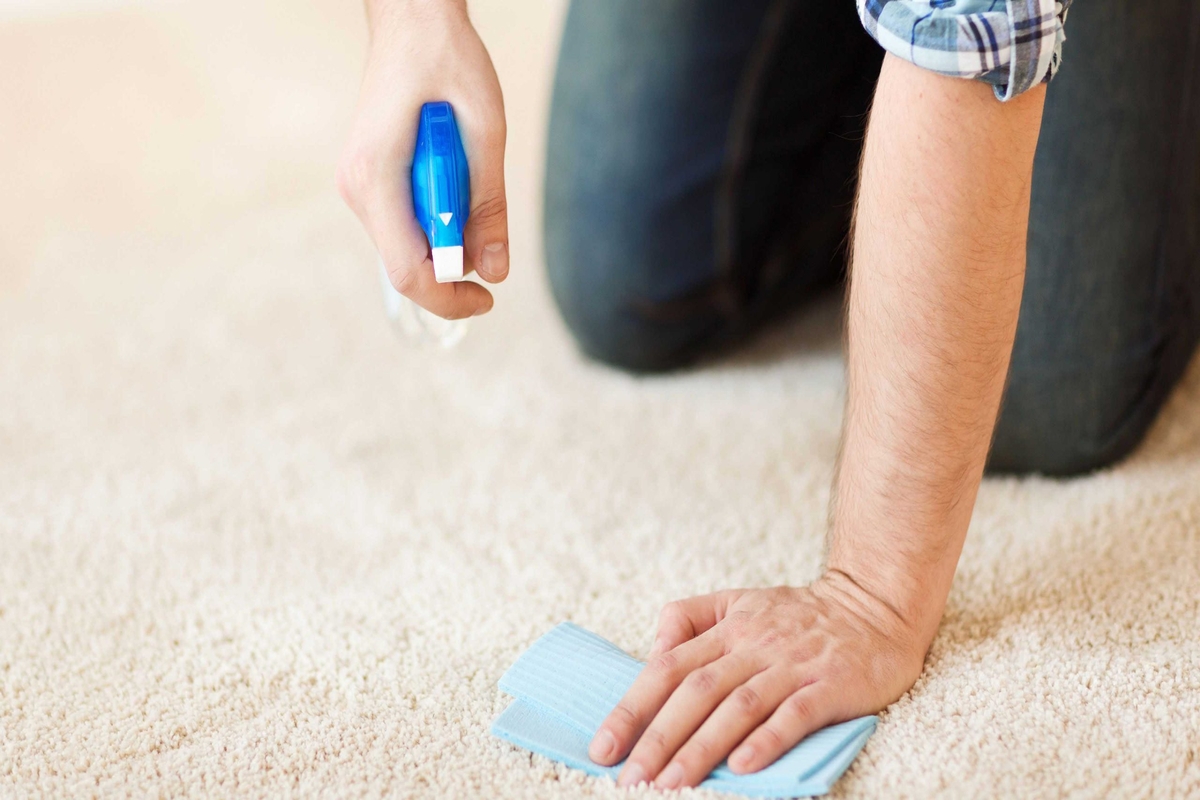
For liquids, press a clean, white absorbent cloth onto the spill. Lift the cloth, move to a clean section and repeat. Work from the outside towards the centre.
Avoid scrubbing. Rubbing can spread the spill and disturb the carpet pile. WoolSafe’s carpet care guidance also recommends removing excess material and blotting rather than rubbing.
2. Check the carpet and cleaning product
Look for the manufacturer’s care instructions. If you know the fibre, check that the proposed cleaner is suitable for it. Also consider the backing and construction: identifying the surface fibre does not establish that the whole carpet can tolerate a treatment.
If the material is unknown, limit your first response to lifting loose material and blotting the spill. Avoid experimenting with stronger products.
3. Test in a hidden area
Follow the product’s testing instructions on a discreet part of the carpet. Check for colour transfer, fading, rings and changes in texture, including after the test area dries.
If carpet dye transfers to the cloth or the pile changes, stop. A product described as suitable for carpets still needs to be checked against your particular carpet.
4. Treat gently with minimal moisture
Use the product only as directed, including its dilution, application method and contact time. Do not pour cleaner into the carpet or assume that more product will work better.
Where the instructions allow application with a cloth, use a small amount and blot gently. Remove residues as directed, using as little additional moisture as practical.
5. Dry the area thoroughly
Blot away remaining moisture with a dry white towel and encourage airflow. Keep people and pets away according to the product instructions and until the area is dry.
Do not use a hot iron or hairdryer to speed up the process. Never use an ordinary dry vacuum cleaner to collect liquid.
Which First Response Suits Each Type of Carpet Stain?
Use this table to find an appropriate starting point. Any wet treatment remains subject to the carpet’s care instructions and a successful hidden-area test.
| Stain type | Safe first response | What to avoid |
|---|---|---|
| Tea, coffee and red wine | Blot promptly, then consider a compatible carpet spot cleaner | Scrubbing, soaking and improvised bleaching treatments |
| Food and chocolate | Lift excess with a spoon before treating the residue | Grinding food into the pile |
| Grease and foundation | Lift excess carefully and check for a suitable treatment | Pouring solvents or make-up remover onto the carpet |
| Blood | Wear gloves, blot and use cool water only if the care instructions permit | Hot water and direct heat |
| Pet urine | Blot fresh liquid and assess whether it has penetrated below the surface | Repeated soaking or assuming the visible mark is the whole problem |
| Ordinary mud | Let it dry, then remove loose soil before treating any remaining mark | Rubbing wet mud into the fibres |
| Wax and chewing gum | Leave firmly attached material undisturbed until you have suitable guidance | Pulling at fibres or using a hot iron |
| Ink, rust and strong dyes | Blot any fresh transferable material and seek stain-specific advice | Applying household solvents or rust removers |
| Unknown marks | Photograph the area and investigate the cause | Adding several different products |
Tea, coffee and red wine
Blot fresh drink spills immediately, changing to a clean part of the cloth as it becomes wet.
If the carpet permits water-based spot treatment, use a suitable cleaner after testing. Coffee with milk or a sugary drink can leave more than a coloured mark, so avoid judging the result solely by whether the stain looks lighter.
Red wine on wool needs particular care. Strong stain-removal products may affect the carpet’s colour as well as the spill. Read our guide to removing red wine from a wool carpet before attempting further treatment.
Food, sauces and chocolate
Lift away as much food as possible with a spoon. Take your time around sticky or softened material so you do not spread it across neighbouring fibres.
Once the excess has been removed, assess what remains. A food spill may contain oil, protein and colourings, which can respond differently to treatment.
Use a compatible carpet cleaner only as directed. Avoid repeatedly treating a stubborn coloured mark with stronger products: the remaining discolouration may need specialist assessment.
Grease, oil and foundation
Blot fresh oily spills and lift thicker deposits gently. Avoid adding water immediately without checking the appropriate treatment.
Foundation can contain oils, waxes and pigments. A product that removes it from skin may be unsuitable for carpet dyes, fibres or backing.
Do not pour make-up remover, nail varnish remover or another solvent onto the mark. For liquid and powder cosmetics, follow our dedicated guide to removing foundation without spreading it.
Blood
Wear gloves when dealing with blood. For a small, superficial spot, blot gently and use cool water only where the carpet’s care instructions permit.
Avoid warm or hot water and direct heat. These can make protein-based staining harder to treat.
Dried blood needs a more cautious approach than a fresh surface spot. Our guide to removing dried blood from carpet explains the relevant limits.
If there is substantial blood, an unknown source or contamination below the surface, seek specialist advice rather than treating it as a routine household stain.
Pet urine
Blot fresh urine with absorbent white towels. Avoid repeatedly wetting the area, particularly if liquid may already have reached the backing or underlay.
A faint surface mark does not necessarily mean the contamination is shallow. Equally, removing the visible stain does not establish that the odour source has been dealt with.
Some pet products contain enzymes, but suitability must be checked against the carpet material and the current product label. Do not assume every pet stain remover is suitable for wool.
For lingering or recurring smells, see our guide to pet urine odours in carpet.
Mud and tracked-in dirt
For ordinary tracked-in mud, allow it to dry before carefully removing loose soil with a vacuum suitable for the carpet. Treat any remaining mark only after the dry material has been removed.
Rubbing wet mud can spread it through the pile.
This advice applies to ordinary soil from shoes or paws. Sewage, floodwater and other potentially contaminated liquids require a different assessment.
Wax, chewing gum, ink and rust
These marks need more specific treatment than a general blot-and-clean routine.
Do not pull hardened wax or gum from the carpet if it is gripping the fibres. Avoid hot-iron methods, which can damage unsuitable materials.
Ink, rust and strongly coloured substances can also react poorly to improvised treatment. Household rust removers and solvents should not be applied simply because they work on another surface.
For these stains, identifying the substance and carpet material is more useful than trying several household remedies.
How Does Your Carpet Material Change the Cleaning Method?
A cleaner that works on one carpet may damage another. The fibre, dye stability, backing and manufacturer’s instructions all influence what is appropriate.
Wool and wool blends
Wool needs carefully selected cleaning products. Avoid assuming a general stain remover is suitable because the packaging mentions carpets.
Where a product is needed, check its current label and suitability for the particular wool carpet. The WoolSafe approved product directory is a useful reference, although approval does not remove the need to follow instructions and test first.
Do not use strong household chemicals or improvised bleaching treatments on wool.
Synthetic carpets
Synthetic does not automatically mean resistant to every cleaner.
Nylon, polyester and polypropylene carpets can differ in how they respond to stains and treatment. Dyes, finishes and backing materials also matter.
Follow the care instructions rather than assuming that bleach, heat or a powerful degreaser will be acceptable.
Delicate or unidentified fibres
If you cannot identify the carpet, avoid guessing based on its appearance or softness.
Silk, viscose and other delicate materials can require specialist care. Limit immediate action to carefully lifting loose material and blotting excess liquid, then obtain advice before adding a cleaning solution.
How Can You Approach Old or Dried Carpet Stains?
Start by finding out what caused the mark and what has already been applied. An old stain that has never been treated is different from one that has been repeatedly soaked or exposed to several cleaning products.
Remove loose dry residue where appropriate. If the carpet and product instructions permit, a controlled spot treatment may help with remaining contamination.
Avoid soaking the area to “loosen everything up”. Extra moisture can carry material further into the carpet and make drying more difficult.
Stop if a careful attempt produces no useful improvement, the mark spreads or the carpet changes colour or texture. Increasing the strength or number of products can turn a stain-removal problem into a damage problem.
Some old marks are permanent staining, colour loss or physical damage. Cleaning cannot correct every change in appearance.
Can Household Products Make Carpet Stains Worse?
Household ingredients are often suggested when people ask how to clean carpet stains. Their suitability depends on the carpet and the spill, and familiar ingredients can still leave residue or cause damage.
Washing-up liquid
Washing-up liquid can create foam and may be difficult to remove from a carpet when too much is used. Residue can leave the treated patch feeling sticky and attracting soil.
Avoid squeezing it directly onto the mark. A carpet-specific product approved for the material is usually easier to assess through its instructions.
Vinegar and bicarbonate of soda
Neither ingredient is a universal carpet stain remover.
Avoid covering a damp stain with bicarbonate of soda or repeatedly applying vinegar mixtures without checking the carpet’s care requirements. The fizz produced when the two are combined is not proof that a stain is being removed.
Also avoid adding either ingredient to a commercial stain remover.
Bleach, peroxide and other strong products
Products with bleaching or oxidising action can affect carpet colour. A concentration suggested online does not establish that it is suitable for your carpet.
Do not mix cleaning substances. The Health and Safety Executive’s cleaning chemical guidance specifically advises against mixing them.
Tell a professional exactly what you have already used, including household ingredients. This helps them assess the next treatment safely.
Why Does a Stain Return After the Carpet Dries?
A returning mark can have several causes.
Cleaning residue may remain in the pile and attract new soil. Alternatively, material deeper in the carpet can move towards the surface as moisture evaporates, a process called wicking. The IICRC discusses this in its consumer carpet care information.
These problems do not necessarily improve with another round of soaking. Read our guide to why carpet stains come back after cleaning before repeating treatment.
When Should You Stop and Call a Professional?
Seek advice if:
- Carpet dye transfers to the cloth or the treated area becomes lighter.
- The pile changes texture, becomes distorted or starts to pull apart.
- The stain spreads despite controlled blotting.
- The carpet remains noticeably wet or develops a musty smell.
- A mark or odour keeps returning after the area dries.
- You are dealing with delicate fibres, unknown staining or substantial biological contamination.
- Several products have already been applied without success.
Professional treatment starts with assessment. The technician needs to consider the spill, fibre, previous treatments and whether the backing or underlay is affected.
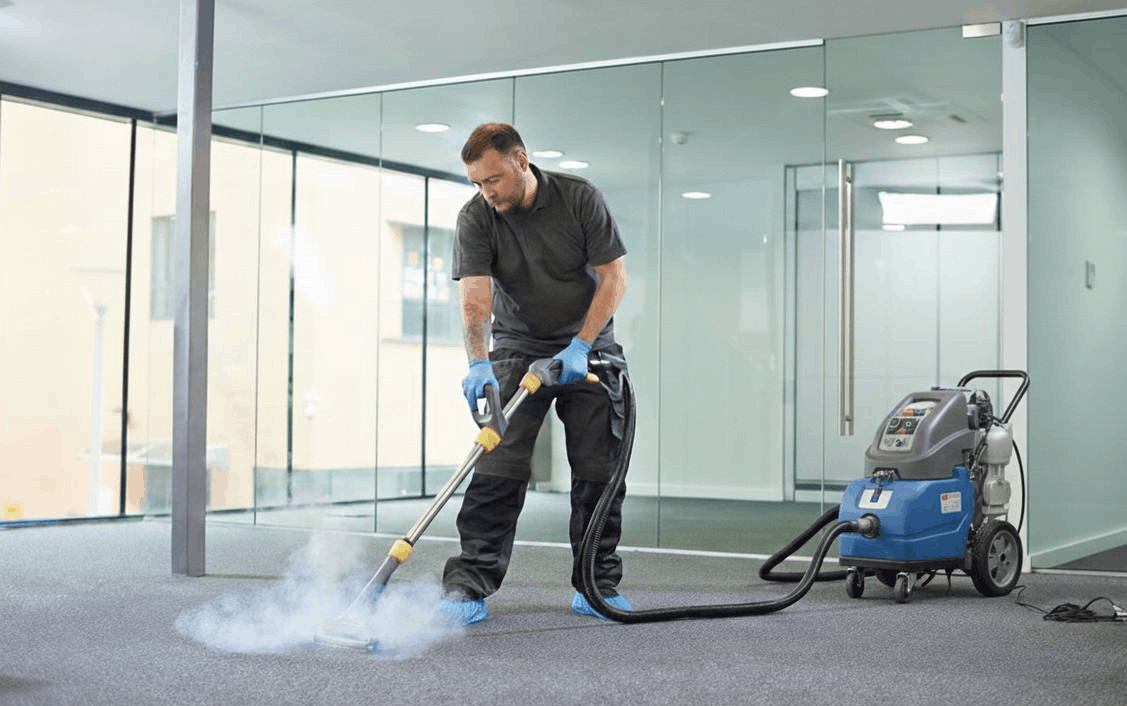
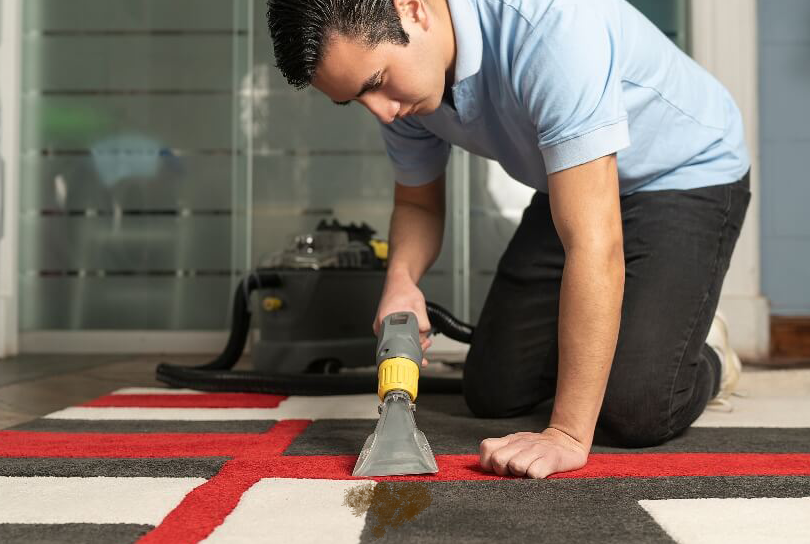
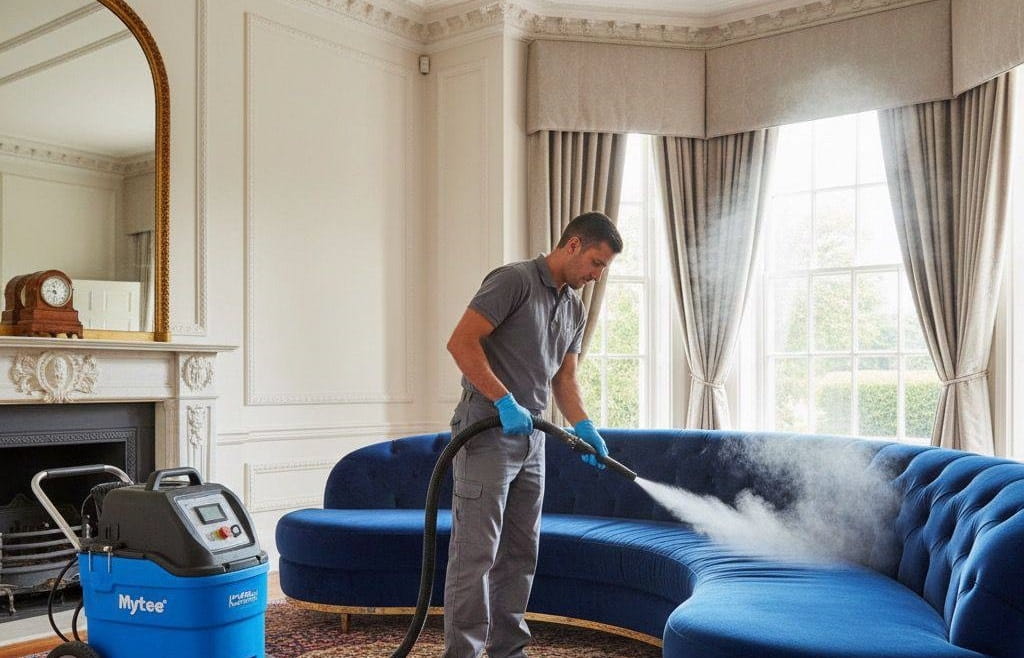
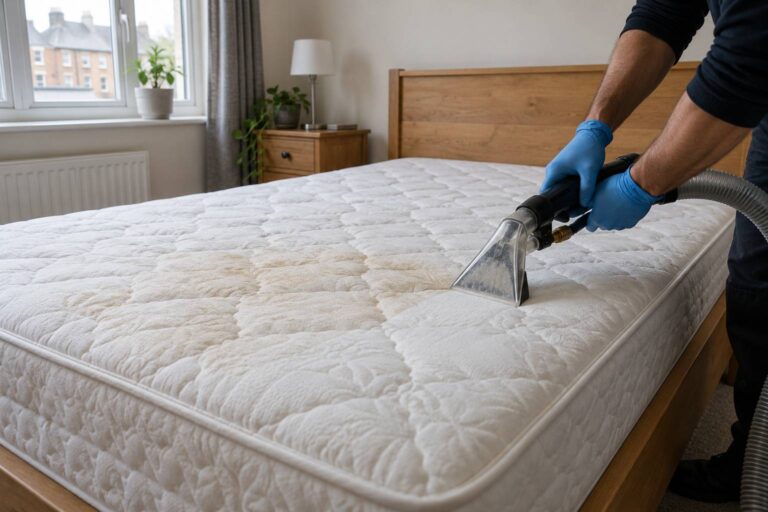
Hi Carpet Cleaner provides specialist spot and stain removal in London. Where wider carpet cleaning is appropriate, treatment may include hot water extraction following a suitability assessment.
Removal cannot be guaranteed before the carpet is assessed. Some marks involve permanent dye changes or damage rather than material that can simply be cleaned away. Our guide to what professional carpet stain treatment can achieve explains these differences.
For an initial enquiry, send a clear photograph, your London postcode, the approximate age of the stain and details of every product used. A photograph helps the team advise on the next step, although an inspection may still be needed.

Frequently Asked Questions About Removing Carpet Stains
Can I remove carpet stains without a machine?
Some fresh surface spills can be managed with careful blotting and a compatible spot cleaner. A machine is not automatically necessary for a small mark. Stains that extend into the backing or underlay, or involve difficult substances, may need professional treatment.
Can old carpet stains still be removed?
Some can improve with suitable treatment, but age is only one factor. The substance, fibre, previous products and any permanent colour change also affect the outcome. Avoid assuming an old stain is removable—or permanent—based solely on how long it has been there.
Is vinegar safe on wool carpet?
Do not assume vinegar is suitable for every wool carpet. Check the manufacturer’s care instructions and use a compatible product where treatment is permitted. Avoid mixing vinegar with commercial cleaners or applying repeated homemade solutions to a mark that is not improving.
Why does the cleaned patch feel sticky?
Sticky areas may contain cleaning residue or material left from the original spill. Adding more detergent can make the problem worse. Follow the product’s residue-removal instructions, minimise moisture and seek advice if the patch remains sticky after drying.
Can cleaning remove a bleach mark?
A bleach mark may involve loss of carpet colour rather than a removable deposit. Cleaning cannot replace missing dye. A specialist may be able to assess colour restoration or repair, but suitability depends on the carpet and the extent of the damage.
What should I do if I do not know what caused the stain?
Photograph the mark and note when it appeared. Check for possible sources, such as a spill, furniture, a plant pot or a previous cleaning attempt. Avoid adding several products. If the cause or carpet material remains unclear, seek advice before further treatment.