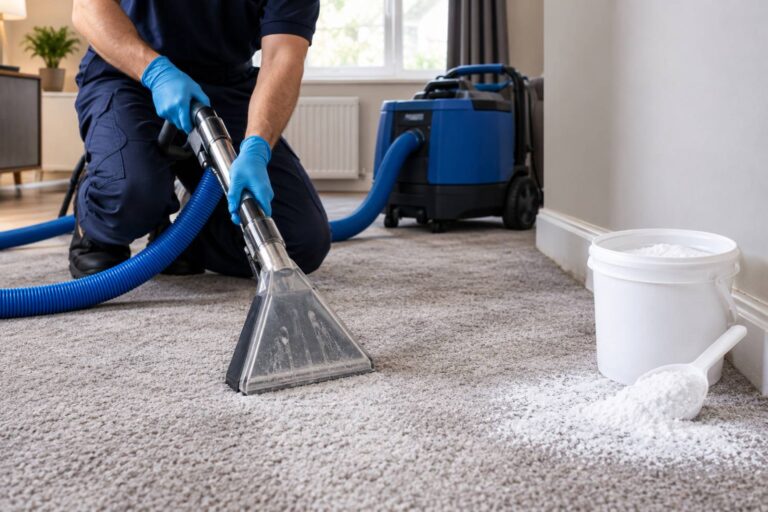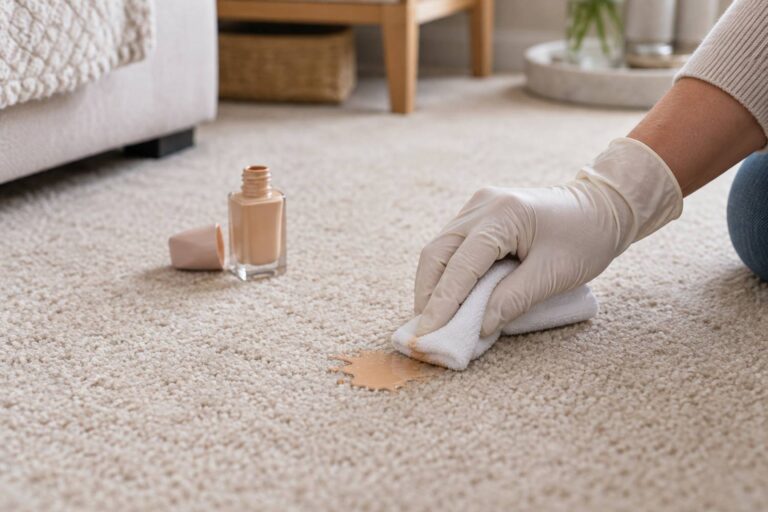
A carpet can turn brown or yellow after cleaning because of excessive alkalinity, cleaning residues, old contamination rising during drying, or cellulosic browning from plant-based backing. Many cases are treatable, but the solution depends on the fibre and cause. Stop applying household products, help the carpet dry and arrange an assessment before attempting another treatment.
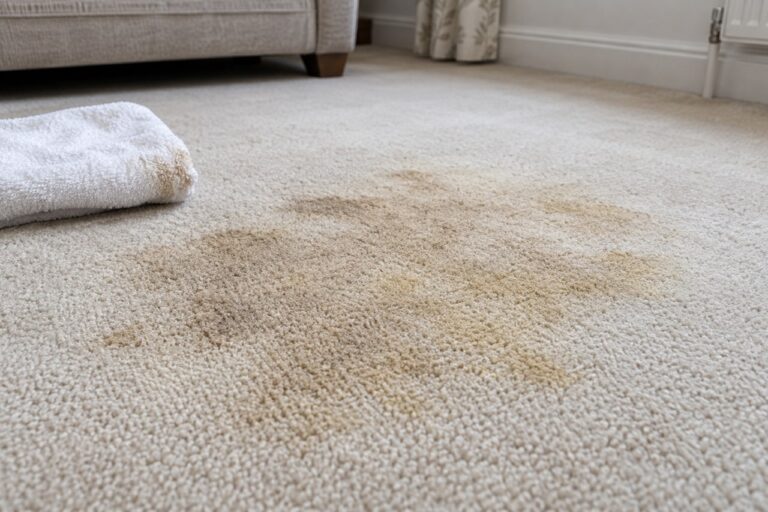
A carpet may look noticeably cleaner immediately after washing, only to develop brown patches, yellow areas or visible rings later. This can happen after DIY cleaning, rental-machine use or professional treatment.
The colour change does not automatically mean the carpet is permanently damaged. However, it does mean that further treatment should be chosen carefully. Removing a returning spill, correcting excessive alkalinity and dealing with lost dye require different approaches.
Why Is My Carpet Turning Brown?
Brown marks after cleaning can involve the cleaning solution, the carpet’s construction or contamination below the visible pile. More than one factor may be involved.
High Alkalinity and Alkaline Cleaning Residues
Many carpet cleaning products are alkaline because alkaline formulations can help break down oily and greasy soils.
An alkaline product is not automatically unsuitable. Its formulation, concentration, application and suitability for the carpet all matter. Problems can arise when excessive alkalinity is introduced or alkaline residues remain after treatment.
This can contribute to browning or yellowing, particularly on sensitive materials and carpets with plant-based backing. The marks may become noticeable as the carpet dries rather than while the cleaning is taking place.
Professional technical guidance identifies excessive alkalinity as a possible contributor to post-cleaning brown patches and describes suitable acidic rinsing as part of the corrective approach.
The aim is to use chemistry suited to the carpet and remove or appropriately neutralise residues—not simply to use the strongest available cleaner.
Hidden Contamination Rising During Drying
Moisture can bring previously hidden substances from deeper layers of the carpet towards the surface.
An old spill may have soaked through the pile into the backing or underlay. Cleaning removes much of the visible contamination, but some material remains underneath. As moisture moves upwards during drying, it can carry dissolved contamination with it.
This process, commonly called wicking, explains why a carpet can look clean immediately after treatment but develop a brown patch later.
Typical clues include:
- A mark returning where an earlier spill occurred.
- A stain becoming more visible as the carpet dries.
- A patch improving after surface cleaning but reappearing afterwards.
Cleaning the same spot repeatedly may not resolve the problem if the source remains deeper down.
Cellulosic Browning From Plant-Based Materials
Cellulosic browning is associated with plant-based materials, such as jute or cotton, in the carpet’s construction.
When these components become excessively wet or dry slowly, coloured compounds can migrate towards the surface and leave a yellow, tan or brown appearance. Unsuitable alkalinity can also contribute.
A wool carpet may develop cellulosic browning because of plant-based material in its backing. Wool itself is a protein fibre, not cellulose. Identifying both the face fibre and the backing therefore matters.
Cellulosic browning and ordinary soil wicking can look similar, but the source of the colour is different. They may also occur together.
Residue Attracting Fresh Dirt
Some cleaning residues encourage fresh soil to collect in the carpet, making it look dirty again sooner than expected.
This may be noticeable along walkways or in frequently used areas. The pile may also feel sticky or stiff.
A patch appearing during drying may involve wicking, browning or a chemical reaction. Darkening that develops after renewed foot traffic may involve residue-related re-soiling. Timing helps guide assessment, but it cannot confirm the cause by itself.
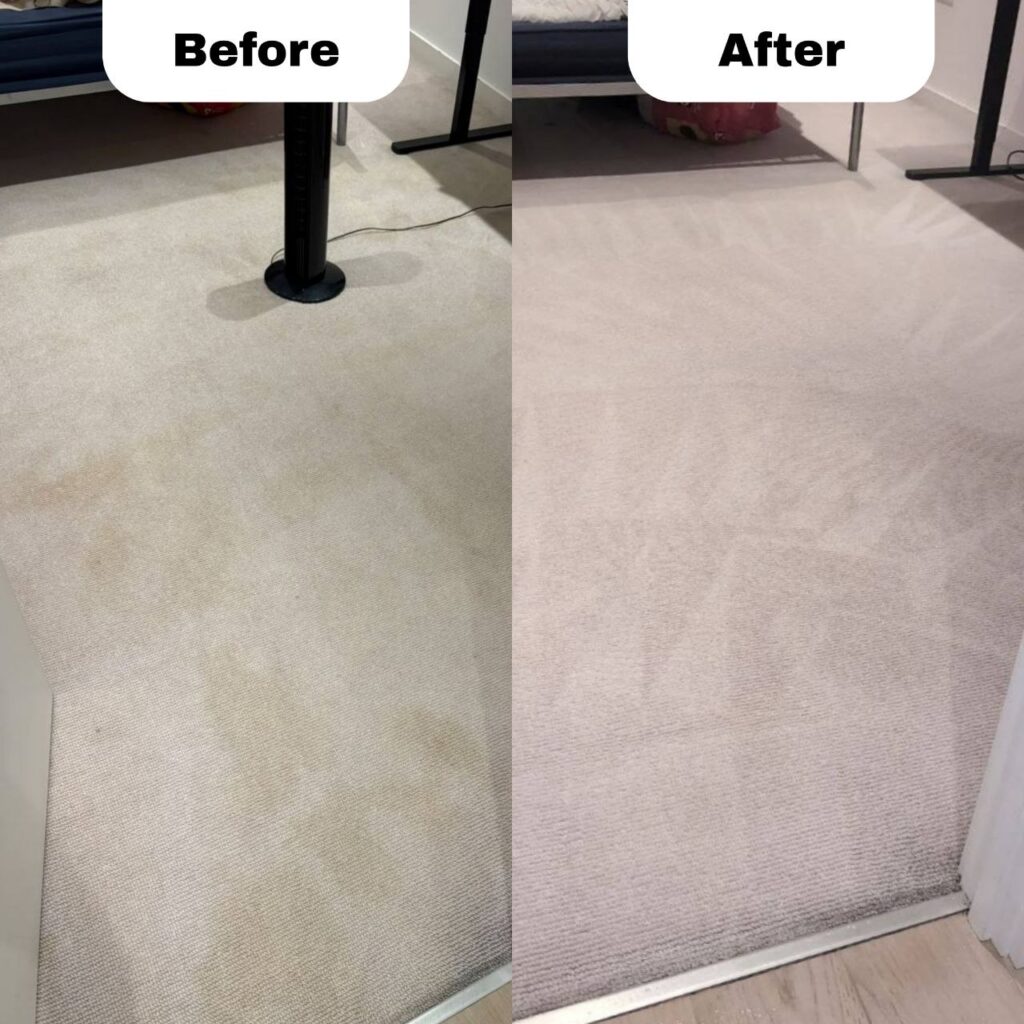
Why Does a Carpet Turn Yellow After Cleaning?
Yellowing can overlap with the causes of browning. Excessive alkalinity, plant-based backing, previous spills and unsuitable products can all be relevant.
However, not every yellow-looking patch is a removable stain.
Some chemicals alter or remove the carpet’s original dye, leaving a pale, yellow or orange appearance. Cleaning may also reveal existing fading that was less obvious beneath accumulated soil.
A professional needs to distinguish between:
- Material deposited on the fibres.
- Discolouration associated with the backing or cleaning chemistry.
- Actual damage to the carpet’s original colour.
Cleaning can remove contamination, but it cannot replace dye that has been lost.
Small marks beneath furniture legs may have another explanation. Wood finishes can transfer onto damp carpet, while metal contact can cause rust-related staining. These marks need stain-specific assessment rather than a general browning treatment.
Can Baking Soda Contribute to Carpet Discolouration?
Baking soda, also called sodium bicarbonate or bicarbonate of soda, is mildly alkaline. It should not be treated as a universal correction for brown or yellow carpet marks.
It is important to tell the cleaner if you have used it, particularly if you applied it repeatedly, combined it with other products or left material in the pile.
However, a yellow patch appearing after baking soda use does not prove that the baking soda caused it. The original spill, other cleaning products, moisture movement and the carpet’s construction may also be involved.
Even manufacturer guidance for baking soda recommends checking colourfastness before carpet application and following appropriate removal instructions. That does not establish that it is suitable for correcting unexplained post-cleaning discolouration.
If you have already used bicarbonate of soda, avoid adding another household product to counteract it. Give the cleaner the treatment history so that any remaining residue can be considered during assessment.
How to Tell Carpet Browning, Wicking and Colour Damage Apart
The pattern of the mark, its timing and the products used can help narrow down the possibilities.
| What you notice | Possible cause | Appropriate next step |
|---|---|---|
| Brown or yellow areas appear after cleaning with unsuitable or overly concentrated products | Excessive alkalinity or a chemical reaction | Review the products used and assess whether controlled rinsing or corrective treatment is suitable |
| An old stain returns as the carpet dries | Contamination wicking from deeper layers | Investigate the remaining source rather than repeatedly treating the surface |
| A tan or yellow-brown haze develops after wetting | Cellulosic browning involving plant-based components | Check the fibre, backing and drying conditions |
| Walkways become dirty again after use, possibly with a sticky feel | Cleaning residue attracting fresh soil | Assess whether residue removal is needed |
| Small patches appear beneath furniture legs | Wood finish transfer or metal-related staining | Prevent further contact with damp carpet and identify the stain |
| Pale or orange patches remain after drying | Possible dye loss or chemical change | Assess whether colour correction or repair is suitable |
These are clues, not a diagnosis. Several causes can occur together, and a photograph alone cannot reliably distinguish them.
Before contacting a cleaner, note when the marks appeared, whether the carpet remains damp and which products were used. Include any treatments applied before the most recent clean, even if they were used weeks or months earlier.
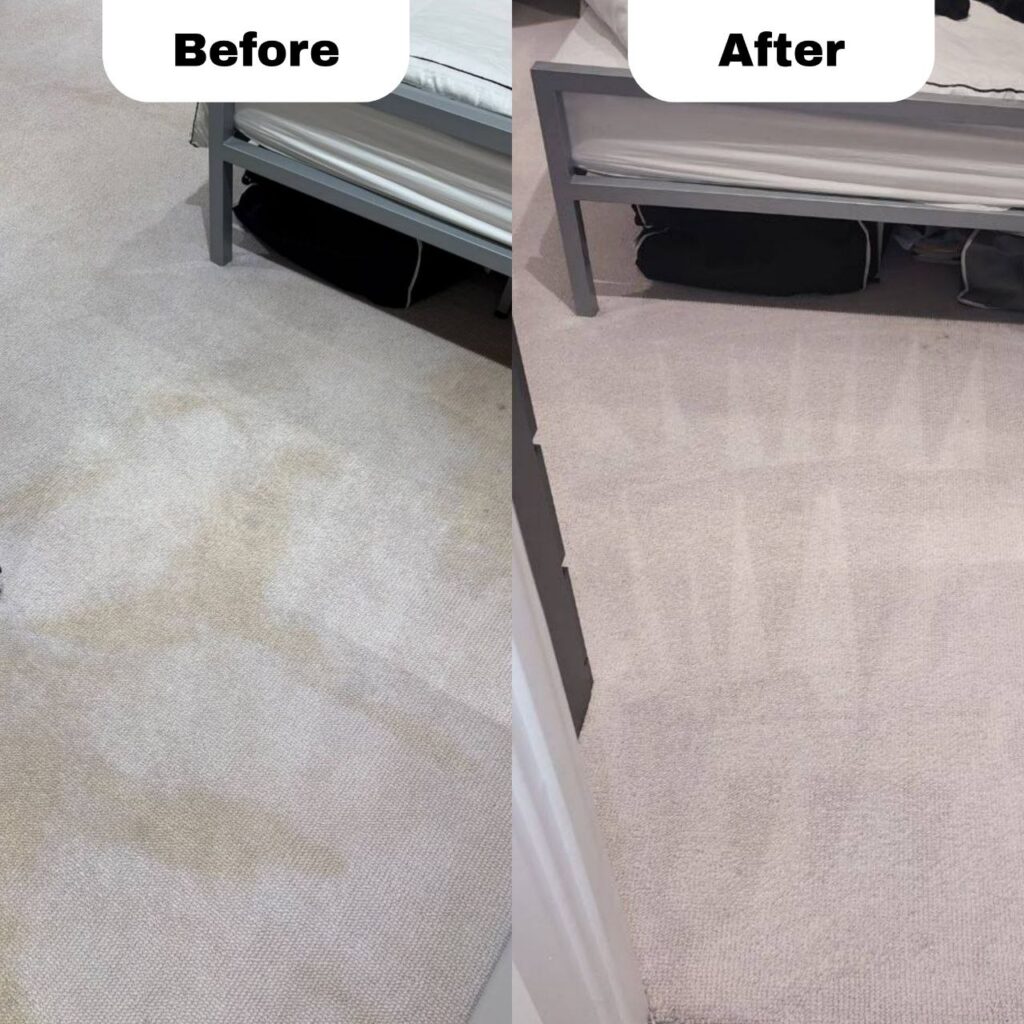
What to Do When Your Carpet Turns Brown or Yellow After Cleaning
The immediate priority is to avoid adding more chemicals or moisture while supporting drying.
1. Stop Applying Cleaning Products
Do not immediately shampoo the carpet again, add bicarbonate of soda or attempt to “balance” an alkaline product with vinegar.
Without knowing the cause, another treatment may add residue, affect the dyes or wet the backing again.
2. Photograph the Marks
Take a close-up photograph and a wider photograph showing the position of the affected area.
Record whether the marks appeared while the carpet was wet, during drying or after it had been used again. Keep the names of the cleaning products and, if known, their concentrations.
3. Blot Accessible Surface Moisture
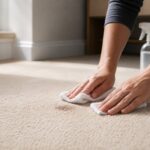
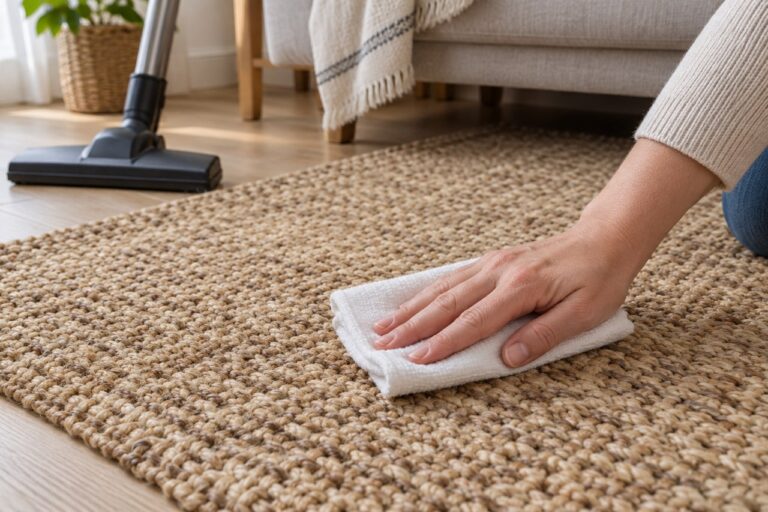
If the carpet is still damp, gently press a clean, dry white towel against the area.
Do not scrub or add water. Stop if the carpet’s colour transfers onto the towel or the texture changes.
Surface blotting can absorb some moisture, but it does not establish whether the backing or underlay is dry.
4. Improve Airflow and Reduce Excess Humidity
Encourage air movement across the carpet and consider a dehumidifier if the room is humid. Ventilation can help when outdoor conditions support drying.
Avoid directing a hairdryer or portable heater onto the patch.
Our guide to how long carpet takes to dry after cleaning explains the factors that affect drying and the signs that further advice is needed.
5. Keep Furniture and Foot Traffic Away
Minimise foot traffic and avoid returning unprotected furniture legs to damp carpet.
Follow the cleaner’s aftercare instructions until the carpet is fully dry.
6. Contact the Cleaning Provider
If discolouration appeared after professional cleaning, contact the provider promptly and explain what changed.
After DIY cleaning, arrange an assessment before trying a stronger product. Industry guidance recommends professional correction for suspected cellulosic browning rather than attempting to fix it yourself.
Can Carpet Browning Be Treated?
Carpet browning is often treatable, although complete removal cannot be guaranteed.
The appropriate approach depends on the carpet fibre, backing, cause of the discolouration, previous treatments and overall condition.
A professional assessment helps establish whether the problem involves excessive alkalinity, returning contamination, cellulosic browning, residue or permanent colour damage.
Re-Cleaning and Acidic Rinsing for Excessive Alkalinity
Where excessive alkalinity or alkaline residues are involved, professional correction may include controlled re-cleaning and an appropriate acidic rinse or neutralising treatment.
A suitable acidic rinse can help lower excessive alkalinity, while rinsing and extraction remove residues from the carpet. The treatment must be selected for the material and used according to its instructions.
Manufacturer guidance describes professional acidic rinses for neutralising alkaline pre-sprays, rinsing away residues and helping stabilise colours.
An acidic rinse is not a universal stain remover. It will not automatically correct every brown patch, and lowering the pH cannot restore dye that has already been destroyed.
Removing Contamination That Keeps Returning
If the mark is caused by wicking, treatment needs to address the contamination that remains below the surface.
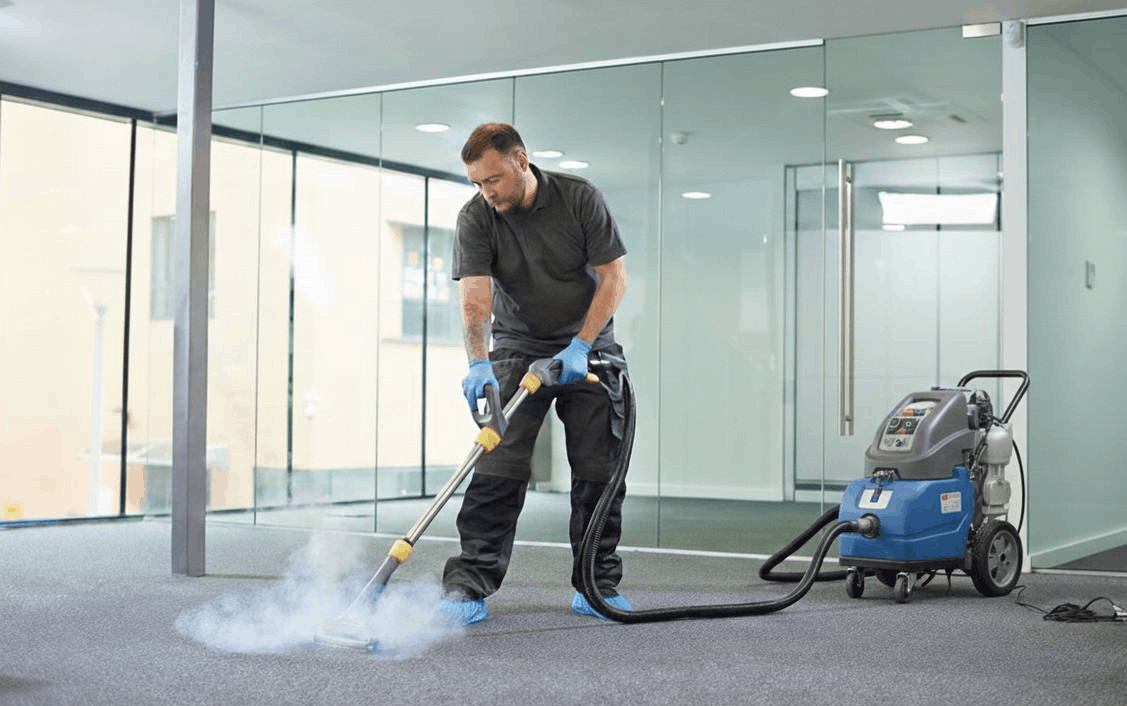
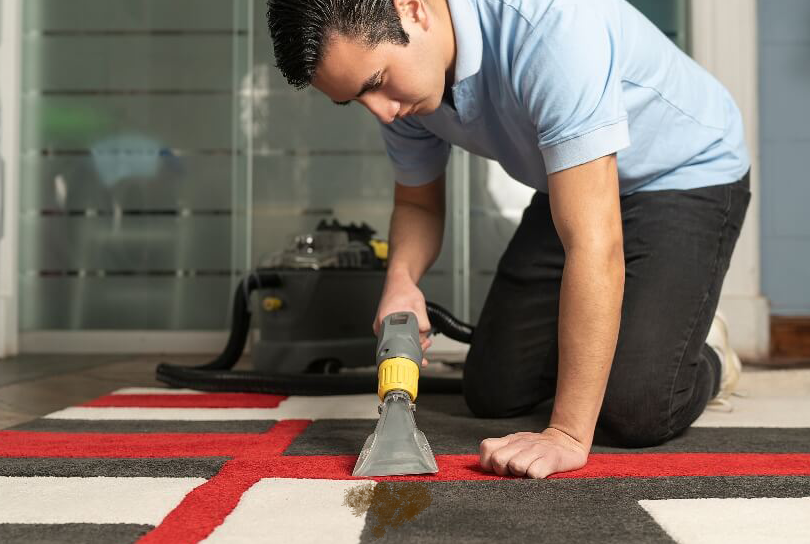
Controlled hot water extraction may be appropriate for a suitable carpet, followed by effective moisture recovery and managed drying. If contamination has reached the underlay, the cleaner may need to assess that deeper source.
Repeated surface cleaning without addressing the remaining material can leave the conditions for another returning stain.
Correcting Cellulosic Browning
Confirmed cellulosic browning may require a dedicated professional corrective treatment.
The product and application method must suit the carpet’s dyes, backing and condition. Testing is important because treating a visible mark should not create a new colour or texture problem.
Professional browning treatments are different from ordinary carpet shampoo and should not be replaced with an improvised household mixture.
Assessing Colour Loss or Fibre Damage
Where the original dye has been removed or permanently altered, further cleaning may provide little benefit.
Depending on the material and extent of damage, suitable carpets may be considered for colour correction, localised repair or replacement.
Hi Carpet Cleaner offers carpet dyeing and colour correction alongside cleaning services, with suitability assessed individually.
Why Random Household Treatments Can Make the Problem Worse
An unexplained brown or yellow mark is not a good starting point for experimenting with several cleaning products.
Repeated treatment can:
- Introduce more moisture into the backing.
- Leave additional residue.
- Affect sensitive dyes or fibres.
- Spread contamination beyond the original patch.
- Make the treatment history harder to assess.
Avoid household bleach, unapproved peroxide products, strong acids and improvised mixtures. Do not assume vinegar is equivalent to a professionally selected acidic rinse.
Take extra care with wool, viscose, jute, sisal and unknown materials. If you cannot identify the carpet or its care requirements, stop further wet treatment and seek advice.
How to Prevent Brown or Yellow Marks After Cleaning
Prevention involves matching the cleaning process to the carpet and managing what remains afterwards.
Share Previous Spill and Treatment History
Tell the cleaner about old spills, pet accidents, supermarket sprays, bicarbonate of soda and rental-machine products.
An old mark may no longer be visible but still have contamination beneath the pile.
Use Suitable Chemistry at the Correct Concentration
Follow the carpet and cleaning-product instructions. A stronger solution is not automatically more effective or more suitable.
Where alkaline products are appropriate, the cleaning process should also account for residue removal and any necessary neutralising rinse.
Control Moisture and Recover It Thoroughly
Avoid repeated wet passes over the same area without adequate moisture recovery.
Hi Carpet Cleaner uses hot water extraction for suitable fitted carpets, with treatment selected following inspection.
Plan for Drying
Arrange suitable airflow, limit foot traffic and follow furniture-protection instructions.
If a musty odour develops alongside the colour change, our guide to musty carpet smells after washing explains the moisture issues to check.
When to Ask for Professional Help in London
Arrange an assessment if the marks are widespread, repeatedly return, worsen after treatment or affect a sensitive carpet.
Persistent dampness, a worsening odour, suspected dye damage or possible wet underlay also require attention. Brown or yellow colour alone does not establish mould.
Hi Carpet Cleaner’s spot and stain removal service in London begins with assessment of the material, staining and previous treatments. This helps determine whether targeted treatment or broader cleaning is appropriate.
For suitable fitted carpets requiring more extensive treatment, explore our carpet cleaning services in London.

Frequently Asked Questions
Why Is My Carpet Turning Brown?
Brown marks can result from excessive alkalinity, old contamination rising during drying, cellulosic browning or residue attracting fresh dirt. The timing, pattern, carpet construction and products used help identify the likely cause.
Why Is My Carpet Discolouring After Cleaning?
Cleaning can mobilise hidden substances or reveal reactions involving the backing, dyes and cleaning residues. Excessive alkalinity may also contribute. A colour change does not automatically mean permanent damage, but the cause should be assessed before further treatment.
How Do You Remove Brown Stains After Carpet Cleaning?
Identify the cause before applying another product. Professional treatment may involve controlled contamination removal, an appropriate acidic rinse for excessive alkalinity, or a dedicated browning treatment. Improve drying and contact the cleaner rather than repeatedly shampooing the patch.
Can Baking Soda Make Carpet Turn Yellow?
Many cases can improve with suitable treatment. Browning, residue and some returning stains are treatable, while lost dye or severe fibre damage may require colour correction, repair or replacement. The result depends on the material and condition.
Does an Acidic Rinse Fix Carpet Browning?
An appropriate acidic rinse may help when excessive alkalinity or alkaline residues contribute to the problem. Other causes may need different treatments. It is not a universal stain remover and cannot restore dye that has been lost.
Will Carpet Browning Disappear When It Dries?
Do not rely on it disappearing. Some marks become more visible during drying and remain afterwards. Contact the cleaning provider if marks persist, spread or accompany continuing dampness rather than adding another household treatment.
Is a 20-Year-Old Carpet Unhealthy?
Age alone does not establish a health concern. Persistent dampness, contamination and the carpet’s condition matter more than its age. Recurring odours, moisture or significant deterioration should be assessed rather than treated with repeated cleaning.
Has your carpet developed brown or yellow marks after cleaning? Send Hi Carpet Cleaner photographs, details of the products used and when the marks appeared. Our London team can advise whether an on-site assessment or specialist stain treatment is appropriate.