To remove fresh red wine from a wool carpet, blot the spill immediately with a clean white cloth, working from the outside towards the centre. Apply a small amount of cool water and blot again. Do not rub, soak the carpet or use heat, bleach or hydrogen peroxide. If the carpet’s colour transfers during a hidden-area test, stop and contact a professional.
Wool is naturally absorbent, so red wine can quickly penetrate its fibres. At the same time, some wool carpet dyes can react badly to strong cleaning products, heat, scrubbing and excessive moisture. The safest approach is therefore to remove as much of the wine as possible while using minimal liquid and avoiding aggressive stain-removal methods.
This guide explains how to treat both fresh and dried red wine stains while reducing the risk of fading, colour bleeding, residue and water marks.
What to Do Immediately After Spilling Red Wine on Wool Carpet
The first few minutes matter. The longer the wine remains in the pile, the more opportunity its pigments and tannins have to move deeper into the carpet.
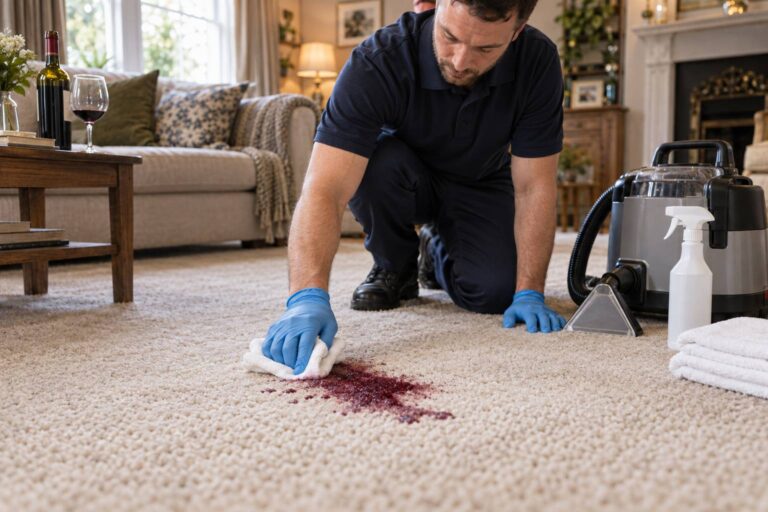
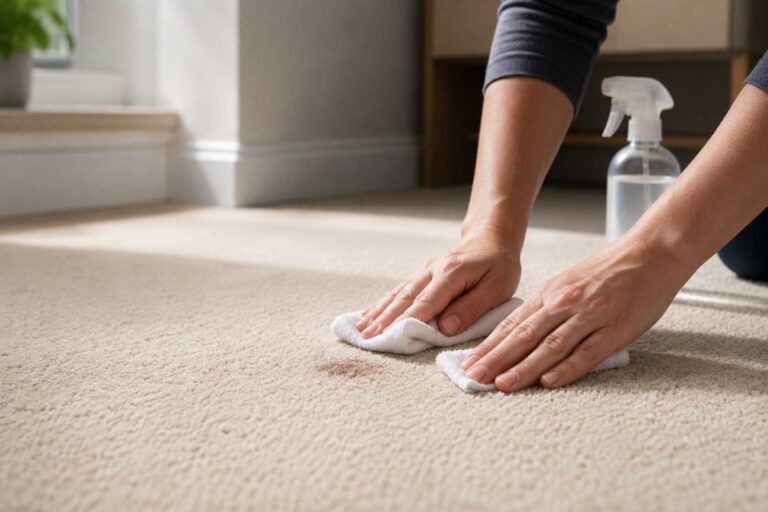
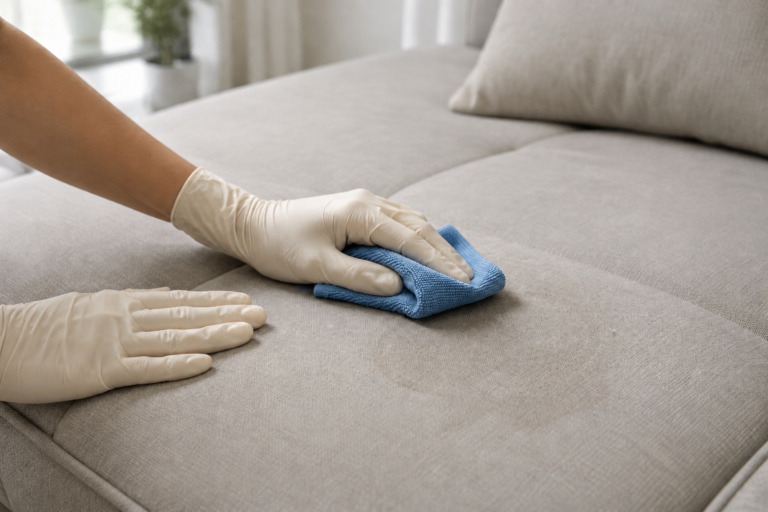
Start by removing the glass and keeping people away from the affected area. Then place a clean, dry white cloth or several sheets of white kitchen roll over the spill. Press firmly and lift the cloth straight upwards. Continue blotting with clean sections of the cloth until very little wine transfers onto it.
Always work from the outside edge of the stain towards its centre. This helps contain the spill instead of spreading it into unaffected fibres. Do not rub or scrub the carpet. Friction can push the wine deeper, spread the stain and disturb the wool pile. It can also make the cleaned area look lighter even when the carpet dye itself has not faded.
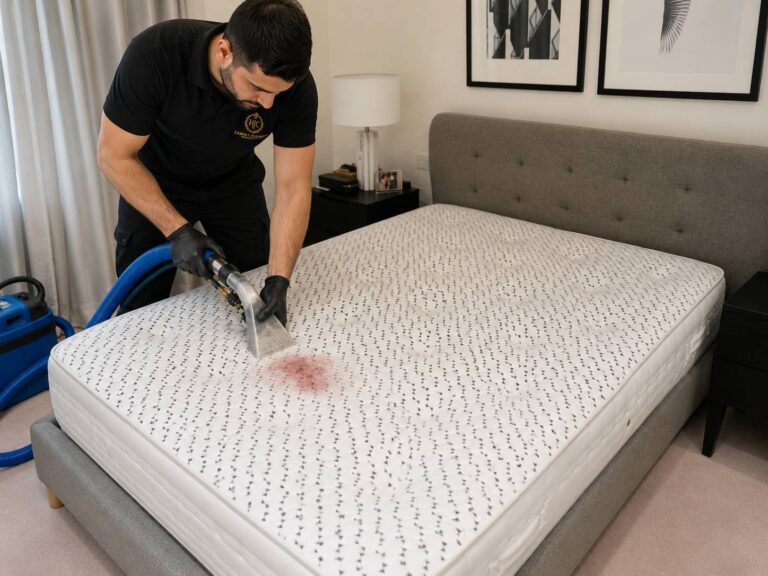
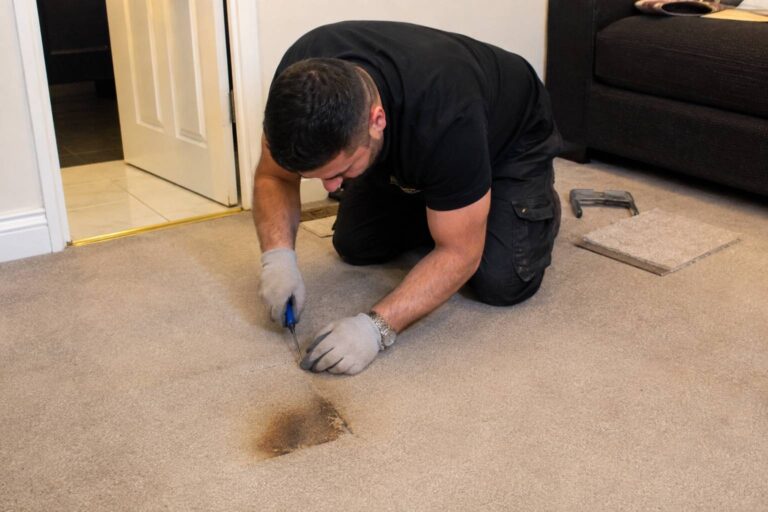
If the spill is large, the carpet backing or underlay may also be wet. Surface blotting alone may not be sufficient in this situation, so it is safer to arrange professional spot and stain removal before repeatedly adding more water or cleaning solution.
What You Will Need
Prepare the following items before treating the stain:
- Clean white cloths or white kitchen roll
- Two small bowls
- Cool water
- A dry white towel
- A wool-suitable or WoolSafe-approved spot remover, if required
- A fan or good room ventilation for drying
Use white cloths rather than coloured towels. When a coloured cloth becomes wet, its own dye may transfer to the carpet and make the problem more difficult to assess.
You should also check the carpet manufacturer’s care instructions if they are available. Wool carpets can differ in construction, backing, protective finishes and dye stability, so no homemade cleaning mixture is universally safe.
How to Remove Fresh Red Wine from a Wool Carpet Safely
Step 1: Blot Up as Much Wine as Possible
Place a folded white cloth over the spill and press down firmly. Lift it away rather than moving it from side to side.
Rotate or replace the cloth whenever it becomes saturated. Continue until it picks up very little wine.
Avoid standing on the towel or leaving a wet cloth pressed against the carpet for a long period. Both actions can force moisture deeper into the pile and backing.
Step 2: Check the Carpet Is Colourfast
Before applying any stain remover, test it on an inconspicuous section of carpet, such as inside a cupboard or behind a large piece of furniture.
Apply a very small amount of the intended solution to a white cloth. Press it gently onto the hidden area for several seconds and inspect the cloth.
Stop if:
- Carpet colour appears on the cloth
- The tested area becomes noticeably lighter
- The pile changes texture
- The carpet develops a visible ring
- The backing or adhesive reacts to moisture
Even plain water can reveal unstable dyes. If colour transfers during the test, further DIY treatment may cause permanent fading or dye migration.
This precaution is particularly important for dark, patterned, handmade or high-value wool carpets.
Step 3: Dilute the Remaining Wine Carefully
Once you have absorbed as much wine as possible, apply a small amount of cool water to a clean white cloth. Dab the remaining mark gently, then blot it immediately with a separate dry cloth.
The aim is to dilute the wine and lift it out—not to flood the carpet.
Repeat the process gradually. Use only enough water to dampen the stained fibres. Pouring water directly onto the carpet can spread the stain into the surrounding pile or carry it down into the backing.
Do not use hot water. Heat can affect wool fibres and may make some stains more difficult to remove.
Step 4: Use a Wool-Safe Spot Treatment if Needed
If cool water and careful blotting do not remove the remaining colour, use a stain remover specifically labelled as suitable for wool carpets. A WoolSafe-approved product is preferable.
Follow the product instructions exactly. Do not make the solution stronger or leave it on the carpet for longer than directed.
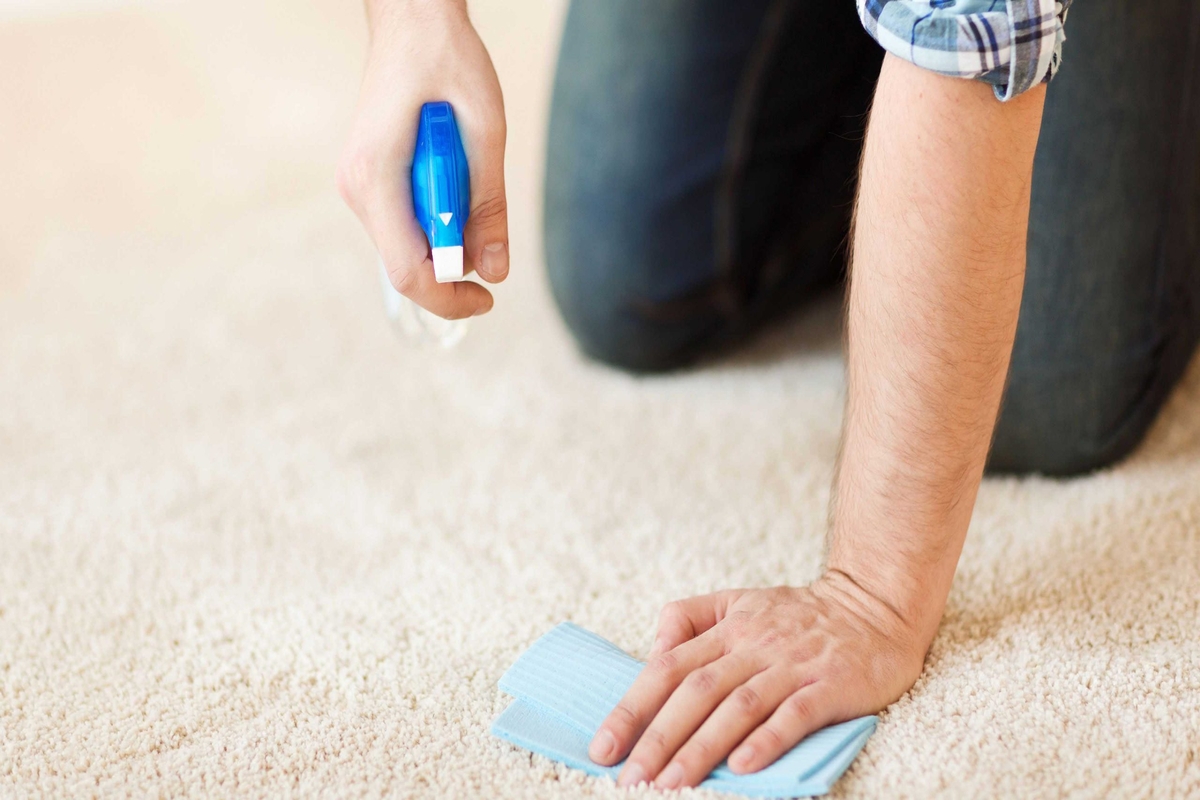
Where the product instructions permit it, apply the treatment to a white cloth first rather than pouring it directly onto the stain. Work in small sections and continue blotting from the edge towards the centre.
Never mix a commercial carpet cleaner with vinegar, bicarbonate of soda, hydrogen peroxide, bleach or another stain-removal product. Different chemicals can react unpredictably, damage the carpet or make subsequent professional treatment more difficult.
If you are unsure which treatment is appropriate, our guide to the types of stains professional carpet cleaning can remove explains why the substance, fibre and age of a stain all influence the method used.
Step 5: Remove Residue and Blot the Carpet Dry
Follow the stain remover’s instructions for rinsing. If a light rinse is required, dampen a clean cloth with cool water and blot the treated area carefully.
Removing cleaning residue is important. Detergent left in the pile can attract soil, cause the area to feel sticky or create a visible patch after drying.
Press a folded dry white towel onto the area to absorb as much remaining moisture as possible. Replace it as necessary until the carpet feels only slightly damp.
Step 6: Allow the Carpet to Dry Properly
Leave the carpet to dry naturally with good airflow. Open a window or position a fan nearby, but do not direct intense heat onto the carpet.
Avoid:
- Hairdryers
- Steam cleaners
- Portable heaters
- Radiators
- Strong direct sunlight
Do not walk over the treated area or replace furniture until it is completely dry. Furniture legs placed on damp wool can leave marks, transfer stain or contribute to browning.
Once dry, gently vacuum the area using a suitable carpet setting to restore the pile.
How to Remove Dried Red Wine from a Wool Carpet
A dried red wine stain is more difficult to treat because the liquid has already penetrated and dried within the fibres. The carpet may still improve, but repeated aggressive treatments are more likely to cause fading than one controlled professional treatment.
Begin by checking the carpet’s care information and testing cool water on a hidden area.
Lightly dampen a clean white cloth with cool water and press it against the stain. Allow the moisture to soften the dried residue briefly, then blot with a separate dry cloth. Do not pour water directly onto the stain or leave the carpet soaking.
If colour begins transferring from the stain to the cloth, continue slowly with the same blotting method. If carpet dye transfers as well, stop immediately.
A tested wool-safe spot remover may be used according to its label, but avoid repeatedly applying different products when the first attempt does not work. Old stains often require controlled stain chemistry and effective extraction rather than additional household remedies.
Professional treatment is advisable when the stain:
- Has been present for several days or longer
- Covers a large area
- Has already been treated with another chemical
- Has reached the carpet backing or underlay
- Appears on an expensive or delicate wool carpet
- Develops a pale, orange, brown or bleached appearance
- Returns after the carpet dries
If you are deciding whether another DIY attempt is worthwhile, see our comparison of DIY carpet cleaning versus professional treatment.
How to Avoid Fading or Colour Bleeding
Removing the red wine is only part of the job. The treatment must also preserve the carpet’s original colour and texture.
Use as Little Moisture as Possible
Excess water can carry carpet dyes into neighbouring fibres, spread the wine into a larger area or soak the backing. Controlled dampening followed by immediate blotting is safer than pouring or spraying large quantities of liquid.
Test Every Product First
A product described as “carpet-safe” is not necessarily appropriate for every wool carpet. Test the precise product and dilution you intend to use, even if you have used it successfully on another carpet.
Avoid Heat
Heat can affect wool fibres, carpet dyes and backing materials. It can also speed up drying at the surface while deeper moisture remains trapped below.
Do Not Scrub the Pile
Scrubbing can distort or fuzz wool fibres. The resulting patch may reflect light differently and look faded, even if no colour has been chemically removed.
Stop When Carpet Dye Transfers
Red or pink transfer may initially come from the wine. However, if the carpet’s own colour appears on the white cloth, do not continue. A professional should assess the fibre and dye stability before further treatment.
The same caution applies to handmade and Persian wool rugs. These should not automatically be treated in the same way as fitted carpet. Our guide on how to clean a Persian rug safely explains the additional risks associated with delicate dyes, foundations and hand-knotted construction.
Red Wine Cleaning Methods to Avoid on Wool Carpet
Many popular red wine remedies are designed for washable fabrics or synthetic carpets. That does not make them suitable for coloured wool.
Hydrogen Peroxide and Oxygen-Based Bleaches
Hydrogen peroxide may lighten red wine pigments, but it can also lighten the carpet’s original dye. A patch test does not always predict how an extended treatment will affect the visible area.
Do not use peroxide or an oxygen-based bleaching product unless its label specifically confirms that it is suitable for your carpet and the method has been approved after proper assessment.
Chlorine Bleach
Never apply chlorine bleach to a wool carpet. It can cause severe colour loss and fibre damage.
Hot Water and Steam
Hot water poured directly onto a stain and domestic steam-cleaning methods can expose wool to unnecessary heat and moisture. They may also spread the contamination into the backing if the machine cannot extract enough liquid.
Scrubbing Brushes
A stiff brush can spread the stain, untwist the pile and create a permanently rough or lighter-looking patch. Blotting is slower, but much safer.
Salt
Salt is frequently recommended for absorbing fresh wine. However, it can leave crystals deep in the pile and may encourage the user to rub or vacuum the area before it is properly dry.
A clean white cloth provides a more controlled way to absorb the spill without introducing another substance.
Bicarbonate of Soda
Bicarbonate of soda can leave a pale, powdery residue that is difficult to remove from dense wool pile. When mixed into a paste, it also requires extra moisture and handling.
It should not be treated as a universally safe alternative to a product designed and tested for wool carpets.
White Wine
Pouring white wine over a red wine stain adds more liquid, acidity, alcohol and sugar to the carpet. It does not provide an advantage over careful dilution with cool water.
Neat Vinegar or Washing-Up Liquid
Vinegar and washing-up liquid appear in many generic cleaning recipes, but concentrations vary and neither is automatically suitable for every wool carpet.
Too much washing-up liquid can leave sticky residue, while applying neat or overly strong vinegar without checking the carpet’s care requirements can affect certain dyes or finishes. A properly labelled wool-carpet spot remover is a safer default.
Why Did the Red Wine Stain Reappear After Drying?
A stain that disappears while wet and returns during drying is often caused by wicking. Red wine may have travelled into the base of the carpet or backing. As moisture evaporates, some of the remaining contamination moves back towards the surface through the fibres, making the stain visible again.
A mark may also reappear because:
- Too much water was used
- The spill reached the underlay
- Cleaning solution remained in the carpet
- The area dried too slowly
- Only the surface of the stain was treated
- The stain spread beyond the visibly wet area
Repeatedly soaking the patch is unlikely to solve deep contamination and may make the affected area larger. Professional extraction is usually the safer next step.
When to Call a Professional Carpet Cleaner
A small, fresh spill on a colourfast wool carpet may respond well to immediate blotting and controlled treatment. Other situations require more caution.
Contact a professional if:
- The carpet’s colour transfers during testing
- The stain is old, large or particularly dark
- Wine has soaked into the backing or underlay
- You have already applied vinegar, detergent, peroxide or another chemical
- The stain has developed a ring
- The mark returns after drying
- The carpet has a strong odour
- The pile feels stiff, rough or sticky
- The carpet is handmade, antique or especially valuable
- You are uncertain whether the carpet is pure wool or a blend
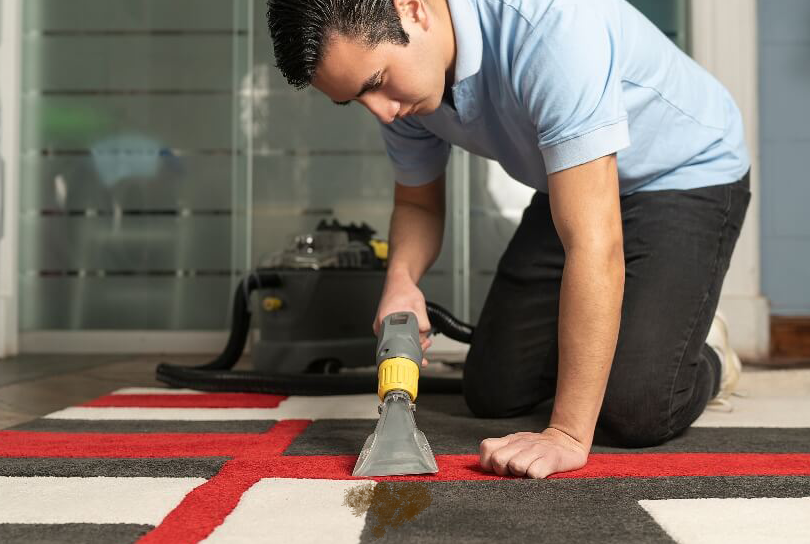
Hi Carpet Cleaner provides professional spot and stain removal across London. The appropriate treatment is selected according to the carpet fibre, dye stability, stain age and any products previously applied.
Complete removal cannot be guaranteed in every case, particularly when a stain has aged or altered the original dye. However, an early assessment can prevent further damage caused by unsuitable or repeated DIY treatments.

Frequently Asked Questions
Will Red Wine Come Out of a Wool Carpet?
Fresh red wine can often be removed or significantly improved when it is blotted quickly and treated correctly. Results depend on the carpet’s dyes, the size and age of the spill, how deeply it has penetrated and whether other cleaning products have already been used.
Can I Use White Vinegar on a Wool Carpet?
White vinegar is not universally safe for every wool carpet. Always check the manufacturer’s instructions and test any intended treatment on a hidden area. A wool-suitable or WoolSafe-approved spot remover is a safer default than applying neat vinegar or an unverified homemade mixture.
Is Bicarbonate of Soda Safe on Wool Carpet?
Bicarbonate of soda is commonly recommended online, but it can leave powder deep in a dense wool pile. A wet paste also introduces additional moisture and may create residue or a visible ring. It is not the best first treatment for a red wine stain on wool.
Can I Use Hydrogen Peroxide on a Wool Carpet?
Hydrogen peroxide should not be used as a general DIY treatment on coloured wool carpet because it may bleach or permanently lighten the original dye. If basic blotting and a tested wool-safe product do not work, arrange a professional assessment.
Does Salt Remove Red Wine from Wool Carpet?
Salt may absorb some liquid, but it can leave crystals and residue within the pile. Immediate blotting with a clean white cloth, followed by a small amount of cool water if necessary, provides a more controlled first response.
Can White Wine Remove a Red Wine Stain?
White wine is not necessary and can add more liquid, alcohol and sugar to the carpet. Use cool water sparingly to dilute the spill, then blot it out with a clean white cloth.
How Do I Remove an Old Red Wine Stain from Wool Carpet?
Lightly rehydrate the stained fibres with a cool, damp white cloth and blot carefully. If the carpet passes a hidden-area test, use a wool-approved spot remover according to its instructions. Stop if the carpet dye transfers or the mark does not improve.
Why Does the Carpet Look Lighter After Cleaning?
The original dye may have been affected by an unsuitable cleaner, or scrubbing may have changed the direction and texture of the pile so that it reflects light differently. Allow the area to dry completely and vacuum it gently. If the lighter patch remains, seek professional advice.