A fabric sofa can collect dust, crumbs, body oils, pet hair and accidental spills long before it looks noticeably dirty. Although light cleaning can often be done at home, using the wrong product or too much water may leave water marks, spread stains, alter the texture or create a lingering damp smell.
To clean a fabric sofa safely, begin by checking its care label. Vacuum away loose debris, patch-test a cleaner suitable for the fabric and use as little moisture as possible. Blot stains instead of rubbing them, clean each area evenly and allow the sofa to dry completely before sitting on it again. Sofas marked S or X, delicate materials and heavily soiled upholstery may need professional cleaning.
Before You Start: Check the Sofa’s Cleaning Code
The appearance of the upholstery does not tell you how it should be cleaned. Two sofas that look similar may contain different fibres, dyes, backings and fire-resistant treatments.
Always check the manufacturer’s care instructions before applying water, detergent, solvent or steam. The label is usually found beneath a seat cushion, under the sofa or attached to the frame.
What Do W, S, WS and X Mean?
Upholstery cleaning codes indicate which types of cleaner can generally be used on the material.
Code | Meaning | Appropriate approach |
W | Water-based cleaning products are permitted | Use a suitable water-based upholstery cleaner with controlled moisture |
S | Solvent-based cleaning only | Do not apply water; use an approved upholstery solvent or contact a professional |
WS or SW | Water- or solvent-based products may be used | Select the product carefully and complete a patch test first |
X | Vacuuming or light brushing only | Do not attempt wet cleaning at home |
A W code does not mean that the sofa can be soaked with water. It also does not confirm that removable covers can be put in a washing machine. Excessive moisture can still penetrate the filling, create water marks or cause the fabric to shrink.
What If the Sofa Has No Care Label?
If you cannot find a care label, look for the original product information, contact the manufacturer or check its website using the sofa’s model number.
When neither the material nor its cleaning requirements can be confirmed, restrict home maintenance to gentle vacuuming. Applying an untested liquid cleaner to an unidentified fabric is risky, particularly if the sofa contains viscose, linen, silk, velvet or unstable dyes.
What You’ll Need to Clean a Fabric Sofa Safely
The exact products will depend on the cleaning code, but the basic equipment usually includes:
- A vacuum cleaner with an upholstery attachment and adjustable suction
- White, lint-free microfibre cloths
- White absorbent towels
- A small bowl
- Lukewarm water or, where appropriate, distilled water
- A cleaner specifically approved for the sofa’s care code
- A soft upholstery brush, if permitted for the fabric
- Good ventilation or a fan to support drying
White cloths make it easier to see the dirt being removed and whether colour is transferring from the sofa. A coloured towel could also release dye, especially when used with moisture or solvent.
Avoid preparing a large bucket of soapy water. More solution does not produce a cleaner sofa; it usually makes moisture control more difficult.
How to Clean a Fabric Sofa at Home Step by Step
The following method is intended for routine maintenance and light cleaning. If the care label prohibits wet cleaning, follow the manufacturer’s instructions instead.
Step 1: Remove the Cushions and Inspect the Sofa
Remove loose cushions, throws and anything trapped between the seats. Check the upholstery for tears, loose threads, worn seams, existing water marks and areas of colour loss.
Take extra care around damaged sections. Vacuuming over a loose thread or applying moisture to a weakened seam could make the damage worse.
This inspection also helps you identify whether the sofa is uniformly dirty or has isolated stains that require separate treatment.
Step 2: Vacuum Without Damaging the Fabric
Vacuum the main surfaces, seams, crevices, under the cushions and both sides of any reversible cushions. Work slowly so that dust is lifted rather than pushed further into the upholstery.
Use low suction on delicate, loosely woven or textured fabrics. A soft brush attachment may be appropriate, but it should not be pressed firmly or dragged aggressively across the surface.
Take particular care with velvet, bouclé and pile fabrics. Excessive suction or rough brushing can distort loops, flatten the pile or alter how the material reflects light.
Removing dry soil first is essential. If dust is mixed with a wet cleaning solution, it can form a dirty residue that is harder to extract.
Step 3: Patch-Test the Cleaning Solution
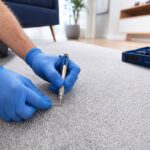
Apply a small amount of the selected product to an inconspicuous section, such as the back, lower side or area beneath a cushion. Follow the product instructions and let the test area dry completely.
Do not check only for immediate colour loss. Once the area is dry, look for:
- Colour transfer onto the white cloth
- A lighter or darker patch
- Water marks or visible edges
- Stiffness or roughness
- Shrinkage or puckering
- A change in the direction or appearance of the pile
Stop if the dye transfers, the texture changes or a visible mark develops. Trying a stronger product is more likely to increase the damage than solve the problem.
Step 4: Treat Spills and Stains Without Rubbing
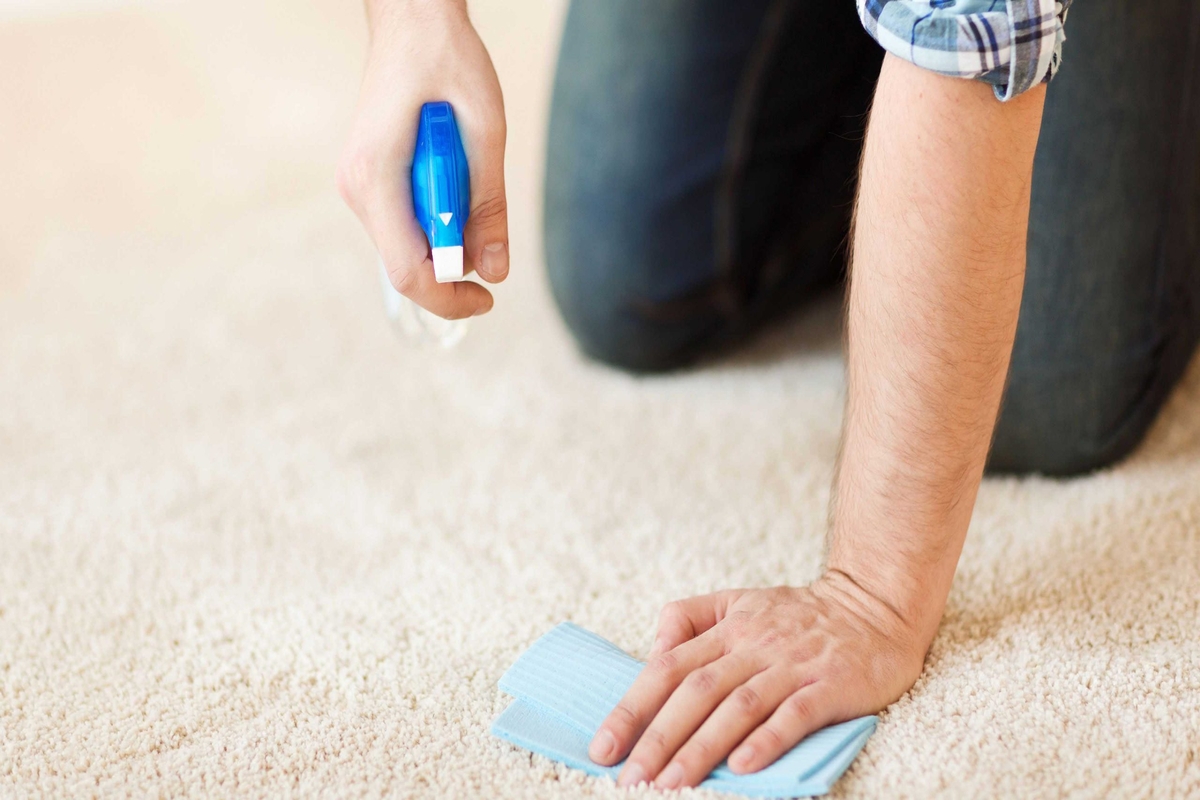
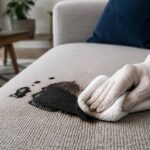
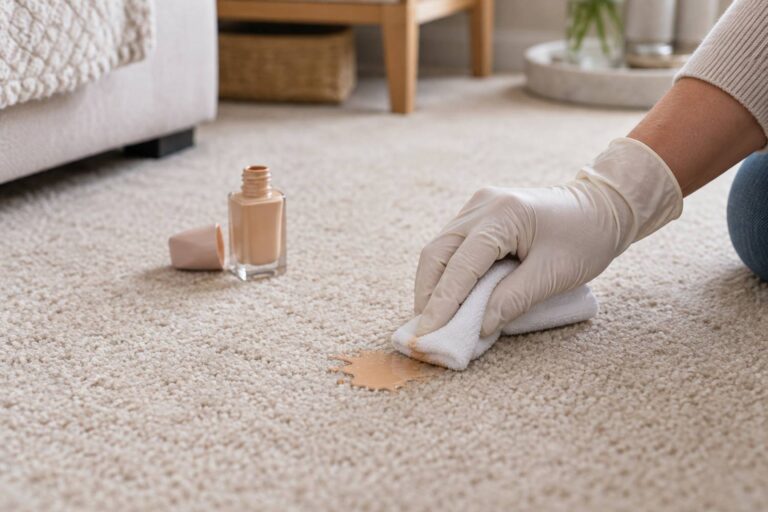
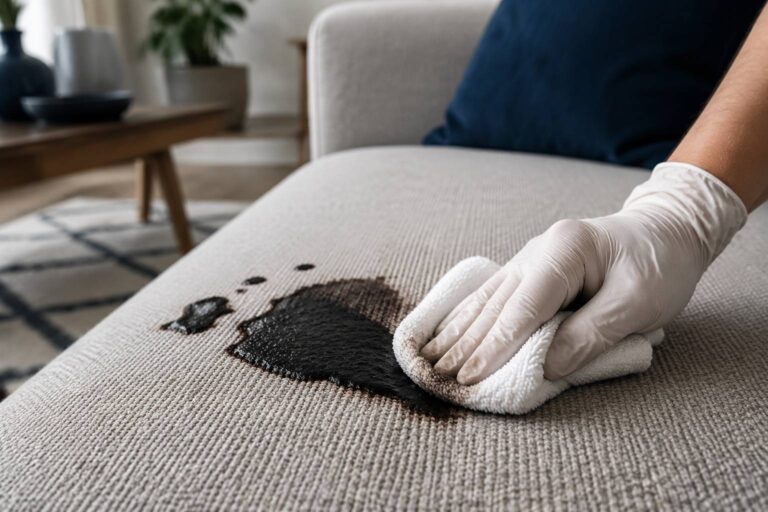
For a fresh liquid spill, place a clean white towel over the area and press gently to absorb as much moisture as possible. Replace the towel as it becomes wet.
Remove solid material with a spoon or blunt scraper, working carefully so that it is not pushed further into the fibres.
Once the excess material has been removed, use a cleaner compatible with the care code. Blot from the outside of the affected area towards the centre. This helps prevent the stain from spreading.
Do not rub or scrub the upholstery. Aggressive movement can spread the contamination, disturb the weave or create a permanently different-looking patch.
No home method can guarantee complete removal of every stain. The result depends on the substance, the fibre, the dye, how long the stain has been present and which products have already been applied.
Step 5: Clean the Sofa in Small, Even Sections
If the sofa is marked W or WS and its instructions permit water-based cleaning, apply a small amount of the approved solution to a cloth rather than pouring it directly onto the upholstery.
Work on one manageable section at a time. Where possible, clean a complete panel from seam to seam rather than wetting only the centre of a visibly dirty patch. Cleaning a defined panel evenly can reduce the risk of leaving a noticeable ring or boundary.
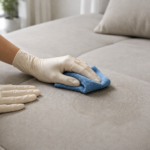
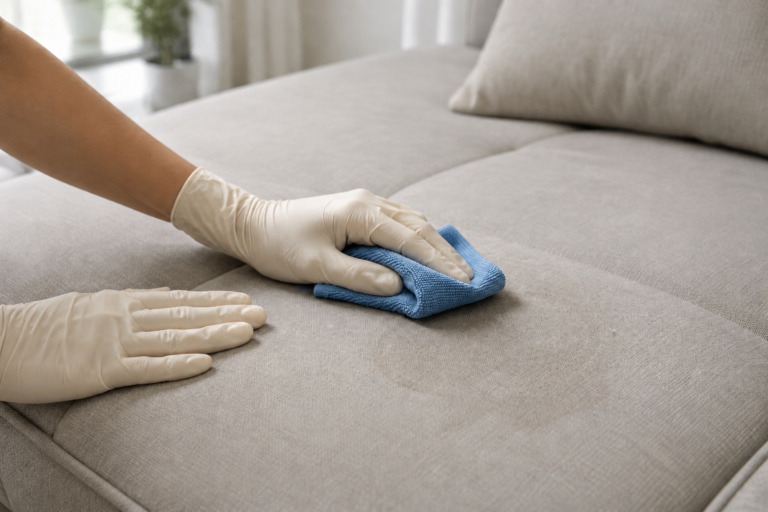
Use gentle blotting and controlled wiping movements. The cloth may be damp, but it should not be dripping. Rinse or replace it when it becomes dirty so that soil is not redistributed across the sofa.
Avoid hot water unless the manufacturer explicitly allows it. High temperatures may affect certain dyes, fibres, adhesives or finishes.
Most importantly, do not saturate the fabric. Moisture that reaches the foam or padding may take much longer to dry than the surface.
Step 6: Remove Cleaning Residue
Follow the instructions supplied with the cleaning product. Some upholstery cleaners are designed to remain on the surface, while others require limited rinsing.
If rinsing is required and the care code permits it, use a clean cloth lightly dampened with water to blot away the remaining product. Do not pour water over the area.
Detergent residue can make upholstery feel stiff or sticky. It may also attract new soil, causing the sofa to become dirty again more quickly. Repeatedly adding more cleaner to a stained area can therefore make the long-term result worse.
Step 7: Let the Sofa Dry Completely
Open windows where practical and create steady airflow through the room. A fan can help, but it should circulate room-temperature air rather than direct intense heat at the fabric.
Position removable cushions so that air can reach more than one side. Do not replace them while either the covers or filling still feel damp.
Avoid using a hairdryer, portable heater or radiator to accelerate the process. Concentrated heat may cause shrinkage, affect adhesives or create uneven drying marks.
Do not sit on the sofa until it is completely dry. Using damp upholstery can compress the fibres, transfer dye from clothing and trap moisture deeper inside the cushions.
Drying time will vary according to the amount of moisture used, the thickness of the cushions, room temperature, humidity and ventilation.
Step 8: Reset the Fabric Pile
Once the sofa is completely dry, some pile fabrics may benefit from gentle brushing in the correct direction. Only do this if it is suitable for the material and recommended by the manufacturer.
A soft upholstery brush can help restore a more uniform appearance. Rough brushing, however, can damage velvet and other delicate surfaces, so professional advice is preferable when the correct technique is uncertain.
How to Remove Common Stains from a Fabric Sofa
Different stains interact with fibres in different ways. A product that helps with a water-based drink may spread an oily mark or permanently affect a sensitive dye.
Food and Drink Spills
Act quickly. Blot liquids with a white towel and lift solid food with a spoon. Check the sofa’s care code before applying any product.
Use only a small amount of an appropriate upholstery cleaner. Work from the outside towards the centre and avoid repeatedly soaking the affected spot. If a ring starts to form, stop and allow the area to dry before deciding what to do next.
Greasy or Oily Marks
Water alone may spread oil rather than remove it. Avoid scrubbing the mark or applying washing-up liquid automatically, especially when the fibre and dye stability are unknown.
Grease stains may require a specialised upholstery product or controlled professional treatment. If the sofa has an S code, do not use a water-based home remedy.
Pet Urine, Vomit and Organic Odours
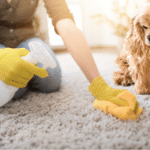
Absorb as much fresh contamination as possible before it reaches the filling. Wear gloves, remove solids carefully and blot the area with clean white towels.
Organic odours need more than perfume or deodorising powder. An enzyme-based product may help break down the source, but it must be suitable for the sofa’s fabric and patch-tested first.
If urine, vomit or another liquid has penetrated the foam, surface spot cleaning may not be sufficient. A lingering smell after the surface has dried often indicates that contamination remains deeper inside the cushion.
Ink, Paint, Nail Polish and Bleach
Do not experiment with random household solvents on ink, paint or nail polish. Products such as acetone can dissolve finishes, spread colour or damage synthetic fibres.
Bleach damage is usually colour loss rather than a removable stain. Cleaning cannot restore dye that has already been stripped from the fabric. These problems should be assessed professionally before further products are applied.
Can You Use Baking Soda and Vinegar on a Fabric Sofa?
Dry baking soda may help reduce certain surface odours, but it is not suitable for every sofa. Fine powder can become embedded in textured fabrics or work into seams and filling. Check the manufacturer’s instructions before using it and vacuum it thoroughly with appropriate suction.
Vinegar is also not a universal upholstery cleaner. Its acidity may affect certain fibres, dyes and finishes, and an unsuitable concentration can leave marks or an unpleasant odour.
Mixing vinegar and baking soda does not automatically create a stronger cleaner. The acid and alkali react with each other, reducing much of the chemical action that each ingredient has separately.
Whether a product is marketed as “natural” does not determine whether it is safe for upholstery. Care-code compatibility and a fully dried patch test are still necessary.
Can You Steam Clean a Fabric Sofa?
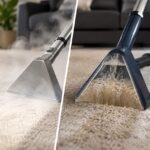
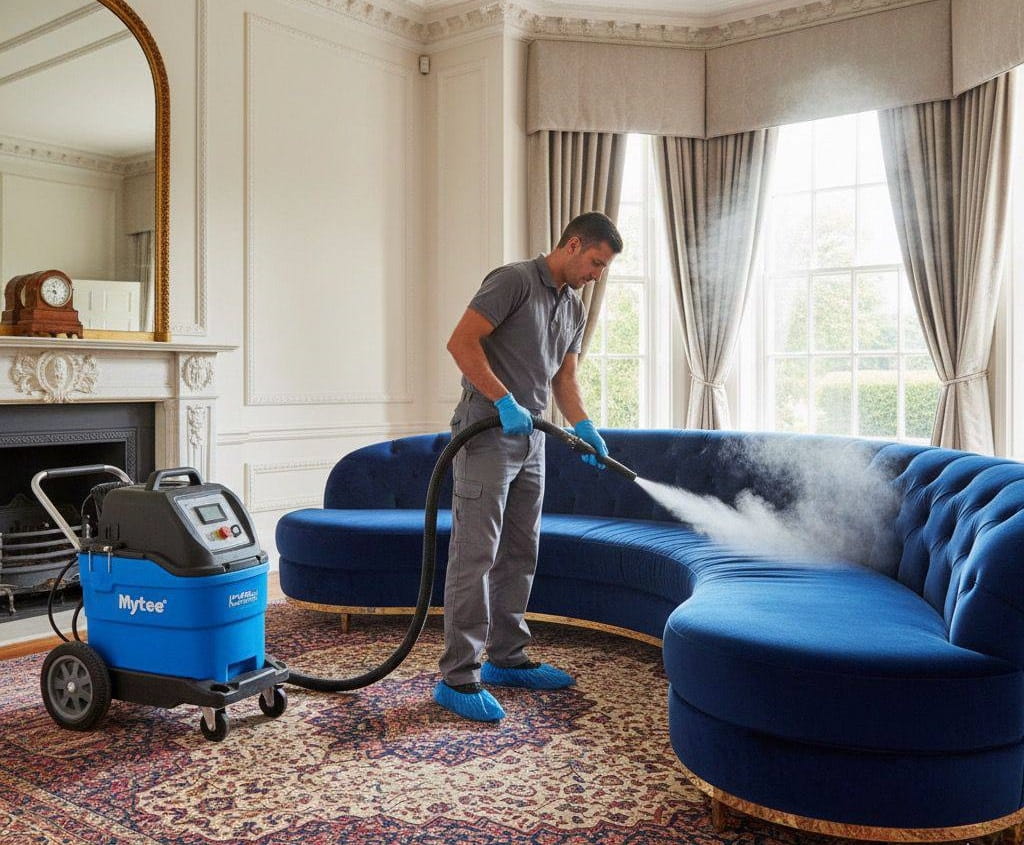
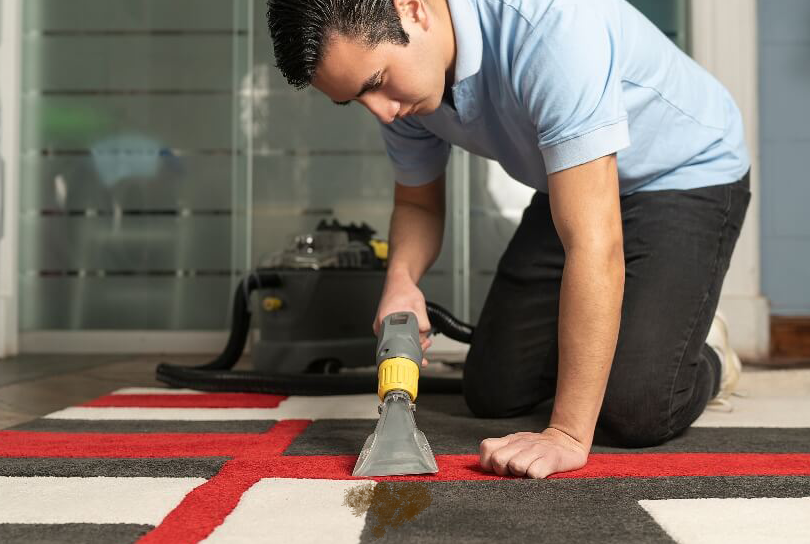
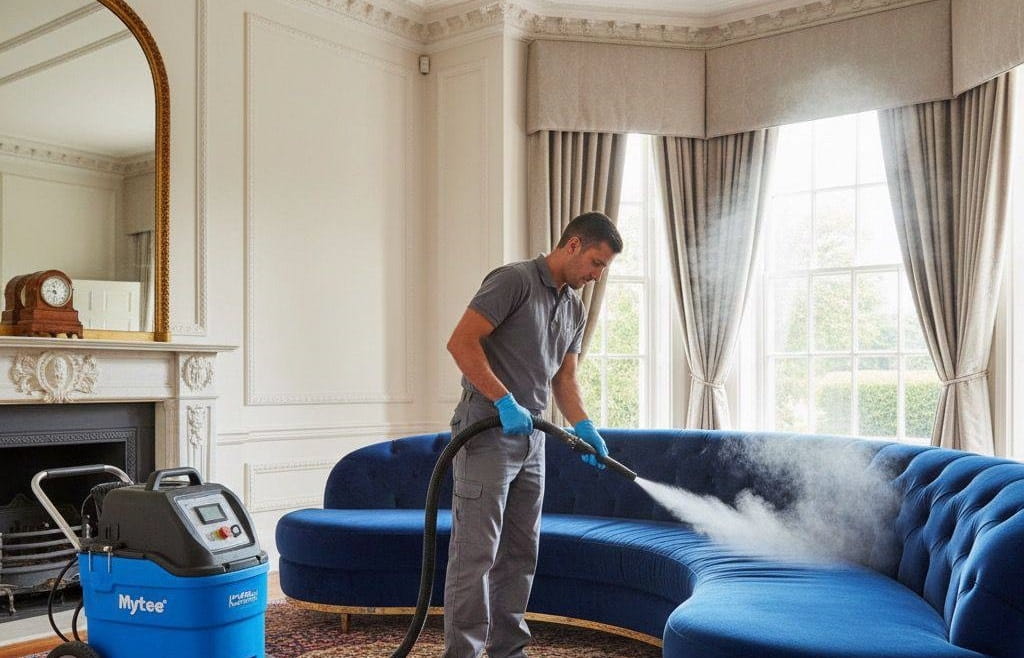
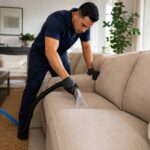
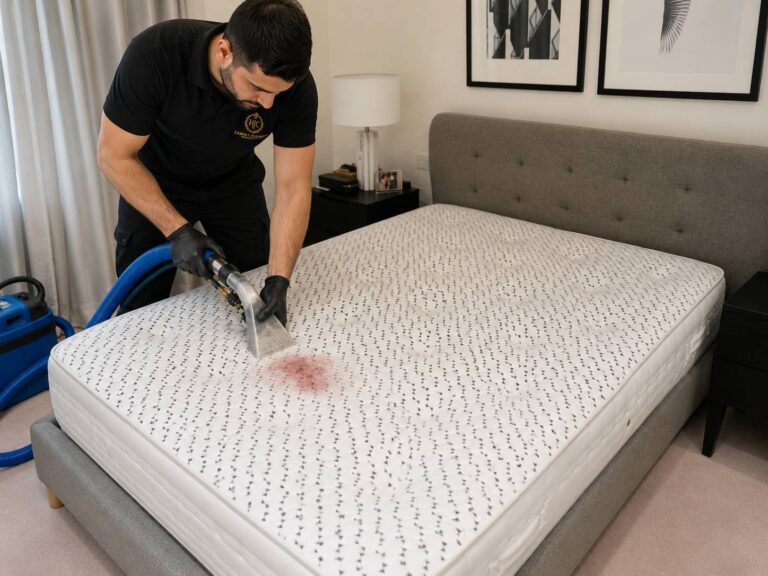
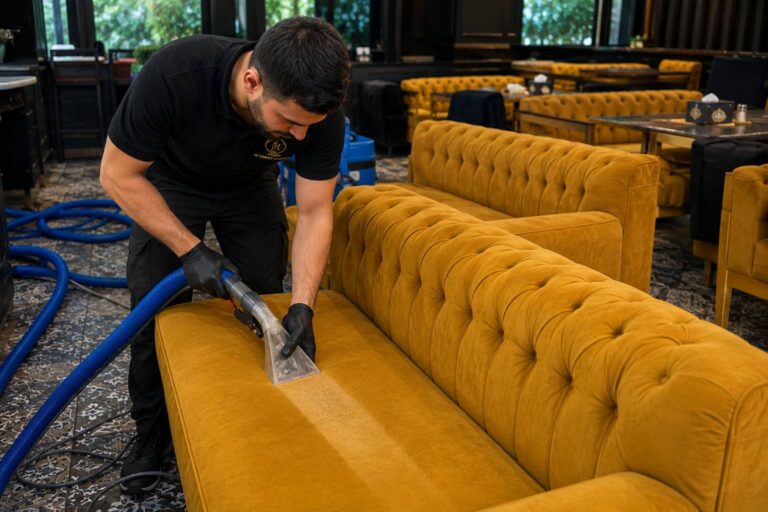
The term “steam cleaning” is frequently used for two different processes. It may describe the application of hot steam to refresh a surface, or it may refer to hot water extraction, where cleaning solution is applied and the dirty moisture is recovered by suction.
These methods introduce different amounts of heat and moisture. A W or WS code alone does not confirm that every steam cleaner or extraction machine is safe for the sofa.
Before using a machine, check that:
- The sofa manufacturer permits the method
- The machine is approved for upholstery and has the correct attachment
- The fabric is stable at the proposed temperature
- The cleaning product is suitable for the fibres
- The operator can control moisture and extract it effectively
- Adequate drying conditions are available
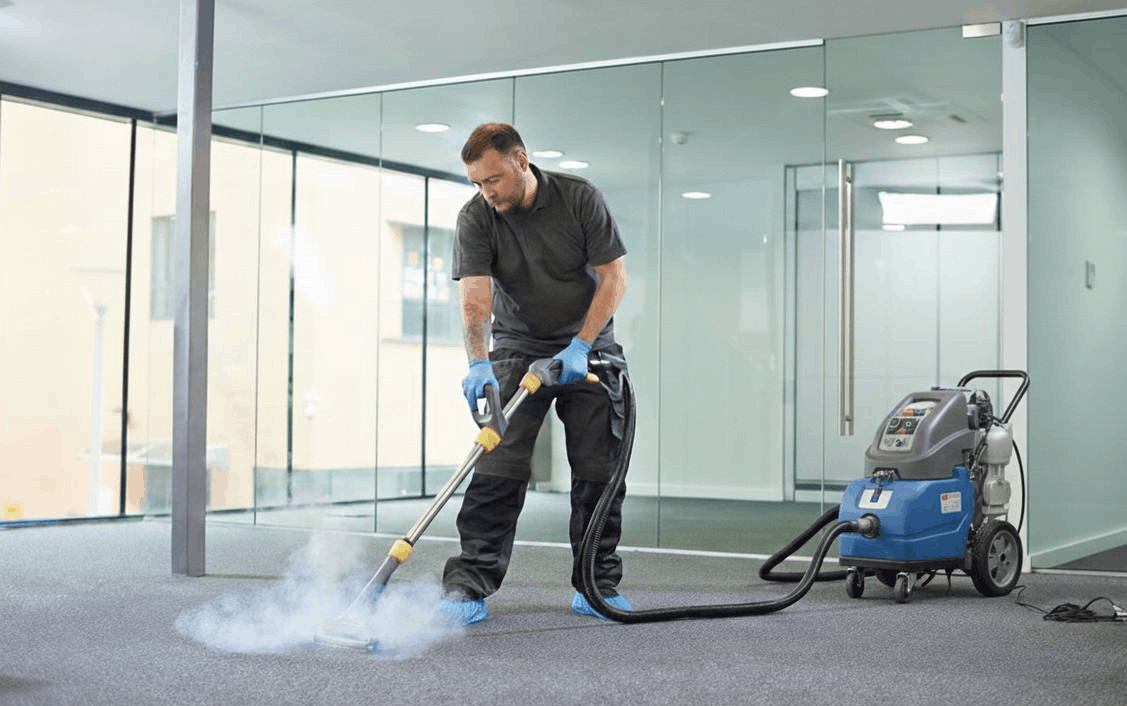
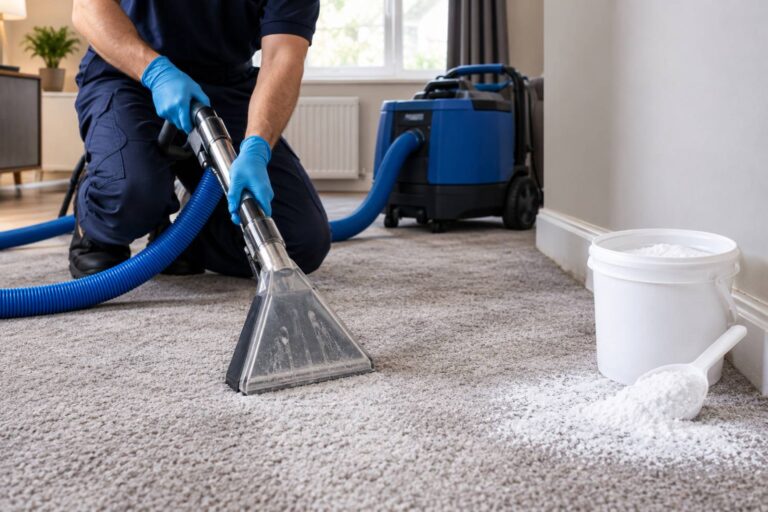
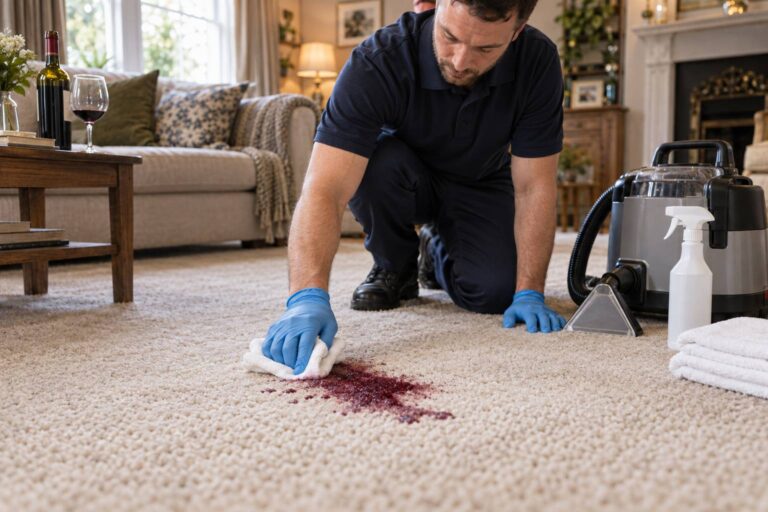
A carpet-cleaning machine should not be used on a sofa simply because it can spray water. Incorrect pressure, excessive solution and weak extraction can leave the upholstery overwet.
Just cleaned it yourself? See how long a sofa takes to dry before sitting back down.
Common Sofa-Cleaning Mistakes That Can Cause Damage
Using Too Much Water
Oversaturation can create water marks, carry soil towards the edges of the wet area and leave the internal padding damp. It also increases the risk of musty odours and prolonged drying.
Scrubbing Instead of Blotting
Scrubbing can spread a stain, distort the weave and produce a visibly worn patch. Blotting transfers contamination onto the cloth with less disturbance to the fibres.
Skipping the Patch Test
Even a product labelled as an upholstery cleaner may not be safe for every fabric. Without testing, colour bleeding, texture changes or a lighter patch may only become apparent after the damage has occurred.
Machine-Washing Removable Covers Without Permission
A removable cover is not necessarily machine washable. Washing it separately may cause shrinkage, colour loss or a change in texture. It may also affect a treatment or backing that is important to the sofa’s performance.
Even if the cover survives washing, it may no longer fit the cushion correctly. Follow the manufacturer’s instructions rather than relying on the zip as evidence that machine washing is permitted.
Using Baby Wipes, Bleach or General Household Cleaners
Baby wipes and multipurpose sprays can leave sticky residue or create a visibly cleaner patch surrounded by older soil. Bleach can permanently remove colour and must not be used as a general stain remover.
Products intended for hard surfaces, clothing or carpets should not automatically be applied to upholstery.
Sitting on the Sofa Before It Is Dry
Pressure on damp fabric can flatten the pile and slow down the drying of the filling. Clothing dye may also transfer onto light-coloured upholstery. Wait until the fabric, seams and cushion interiors are fully dry.
When Should You Stop DIY Cleaning and Call a Professional?
Home cleaning is best limited to low-risk maintenance when the material and appropriate method are known. Stop and seek professional advice if:
- The sofa has an X code
- It has an S code and you do not have the correct product or experience
- The care label is missing and the fabric cannot be identified
- The upholstery contains silk, viscose, velvet or another delicate material
- Colour transfers during the patch test
- The test area develops a water mark or texture change
- The stain contains oil, ink, paint, nail polish or an unknown chemical
- Pet contamination or another liquid has reached the internal filling
- A previous cleaning attempt has created rings or colour variation
- Large sections need to be cleaned evenly
- The sofa is valuable, antique or covered by a warranty
Professional upholstery cleaning should begin with an assessment of the fibre, colour stability, construction, existing damage and type of contamination. The cleaning method can then be selected for that particular sofa rather than applying the same process to every fabric.
If you are unsure whether your upholstery is safe to clean at home, send Hi Carpet Cleaner clear photographs of the sofa, care label and affected areas. Our team can assess the situation and recommend the safest next step.
When DIY isn’t enough, see professional sofa cleaning cost before booking.
Need Professional Sofa Cleaning in London?
If your sofa is heavily soiled, made from a delicate fabric or affected by persistent stains and odours, repeated DIY treatment could make the problem harder to correct.
Hi Carpet Cleaner provides professional upholstery cleaning in London, with the cleaning method selected according to the upholstery, construction and condition of each sofa. Contact our team for an assessment and a free quote.
Home cleaning works best alongside a regular professional schedule, see how often sofas should be professionally cleaned.
Frequently Asked Questions
What Is the Safest Way to Clean a Fabric Sofa at Home?
Check the care label, vacuum with suitable suction and patch-test an approved cleaner. Use minimal moisture, blot instead of scrubbing and allow the sofa to dry completely. Do not wet-clean an S- or X-coded sofa.
Can I Clean a Fabric Sofa with Washing-Up Liquid?
Only if the sofa’s instructions permit water-based cleaning and the detergent is compatible with the material. Washing-up liquid can produce excessive foam or leave sticky residue, so it should not be treated as a universal upholstery cleaner. Patch-test any proposed solution first.
Can I Use a Carpet Cleaner on My Sofa?
Only use a machine if it has a suitable upholstery attachment and both the sofa manufacturer and equipment manufacturer approve its use on that fabric. The operator must also be able to control the amount of solution applied and recover enough moisture for safe drying.
How Long Does a Fabric Sofa Take to Dry?
There is no single drying time for every sofa. It depends on the cleaning method, quantity of moisture, cushion thickness, fibre type, room temperature, humidity and airflow. Do not judge dryness by the surface alone; seams and internal filling may remain damp for longer.
Why Does My Sofa Have Water Marks After Cleaning?
Water marks can result from local oversaturation, detergent residue, minerals in the water or soil moving towards the boundary of the damp area. Cleaning only the centre of a panel can also leave an uneven edge. Avoid adding more product until the cause has been assessed.
Can All Removable Sofa Covers Go in the Washing Machine?
No. A zip or removable cover does not mean that machine washing is permitted. Washing may shrink the material, affect its finish or prevent it from fitting the cushion again. Always follow the care label and manufacturer’s instructions.