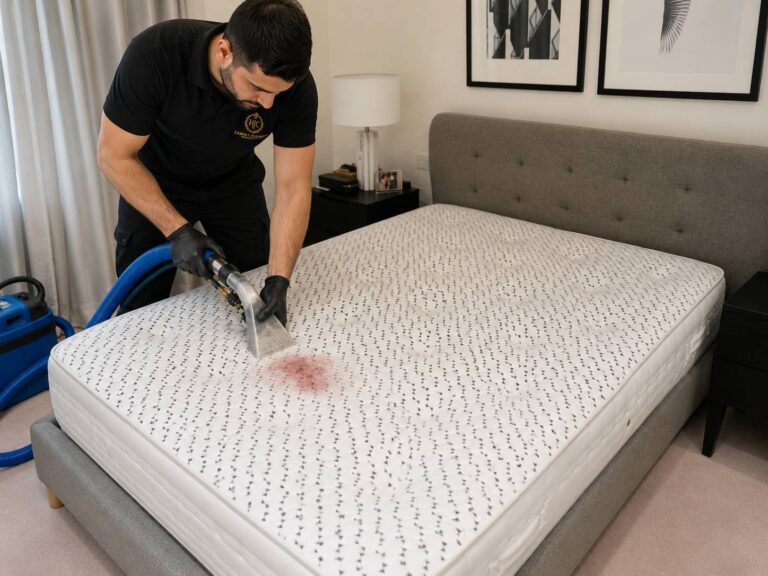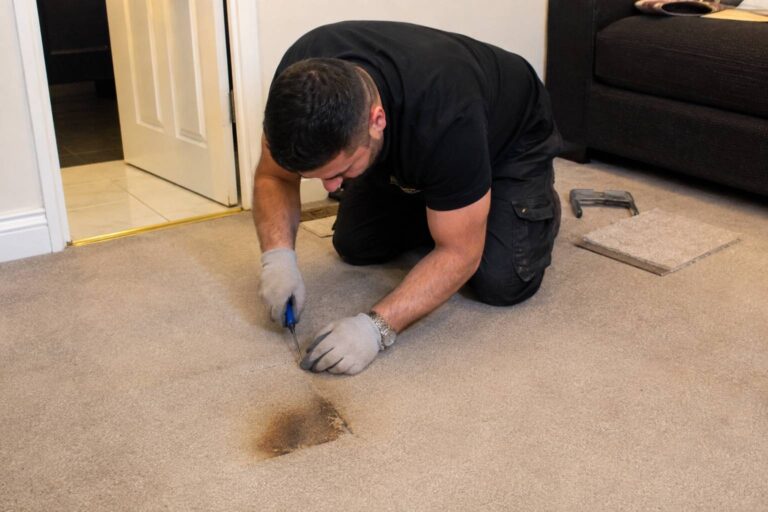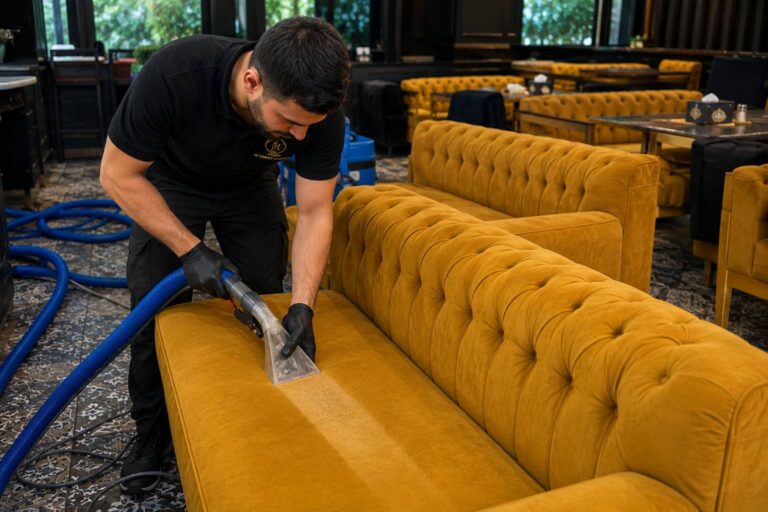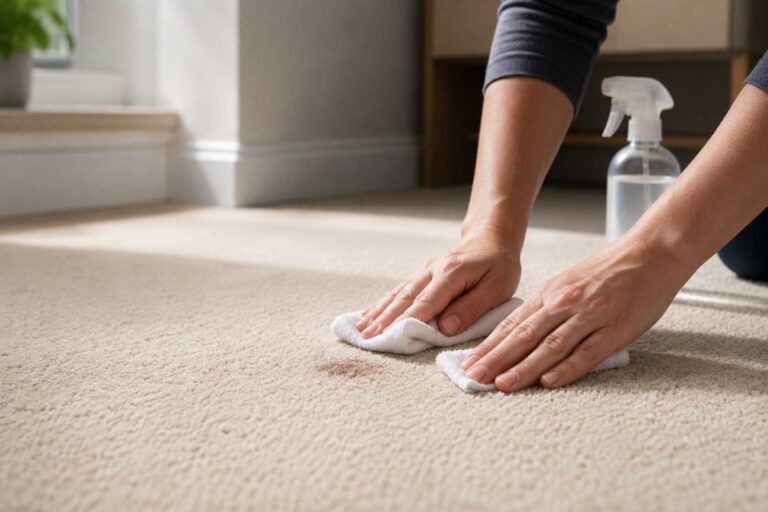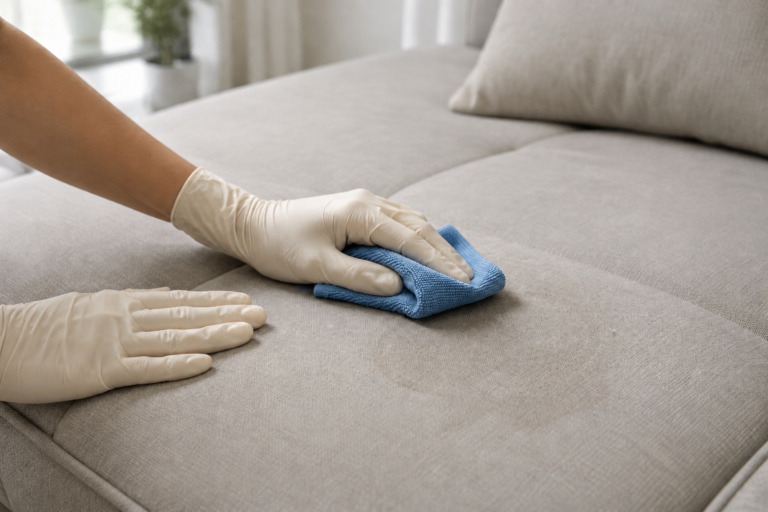
For most fabric sofas, professional cleaning every 12 to 18 months is a reasonable starting point. A sofa used heavily every day, shared with pets or young children, or exposed to frequent food spills may need professional cleaning every 6 to 12 months.
A lightly used sofa in a guest room may go 18 to 24 months between cleans, provided it has no stains, odours or other signs of contamination.
These intervals are practical guidelines rather than fixed rules. The right schedule depends on:
- How frequently the sofa is used
- Whether children or pets use it
- The upholstery material and care instructions
- Whether food is regularly eaten on it
- The presence of smoke, persistent odours or previous spills
- How consistently the sofa is vacuumed and maintained
Published cleaning guidance varies, but most recommendations place regularly used household sofas somewhere between six and eighteen months, with shorter intervals for busy homes. Professional cleaning should not be treated as a substitute for routine maintenance. Weekly vacuuming, prompt spill treatment and regular cushion rotation can slow down the build-up of soil, but they do not necessarily remove residues that have settled deeper into the upholstery.
Ready to book your next visit? Explore our upholstery cleaning services.
Recommended Sofa Cleaning Frequency by Household Type
The following table provides a more useful starting point than applying one cleaning interval to every sofa.
Household or sofa condition | Suggested professional cleaning interval |
Lightly used guest-room sofa | Every 18–24 months |
Average household use | Every 12–18 months |
Heavy daily use | Every 6–12 months |
Home with young children | Every 6–12 months |
Pet regularly sits on the sofa | Every 6–9 months |
Pet lives in the home but stays off the sofa | Every 9–12 months |
Food is regularly eaten on the sofa | Every 6–12 months |
Smoker in the property | Every 6–9 months |
Allergy-sensitive household | Every 6–12 months, depending on symptoms and medical advice |
Rental property | Between tenancies or according to condition |
Reception, waiting-room or commercial seating | Every 3–6 months |
Second-hand sofa | Before regular use, where suitable for professional cleaning |
These intervals should be adjusted according to the manufacturer’s instructions and the actual condition of the furniture.
For example, a dark synthetic sofa used by two adults may remain in good condition with professional cleaning every 12 to 18 months. A pale fabric corner sofa used daily by a family with two children and a dog may need attention closer to every six months.
The calendar alone should not determine the decision. Visible darkening, recurring odours or a significant spill may justify cleaning earlier.
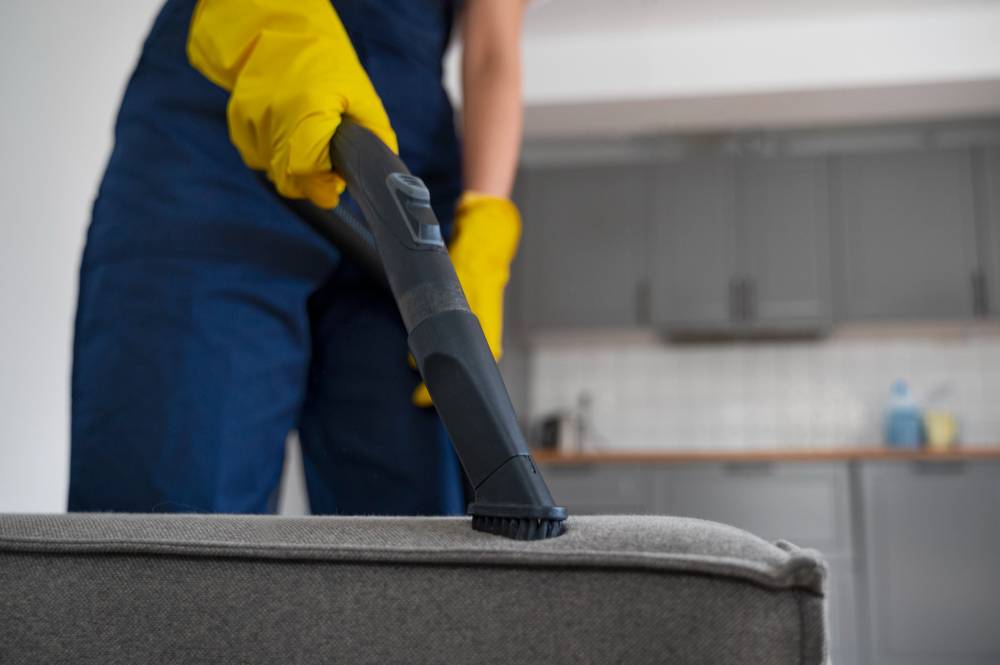
What Determines How Often Your Sofa Needs Cleaning?
Usage Level
A sofa used for several hours every day collects more body oils, dust, crumbs and general soil than occasional seating.
The most heavily affected areas are usually:
- Headrests
- Armrests
- Front edges of seat cushions
- Areas where hands regularly touch the fabric
- Gaps between cushions
- The preferred seat of a family member or pet
High-use sofas may begin to look dull even when they do not have an obvious stain. This is often caused by gradual soil accumulation rather than one isolated incident.
A formal sofa used only when guests visit may need professional cleaning far less frequently than the main living-room sofa.
Children and Pets
Children increase the likelihood of food spills, drink marks, sticky residues and repeated contact with the upholstery. Pets can add hair, outdoor soil, body oils and odours.
The presence of a pet does not automatically mean the sofa must be cleaned every few months. Frequency depends on:
- Whether the pet is allowed on the sofa
- The number and size of the pets
- How heavily they shed
- Whether they regularly return indoors wet or muddy
- Whether washable throws are used
- How frequently the sofa is vacuumed
A dog that sleeps on the sofa every night creates a different maintenance requirement from a pet that remains on the floor.
Fabric Type and Care Label
Different upholstery materials react differently to moisture, agitation, heat and cleaning products. A method that works on a durable synthetic sofa could damage viscose, velvet, silk or other sensitive materials.
Before any cleaning method is selected, the following should be checked:
- Fibre composition
- Colour stability
- Construction
- Backing material
- Existing wear
- Previous cleaning attempts
- Manufacturer’s care instructions
Some furniture uses cleaning codes such as:
- W: Use an appropriate water-based cleaning method.
- S: Use a suitable solvent-based method; water may be unsuitable.
- W/S or WS: Water- or solvent-based methods may be permitted.
- X: Vacuuming or dry brushing only; liquid cleaning products should not be used.
These codes describe compatible cleaning categories, not a complete cleaning procedure. A hidden-area test and professional assessment may still be necessary. Care-code systems can also differ between manufacturers and markets, so the furniture manufacturer’s instructions take priority.
Allergies, Smoking and Ventilation
Upholstered furniture can retain dust, pollen, pet debris and other fine particles. Professional cleaning may reduce some of this accumulated material, but it should not be presented as a medical treatment or a guarantee that allergy symptoms will improve.
For allergy-sensitive households, sofa maintenance normally works best as part of a broader plan that may include:
- Regular vacuuming with suitable filtration
- Cleaning curtains, rugs and carpets
- Washing pet bedding
- Controlling indoor humidity
- Improving ventilation
- Following medical advice
Smoke exposure can create a different problem. Smoke-related odours may affect the fabric, cushion fillings and internal structure. Surface cleaning alone may not remove an odour that has penetrated deeply into the foam.
Colour and Fabric Protection
Pale upholstery often shows discolouration earlier than dark upholstery. This does not always mean it is objectively dirtier, but visible changes become noticeable sooner.
Dark fabric can conceal gradual soil accumulation. Check less exposed areas—such as beneath a cushion or behind the sofa—against frequently touched areas to identify colour differences.
A fabric protector may slow the absorption of some spills, but it does not make the sofa stain-proof or remove the need for maintenance. Its performance can also reduce over time through use and cleaning.
Signs Your Sofa Needs Cleaning Before the Scheduled Date
Do not wait for the planned cleaning date when the sofa already shows clear signs of deterioration.
Persistent Odours
A stale, smoky, musty or pet-related smell that remains after ventilation and vacuuming may indicate that the source is inside the upholstery.
Odours should be assessed carefully. Cleaning may help when the problem is held within the surface fabric, but contamination that has reached the foam may require additional treatment.
A damp or mould-like smell should not be covered with fragrance. The source of the moisture must be identified first.
Visible Darkening
Armrests, headrests and seat edges may become darker because they receive repeated contact with skin, hair products, lotions and clothing.
This type of gradual build-up can be more difficult to remove when left untreated for a long period.
Recurring or Widespread Stains
One small recent spill may only require careful spot treatment. Multiple stains, large water marks or stains that return after drying can indicate a deeper issue.
A returning stain may be caused by:
- Residue left by a cleaning product
- Soil rising from deeper layers as the area dries
- A spill that reached the cushion filling
- Uneven wetting
- Incomplete extraction
Repeatedly applying more household cleaner may increase residue and make professional treatment more difficult.
Increased Dust or Debris
Visible dust released when cushions are moved or tapped suggests that routine vacuuming has not removed material from deeper areas.
Pay particular attention to:
- Cushion gaps
- Zips and seams
- Beneath removable cushions
- The back edge of the sofa
- Areas close to radiators or open windows
Fabric Feels Different
A greasy, sticky, stiff or rough texture may indicate accumulated soil or cleaning-product residue.
Texture changes can also be caused by wear, fibre damage or previous over-wetting. Cleaning will not correct every physical change.
A Significant Spill or Accident
Pet urine, vomit, milk, oily food and large drink spills should be addressed promptly. Waiting for the next scheduled clean allows liquids and odours to move further into the cushion.
Between professional visits, keep it fresh with our guide to cleaning a fabric sofa at home.
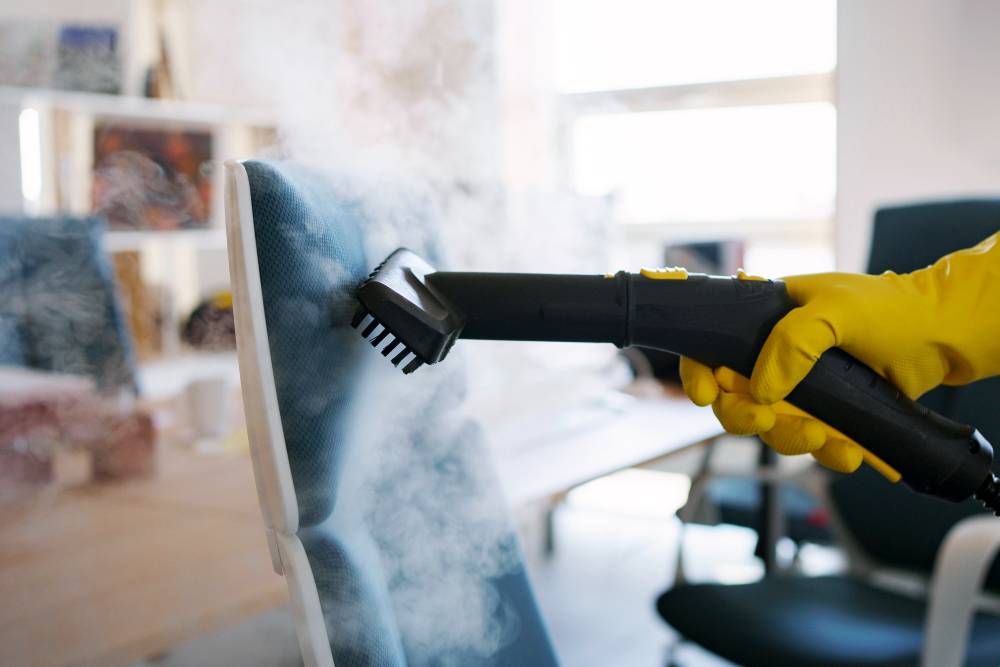
Weekly Maintenance vs Professional Sofa Cleaning
Routine maintenance and professional cleaning perform different functions.
Weekly Maintenance
Routine care is intended to control surface dust and prevent debris from becoming deeply embedded.
A practical weekly routine includes:
- Remove loose cushions where possible.
- Vacuum the seats, arms, back and cushion gaps.
- Use an upholstery attachment rather than an aggressive rotating brush unless approved by the manufacturer.
- Remove pet hair using a suitable fabric-safe tool.
- Rotate reversible cushions.
- Check for recent spills or changes in texture.
- Wash removable throws according to their care labels.
Homes with pets or heavy use may need vacuuming several times a week. Monthly light cleaning and deeper cleaning every six to twelve months are common recommendations, but the furniture’s care instructions remain the deciding factor.
Spot Treatment
Spot treatment is for a recent, localised mark. It does not replace a full professional clean.
Before treating a stain:
- Check the care label.
- Blot rather than scrub.
- Avoid saturating the cushion.
- Test the product in a hidden area.
- Do not mix cleaning chemicals.
- Do not use hot water unless the material and stain type allow it.
Scrubbing can spread the stain, distort the texture or push contamination deeper into the upholstery.
Professional Cleaning
Professional cleaning is intended to address broader or deeper soiling using a method selected for the particular material.
Depending on the sofa, this may involve:
- Hot water extraction
- Controlled low-moisture cleaning
- Solvent-based cleaning
- Dry compound or specialist methods
- Targeted odour or stain treatment
“Steam cleaning” is often used as a general marketing term, but not every professional upholstery clean relies on steam, and not every sofa is suitable for a water-based extraction process.
Budgeting for this regularly? See sofa cleaning cost in London.
Can You Have a Sofa Professionally Cleaned Too Often?
A sofa should be cleaned when its condition and usage justify it—not simply because a fixed number of months has passed.
Correct professional cleaning at sensible intervals should support maintenance. However, unnecessarily frequent or inappropriate cleaning may create risks, particularly when the wrong method is used.
Potential problems include:
- Excessive moisture reaching the cushion filling
- Slow drying
- Water marks
- Colour bleeding
- Shrinkage
- Texture distortion
- Residue left in the fabric
- Damage to unsuitable backings or internal materials
- Premature reduction of an applied fabric protector
A sofa in a quiet adult household does not usually need professional wet cleaning every three months when it is clean, odour-free and well maintained.
Conversely, a sofa affected by pet urine should not be left untreated simply because it was professionally cleaned two months earlier.
The safest approach is condition-based cleaning supported by a reasonable maintenance schedule.
How Cleaning Frequency Changes by Fabric Type
The material influences both cleaning frequency and method.
Synthetic Upholstery
Polyester, nylon and some microfibre fabrics are often more resistant to everyday use than delicate natural fibres. They may tolerate regular professional cleaning, but their backing, dyes and construction must still be checked.
A durable synthetic family sofa may follow a 6- to 12-month schedule under heavy use or a 12- to 18-month schedule under normal use.
Cotton and Linen
Cotton and linen can absorb moisture and show water marks, shrinkage or colour movement if cleaned incorrectly.
They should not automatically be treated with a rented extraction machine. Professional assessment is particularly important when the upholstery is pale, loose-woven or labelled for specialist cleaning.
Velvet
“Velvet” describes a surface construction rather than one specific fibre. Velvet may be made from cotton, synthetic fibres, viscose, silk or a blend.
Its pile can flatten, distort or dry unevenly when the wrong technique is used. Cleaning frequency should be based on condition, but the method is more important than applying a standard timetable.
Wool
Wool upholstery requires controlled chemistry, moisture and agitation. Strong alkaline products, high heat or aggressive brushing can affect the fibres.
Routine vacuuming can reduce the need for frequent deep cleaning. Professional treatment should follow the manufacturer’s guidance.
Viscose and Silk
Viscose and silk are sensitive materials. They may be prone to water marking, colour movement, texture change or loss of surface character.
Do not assume that a sofa described as suitable for “professional cleaning” can be cleaned with a standard water-extraction method.
Leather
Leather should not be placed on the same cleaning schedule as fabric upholstery. It normally requires surface cleaning and conditioning using products appropriate for the specific leather finish.
Protected, aniline and semi-aniline leather have different requirements. The manufacturer’s instructions should determine the maintenance method and interval.
When a Sofa Needs Immediate Professional Attention
The following situations should be assessed before the normal cleaning date.
Pet Urine
Urine can pass through the surface fabric and enter the foam. Cleaning only the visible mark may leave odour-producing contamination deeper inside.
Blot the area without spreading it. Avoid soaking it with household fragrance or detergent.
Also read: how to remove pet urine smell from carpet
Vomit, Blood or Other Biological Contamination
These spills require prompt, controlled treatment. The appropriate method depends on the material and the nature of the contamination.
Avoid vigorous scrubbing or experimenting with several products.
Large Liquid Spills
A large drink spill can penetrate beyond the upholstery surface. Drying the visible fabric does not confirm that the internal filling is dry.
Early extraction may reduce the likelihood of water marks, odour and prolonged dampness.
Oily or Strongly Coloured Stains
Oil, cosmetics, curry, ink and strongly coloured drinks can become more difficult to treat over time.
Do not apply heat before identifying the stain and fabric because heat may set some marks.
Smoke or Fire Exposure
Smoke residue may affect the fabric, foam and wooden frame. Specialist restoration may be more appropriate than ordinary sofa cleaning.
Mould or Persistent Damp Odour
Cleaning should not begin until the moisture source has been identified and corrected.
A sofa with extensive mould inside its cushions or frame may not be suitable for ordinary cleaning.
Second-Hand Furniture
A second-hand sofa may benefit from professional assessment before use, particularly when its cleaning history, storage conditions or previous environment are unknown.
Inspection should also check for physical damage, pest activity and persistent odours that cleaning may not resolve.

What Happens During Our Professional Sofa Cleaning?
A suitable cleaning process—such as the one we follow here at H’s Carpet Cleaner—should begin with inspection rather than immediate spraying.
1. Upholstery Inspection
The technician identifies, where possible:
- Fibre type
- Care instructions
- Construction
- Colour stability
- Existing wear
- Previous damage
- Stain types
- Areas of heavy soil
- Possible risks
Pre-existing wear should be distinguished from dirt. A faded armrest will not return to its original colour simply because it is cleaned.
2. Colour and Material Testing
A hidden area may be tested to assess:
- Colour transfer
- Water sensitivity
- Texture change
- Reaction to the proposed cleaning solution
Testing reduces risk but cannot guarantee that every old stain or previously treated area will respond uniformly.
3. Dry Soil Removal
Loose dry particles should normally be removed before moisture is introduced. Applying liquid to dust and loose debris can turn dry soil into a more difficult residue.
4. Pre-Treatment
Heavily used areas and suitable stains may receive controlled pre-treatment. Products should be selected according to fibre, dye stability and contamination type.
5. Cleaning and Extraction
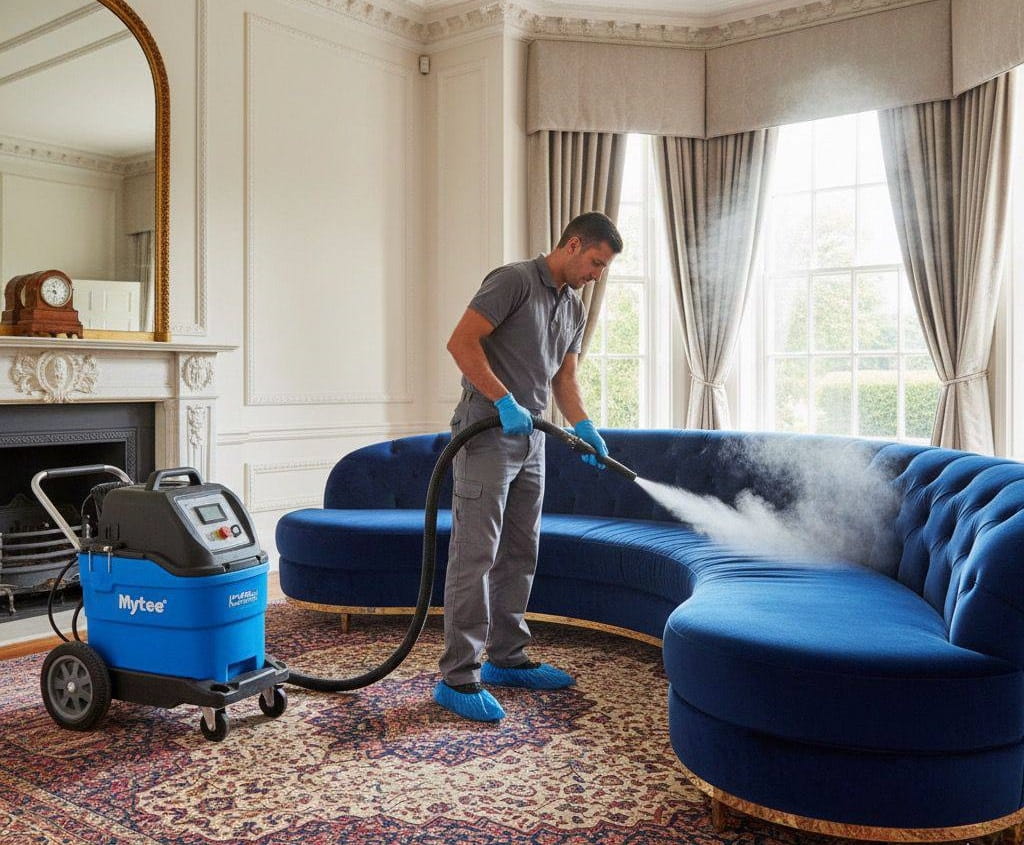
The cleaning method may use controlled moisture, extraction, solvent or another specialist process. This is the core stage of our cleaning system at H’s Carpet Cleaner, where soils are lifted from the upholstery using professional equipment designed for deep but fabric-safe cleaning.
More water does not automatically produce a better result. Effective cleaning depends on balancing:
- Suitable chemistry
- Controlled agitation
- Dwell time
- Temperature where appropriate
- Soil removal
- Thorough extraction
- Safe drying
6. Stain Reassessment
Some stains improve only after the surrounding soil has been removed. Others may need separate treatment.
Permanent colour loss, fibre damage and chemical bleaching cannot be extracted as if they were ordinary dirt.
For a treatment built to actually last, book our spot & stain removal service.
7. Grooming and Drying Guidance
Pile fabrics may be groomed to support even drying and appearance.
Cushions may need to be positioned separately to allow airflow. The sofa should not normally be used until the upholstery is fully dry.
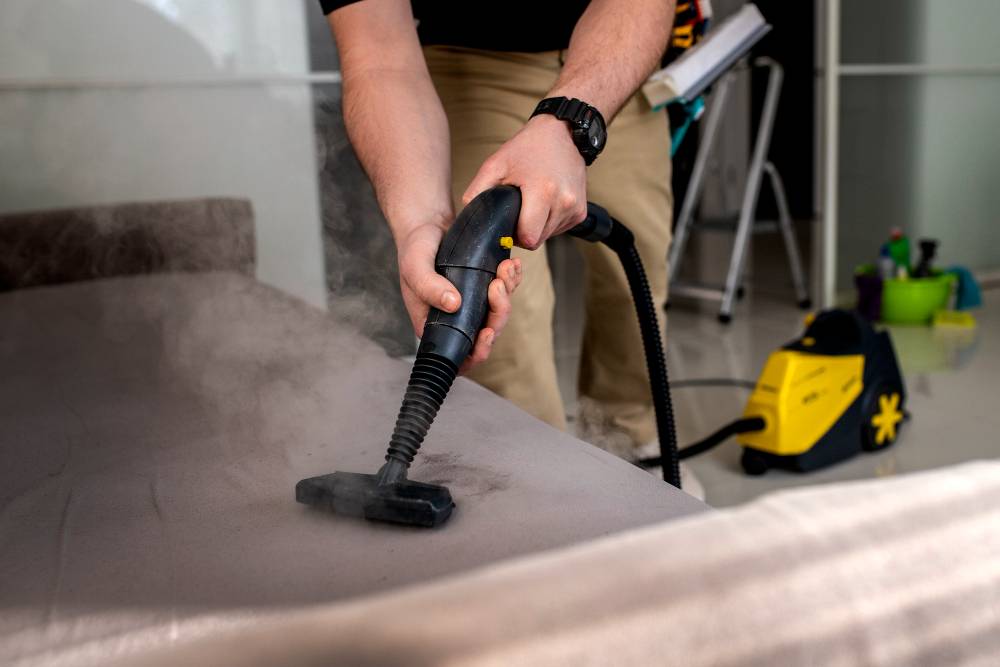
How Long Does a Professionally Cleaned Sofa Take to Dry?
Many professionally cleaned fabric sofas dry within approximately four to eight hours, but this is only a general estimate. Some materials and conditions require longer.
Drying time depends on:
- Upholstery fibre
- Fabric thickness
- Cushion density
- Cleaning method
- Amount of moisture used
- Extraction efficiency
- Indoor temperature
- Humidity
- Ventilation
- Whether the cushions can be separated
Low-moisture methods may dry faster. Thick cushions, absorbent natural fibres and poorly ventilated rooms may take considerably longer.
To support drying:
- Keep the room ventilated where weather and security allow.
- Maintain moderate indoor warmth.
- Keep removable cushions separated.
- Avoid covering the upholstery.
- Do not sit on the sofa while it remains damp.
- Do not place cushions back against each other until all sides are dry.
A sofa should feel dry throughout, not just on the visible surface.
For more information, also read: How Long Do Sofas Take to Dry After Cleaning in London?
When Cleaning Will Not Solve the Problem
Professional cleaning can improve many sofas, but it cannot reverse every form of damage.
Permanent Colour Loss
Bleach, strong stain removers, sunlight and chemical spills may remove or alter the dye. Cleaning can remove soil around the area but cannot restore missing colour.
Worn or Damaged Fibres
Flattening, thinning, pilling, burns, tears and abrasion are physical damage. These may require repair, reupholstery or replacement.
Failed Cushion Foam
Cleaning will not restore foam that has collapsed, lost support or permanently changed shape.
Deep Internal Odour
When urine, smoke or another contaminant has saturated the foam or frame, standard surface cleaning may not fully remove the smell.
The filling may require specialist treatment or replacement.
Extensive Mould
A sofa affected by substantial internal mould or prolonged water damage may not be suitable for routine upholstery cleaning. The moisture source and extent of contamination must be assessed first.
Previous DIY Damage
Water rings, colour bleeding, stiff residue and texture changes caused by earlier cleaning attempts may limit the achievable result.
A professional should be told what products have already been applied.
Frequently Asked Questions
Is professional sofa cleaning necessary if there are no visible stains?
It may still be useful when the sofa is heavily used, has developed a dull appearance or has not been professionally cleaned for several years. However, a clean-looking, lightly used and well-maintained sofa does not need to be cleaned purely to meet an arbitrary date.
How often should a sofa be cleaned in a home with pets?
A sofa that pets regularly sit or sleep on may need professional cleaning every six to nine months. Where pets remain off the furniture and the sofa is vacuumed regularly, nine to twelve months may be sufficient. Odours, accidents and visible soil should be addressed sooner.
How often should a sofa be cleaned in a home with children?
For a heavily used family sofa, six to twelve months is a practical range. Washable throws, prompt spill treatment and regular vacuuming may help extend the interval.
Can professional sofa cleaning help with allergies?
Professional cleaning may reduce accumulated dust, pollen, pet debris and other material held within suitable upholstery.
It does not sterilise the sofa, treat allergies or guarantee symptom improvement. Allergy management may also require attention to carpets, mattresses, curtains, ventilation and medical guidance.
Should sofa covers be washed every month?
Only when the manufacturer’s instructions permit it. Frequent machine washing can cause shrinkage, fading or difficulty refitting the covers. Some removable covers are not designed for domestic machine washing even though they have zips.
Can I use a carpet cleaner on my sofa?
Only when the machine, cleaning product and upholstery are all confirmed as compatible. Carpet and upholstery construction are different. A carpet-cleaning machine may release too much moisture or use unsuitable chemistry for certain sofas.
Can a sofa be professionally cleaned too frequently?
Yes, when cleaning is unnecessary or the method is unsuitable. The decision should be based on usage, condition, material and manufacturer guidance rather than a rigid timetable.
Is an old sofa worth professionally cleaning?
It depends on whether the problem is dirt or permanent damage. Cleaning may improve an older sofa that is structurally sound. It will not correct collapsed foam, extensive wear, tears, permanent fading or deep internal contamination.