Professional repair is needed when fraying reaches the base of the fringe, the end stitching starts to open, or the rug begins to lose rows of pile. Slightly fuzzy tassel tips can be cosmetic if the end remains secure, but growing gaps, broken foundation threads or a receding border need prompt assessment. Avoid cutting or gluing the fringe while you decide what to do.
The useful question is not simply how untidy the tassels look. It is whether the woven end that holds the rug together is still sound. A short, uneven fringe can be stable; a long fringe can conceal a failing end finish.
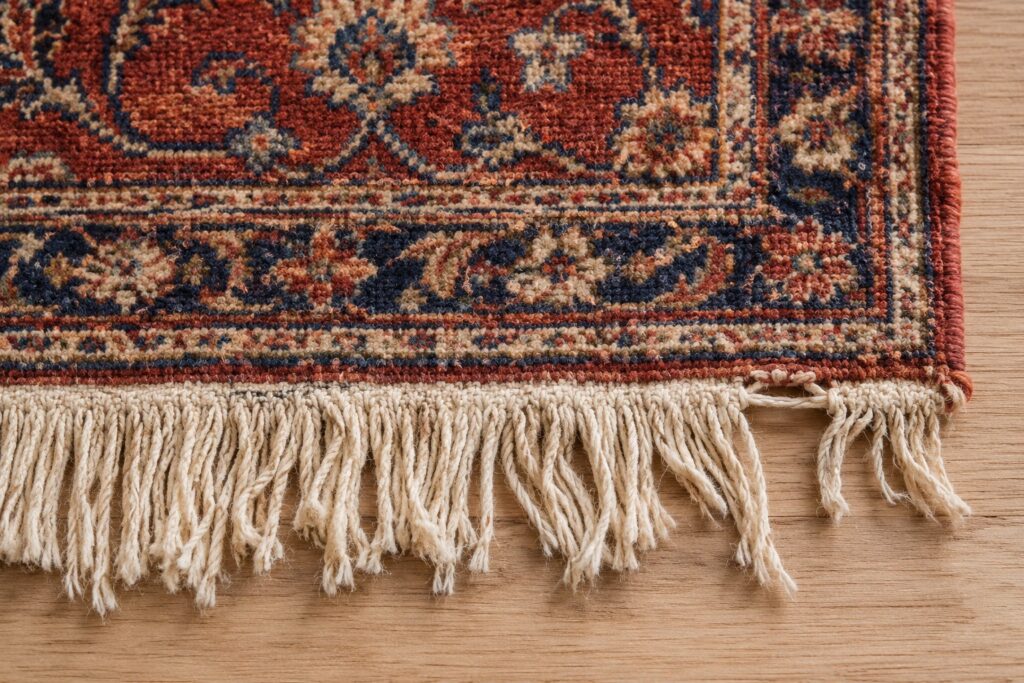
Why Rug Fringes Need a Closer Look
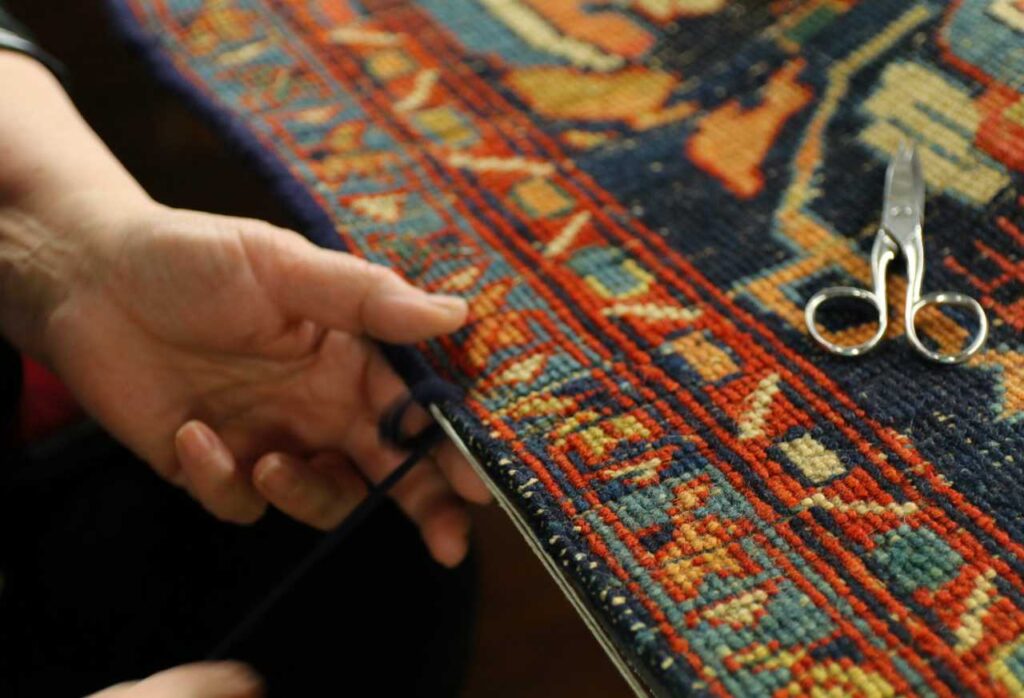
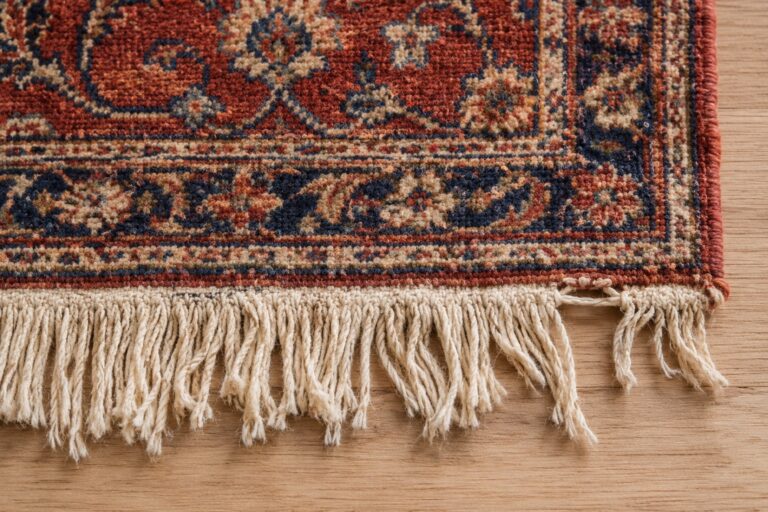
On a hand-knotted rug, the fringe usually consists of the exposed ends of the warp threads running through its foundation. The end finish helps keep the final woven rows secure. If that finish loosens, damage can progress from the tassels into the body of the rug.
Other rugs have an applied decorative fringe, while previous repairs may have added a replacement strip over an older end. Appearance alone cannot reliably establish which construction you have.
The IICRC’s area-rug care guidance distinguishes foundation fringe from machine-woven or sewn-on fringe and identifies traffic, pets, aggressive vacuuming and bleaching as potential sources of damage.
Cosmetic Wear or Structural Damage?
Look at both ends in good light, including the reverse where it can be viewed without stressing the rug. Compare the affected section with a sound area. Do not pull strands to test their strength.
| What you notice | What it may mean | Next step |
|---|---|---|
| Fuzzy tips or uneven tassels, with a firm, unchanged end | Surface wear or earlier trimming | Reduce snagging and monitor; ask for advice if construction is uncertain |
| Stitches opening or a flat woven band separating | The end finish is failing | Arrange professional assessment before further wear |
| Threads broken close to the pile, with growing gaps | Possible loss of foundation support | Keep the damaged end out of use and seek repair advice promptly |
| Loose pile knots or part of the border disappearing | Damage has entered the woven body | Ask about stabilisation and whether reconstruction is feasible |
| A sewn-on fringe strip coming away | Failed attachment or an older repair | Have the attachment and the underlying rug end checked |
| Brown, stiff or brittle fringe | Soiling, previous treatment or fibre deterioration | Seek assessment; colour alone does not diagnose rot |
These are inspection clues, not a diagnosis. Damage that is visibly progressing deserves attention even if it affects only a small section. Antique, silk and particularly fragile rugs merit specialist advice before any home intervention.
Signs You Should Arrange Professional Repair
The End Finish Is Opening
Loose securing stitches, an opening flat woven end band or gaps beside the first pile row suggest that the problem goes beyond untidy tips. A repairer can assess whether the surviving finish can be secured before more material is lost.
The Fringe Is Breaking at Its Base
Threads snapped close to the rug body leave less material available for securing. This differs from wear confined to the free tassel ends. Missing sections, repeated breakage or a corner starting to unravel are reasons to stop using the affected area and seek advice.
Pile or Pattern Is Being Lost
If the border has become uneven or rows of knots are coming away, fringe tidying alone will not replace what has disappeared. The assessment should distinguish preserving the remaining end from rebuilding the missing weave.
What to Do Before the Rug Is Assessed
Take an overall photograph, close-ups of both ends and a photograph of the reverse of the damaged section, if accessible. Include a ruler beside the damage without pressing or stretching it. Keep any detached pieces and explain when the change appeared.
- Keep rotating vacuum brushes and robot vacuums away from the fringe.
- Prevent pets, furniture and passing feet from catching the loose area.
- Do not drag or lift the rug by its tassels.
- Avoid vigorous combing, scrubbing or home washing of a weakened end.
- Leave cutting, gluing, taping and improvised stitching until the construction has been assessed.
Tell the repairer about earlier cleaning, bleaching, dampness and repairs. If damage appeared during a recent clean, contact the provider and share photographs before trying another treatment.
What Professional Fringe Repair Can Involve
A useful repair plan explains which original material can remain, what needs securing and what visual changes to expect. The least extensive suitable treatment may be enough; full refringing is not automatically necessary.
Securing the Existing End
Where enough sound material remains, a specialist may renew the end finish, apply suitable securing stitches or re-knot loose fringe. The aim is to stabilise the surviving weave. A secure result may retain some unevenness rather than making an older rug look newly manufactured.
Rebuilding Missing Foundation and Pile
More substantial loss may require compatible foundation threads to be introduced and missing pile reconstructed. This involves more handwork than securing an intact end. The condition of the surrounding fibres, weave and available materials affects what can be achieved.
Replacing Applied Fringe or Changing Its Length
A decorative fringe attached to a sound rug end may be repaired or replaced without the same foundation work. On a hand-knotted piece, sewing a new strip over damage does not by itself restore the underlying structure.
If you prefer shorter tassels, ask whether shortening and securing is appropriate. Any proposal to remove woven rows or alter the border should be explained before you agree, because it changes the rug’s dimensions or design.
Cleaning, Colour Correction and Repair Do Different Jobs
Cleaning can improve soiling on fringe, but cannot reconnect broken threads. Colour correction addresses suitable colour problems; it does not restore missing fibres. Physical repair secures or reconstructs the textile, while replacement means choosing a different rug.
A dirty and damaged rug may need both cleaning and repair. The professional should inspect it before choosing the sequence, since a weak end may need stabilising before cleaning. Do not bleach a worn fringe to make it look whiter.
For broader maintenance, read our guide to safe Persian rug care. If soil removal is also needed, discuss the damage when enquiring about our rug cleaning services in London.
Is Fringe Repair Worth the Cost?
Compare the proposed work with the rug’s overall condition, replacement options and personal significance. Securing a localised weak end can be a sensible choice when the rest of the rug is sound. Extensive deterioration throughout the foundation may limit the benefit of an elaborate repair.
Ask whether the quote covers one end or both, and whether cleaning, assessment, collection and delivery are included. Agree the intended finish and timescale in advance. Repairs cannot be assumed to increase market value or produce an invisible result.
Arrange a Fringe Repair Assessment in London
Hi Carpet Cleaner offers specialist rug repair in London, including fringe repair and re-knotting, securing loose threads and edges, and hand restoration for suitable rugs.
Contact the team for an initial assessment with photographs of the whole rug, both ends and the damaged reverse, together with dimensions and your postcode. Explain whether your priority is to stop further loss, preserve original detail or improve the fringe’s appearance. An initial view from photographs may need an in-person assessment before the repair method and final price can be confirmed.
Frequently Asked Questions
Can fraying rug fringes be repaired?
Often, yes. Loose end finishes may be secured, while missing foundation threads or pile can require reconstruction. The available options depend on the rug’s construction and how much sound material remains.
Can I cut off the frayed fringe?
Do not cut it off before the construction has been checked. On a hand-knotted rug the fringe continues from the foundation. A specialist may be able to shorten and finish it safely, but cutting close to the pile can leave the end vulnerable.
Can fringe be replaced on a rug?
An attached decorative fringe can sometimes be replaced. Structural fringe requires a different assessment: adding a ready-made strip does not rebuild missing foundation threads. Ask what the proposed treatment will secure.
Will professional cleaning stop the fraying?
Cleaning removes soil; it does not reconnect broken threads or secure an opening end finish. Tell the cleaner about damage before washing so that stabilisation and cleaning can be planned in a suitable order.
How much does rug fringe repair cost?
The price depends on the length affected, fibre, weave, remaining foundation and amount of handwork. Ask for an itemised quote that includes any cleaning, collection, delivery or assessment charges. A photograph may support an initial estimate, with inspection needed to confirm it.
Is it worth repairing an inexpensive rug?
Compare the repair quotation with the cost and quality of a suitable replacement, while allowing for sentimental value. A limited repair may be sensible when the rest is sound. Extensive foundation failure can make replacement more practical.