Blot fresh pet urine with clean white towels, working from the outside towards the centre without rubbing. Check the carpet’s care instructions before using a little cool water or a suitable wool-approved pet stain remover. Test any treatment first and avoid soaking. Old stains, colour changes or smells that return after drying need professional assessment.
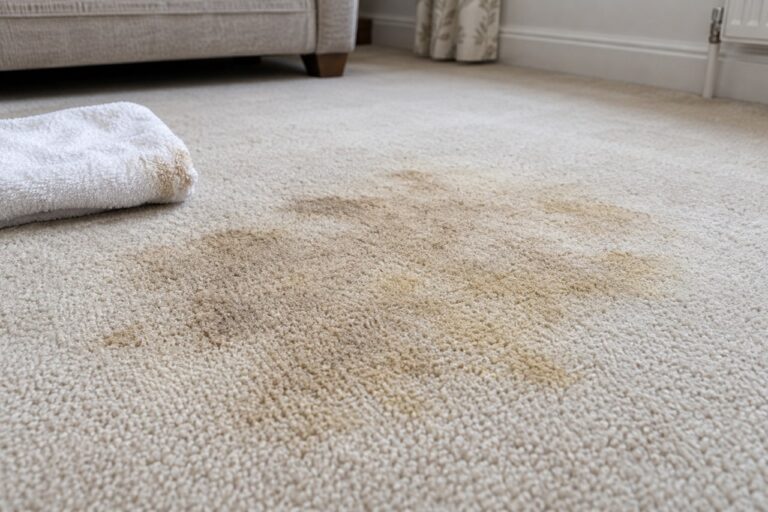
A fresh urine accident and an old yellow mark are different problems. Prompt blotting can remove liquid before more of it reaches the backing, but cleaning cannot always reverse changes to the carpet’s colour. The aim is to remove what you safely can without spreading moisture or damaging the wool.
This guide covers cautious first aid for small, fresh accidents on fitted wool and wool-blend carpets. If you have a handmade rug, an unknown fibre blend or a carpet with special care requirements, seek advice before applying a treatment.
What should you do immediately after a pet accident?
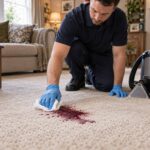
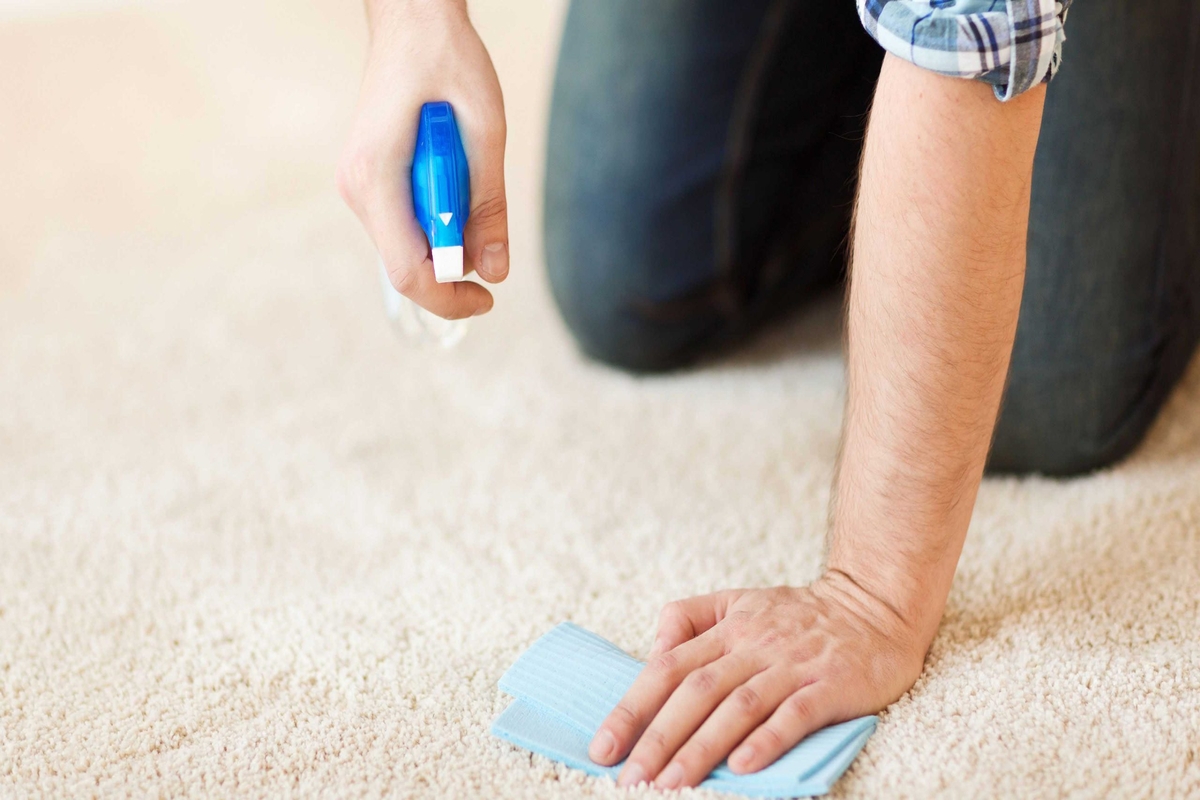
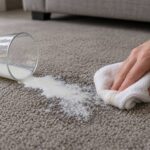
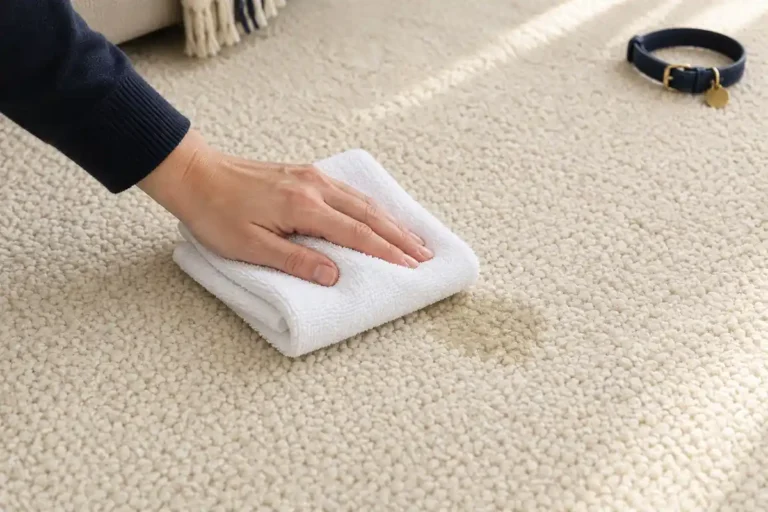
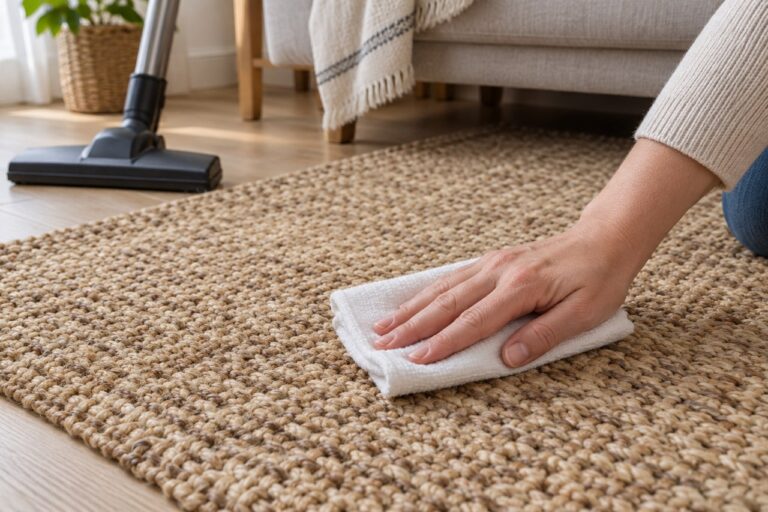
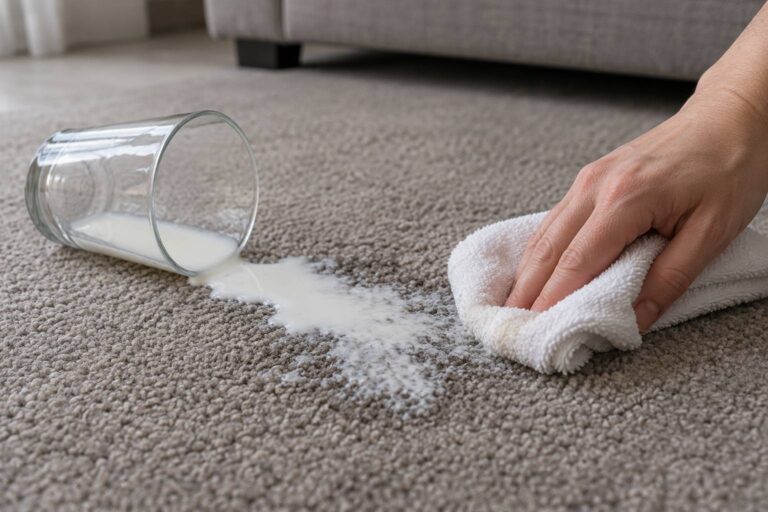
Keep your pet away from the area and place clean, plain white towels over the wet spot. Press gently, lift the towel and move to a dry section. Continue while the towels are absorbing urine. Do not scrub or brush the wet pile.
Blot immediately; you do not need to wait until you have found a cleaning product. Before adding water or a spot treatment, check the manufacturer’s care guidance. If you cannot identify the carpet or its cleaning requirements, limit your first response to absorbing the liquid and obtaining advice.
Avoid reaching for a general pet spray simply because it says “for carpets”. Its suitability for wool, dyes and backing still needs checking.
How do you remove fresh pet urine from wool carpet?
1. Blot up as much urine as possible
Use white kitchen roll or a clean, absorbent white cloth. Work from the edges towards the centre, replacing wet towels with dry ones rather than moving the liquid around.
Keep the action gentle and downward. Rubbing can spread the affected area and disturb the pile. Do not pour water onto the spot to dilute it: moisture control matters, especially when urine may already be moving towards the backing.
2. Check the care instructions and test first
Find the care label, installation information or manufacturer’s online guidance. Wool blends may also contain fibres or backing materials that affect the cleaning method.
Before treating the visible area, test the proposed treatment on an inconspicuous section or a matching offcut. Follow the product’s test instructions and allow the area to dry before checking for colour or texture changes.
If carpet colour transfers onto the white cloth, or the test patch changes appearance, stop. A treatment that leaves no obvious damage while wet may still look different once dry.
3. Use a little cool water only if permitted
If the carpet’s instructions allow it and the hidden test is satisfactory, use a cloth lightly dampened with cool water to blot the remaining surface residue. Follow each damp blot with a dry towel to absorb moisture.
Keep the cloth damp rather than dripping. The aim is controlled surface treatment, not flushing urine through the carpet. Stop adding moisture if the wet area expands or the carpet appears to be taking in more water than you can absorb.
4. Choose a suitable pet stain treatment if needed
If a mark remains, check whether the carpet manufacturer permits a pet stain treatment. Where appropriate, select a product with verified wool suitability.
Check the exact product and current instructions. Approval of one formulation does not establish that every cleaner sold under the same brand is suitable.
Follow the specified amount, application method and contact time. If the product requires prolonged soaking or another method that conflicts with the carpet’s care instructions, seek advice rather than improvising.
5. Remove residues without flooding the carpet
Follow the product and carpet manufacturer’s instructions for removing treatment residues. Where a clean-water rinse is required and permitted, use controlled damp-cloth blotting followed by dry towels.
Do not keep layering vinegar, detergent, enzyme spray and other spot removers onto the same patch. If one suitable treatment has not resolved the problem, adding more products can leave residues and complicate later treatment.
6. Dry gently and check the result
Absorb remaining moisture with dry white towels and encourage airflow. Avoid placing a heater or hairdryer directly over the spot. Keep people and pets away until the carpet is dry and any additional product-label conditions have been met.
Reassess the area once dry. Is there still a visible mark? Has the pile changed? Does an odour remain or return? These observations are more useful than judging the result while the carpet is wet. Do not assume a faded stain means the contamination has been fully removed.
What should you do about dried or yellow urine stains?
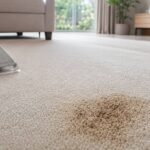
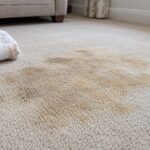
An old yellow urine mark needs a more cautious approach than a fresh surface accident. There may be remaining contamination, a change to the carpet’s dyes or a combination of both.
Urine can cause immediate or developing changes to textile dyes and fibres. Removing the urine does not necessarily restore the original colour.
Avoid repeated wetting, stronger homemade mixtures or attempts to bleach the patch back to its previous shade. A pale area may represent colour loss rather than a stain that needs more cleaning.
WoolSafe’s wool carpet maintenance guide treats fresh and old urine separately and flags old urine staining as a case that may require professional treatment.
Photograph the dry mark and note when the accident happened and what has already been applied. A cleaner can use that information to assess the likely treatment and its limits.
Which cleaners and home remedies should you avoid?
Wool-specific suitability matters more than whether a product is described as natural, powerful or designed for pets.
| Treatment | Guidance for wool carpet |
|---|---|
| Cool water and white towels | Use small amounts only where the carpet’s care instructions allow. Avoid soaking. |
| Wool-approved pet stain remover | Check the exact formulation, current directions and carpet compatibility; test first. |
| Enzyme cleaner | Use only with explicit wool suitability and compatible care instructions. Do not assume all pet enzyme products are suitable. |
| Vinegar and bicarbonate of soda | Avoid using these as a default wool-cleaning recipe or combining them with other treatments. |
| Bleach, hydrogen peroxide or ammonia | Do not use as improvised home treatments for a urine stain on wool. |
| Washing-up liquid or laundry detergent | Avoid substituting general household detergents for an appropriate carpet product. |
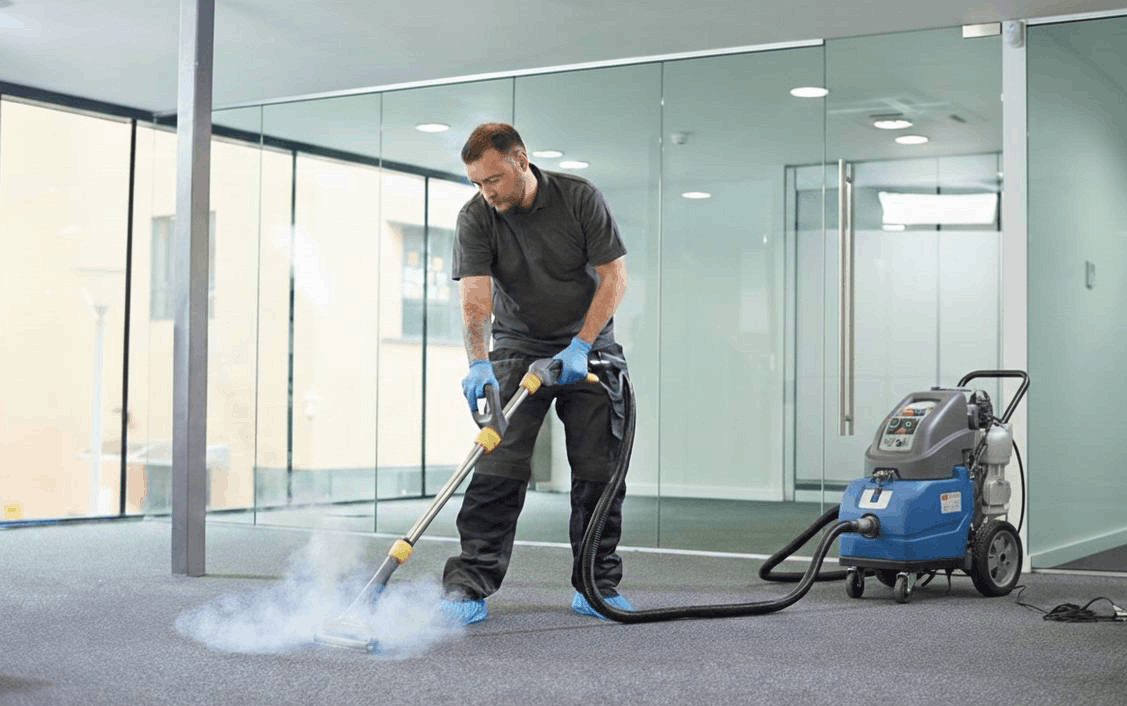
| Steam cleaner or hired extraction machine | Do not use to flood or heat an untreated urine patch as an immediate rescue method. |
Are enzyme cleaners safe for wool?
There is no useful blanket answer for every enzyme cleaner. Suitability depends on the actual formulation and its directions, as well as the carpet being treated.
Look for explicit confirmation that the product is suitable for wool. Check the current label, carpet manufacturer’s requirements and any applicable WoolSafe listing. If the instructions are unclear, ask the product manufacturer or a wool carpet specialist before using it.
A product’s description as “pet-safe” does not, by itself, establish that it is safe for wool or its dyes.
Can you use vinegar and bicarbonate of soda?
This guide does not recommend a standard vinegar-and-water mixture for wool urine stains. Advice intended for synthetic carpet should not automatically be transferred to wool.
Bicarbonate of soda is also not a substitute for removing contamination. Powder can be difficult to remove thoroughly from dense pile, particularly when applied to a damp area. Keep the response simple and follow the carpet’s care instructions rather than combining household remedies.
Why can the stain or smell return after cleaning?
The visible patch may be smaller than the affected area below it. Urine can reach the backing or underlay, where surface blotting cannot fully address it. Residues can also move back towards the surface as a wet carpet dries.
A returning mark does not always mean that you should repeat the same treatment. Likewise, a pleasant fragrance does not establish that the source of an odour has been removed.
If smell is the main remaining problem, read our guide to persistent pet urine odours in carpet. Keep the wool-specific precautions in this article in mind before applying any general carpet treatment.
When should you stop and call a professional?
Stop home treatment if the carpet changes appearance, you cannot control the moisture or you are unsure which products are compatible with it.
| What you notice | What to do next |
|---|---|
| Carpet dye transfers during testing | Stop using the treatment and seek advice. |
| An old yellow or pale patch remains | Request an assessment of staining versus colour damage. |
| The smell returns after drying | Ask whether contamination may extend below the pile. |
| Repeated accidents affect the same spot | Explain the history so the full affected area can be assessed. |
| The carpet remains damp or the wet area spreads | Avoid further wetting and arrange an assessment. |
| The fibre, backing or previous products are unknown | Send photographs and any care information before trying another treatment. |
For an assessment, provide the carpet’s care label if available, photographs of the dry area, the approximate age of the stain and the names of any products already used.
Professional treatment also needs to match the carpet. This guide’s warning against domestic steam treatment does not mean that every form of professional hot water extraction is unsuitable for wool. Product choice, moisture, temperature, equipment and drying all need to suit the individual carpet and contamination.
If the mark is old, colour is changing or odour keeps returning, explore professional carpet cleaning in London with Hi Carpet Cleaner. An assessment can help establish what is achievable; complete stain or colour restoration cannot be assumed.
How can you reduce repeat accidents and protect the carpet?
Deal with fresh accidents promptly and keep your carpet’s care information somewhere accessible. Store a suitable white towel and the manufacturer’s recommended care details so you can respond without experimenting.
Follow product-label instructions about keeping pets away during treatment and drying. If indoor accidents are new or recurring, speak to your vet about possible causes rather than relying on cleaning alone.
For unrelated spills, use our guide to removing different carpet stains to find advice appropriate to the substance and material.
Frequently asked questions
Can you remove an old urine stain from wool carpet completely?
Sometimes treatment can improve an old mark, but complete removal is not guaranteed. The result depends on the stain’s age, depth, previous treatments and whether the carpet’s dyes or fibres have changed. A permanent colour change will not necessarily respond to cleaning.
Is cat urine treated differently from dog urine on wool?
Both require the same initial fibre precautions: absorb fresh liquid, avoid rubbing and soaking, and check product compatibility. For treatment decisions, the age and depth of contamination, carpet construction and previous chemicals matter. Do not assume that a cat- or dog-specific spray is suitable for wool.
Should you keep cleaning until the yellow mark disappears?
No. Repeated wetting or stronger chemicals can make the problem worse. If a suitable, carefully applied treatment leaves a mark after drying, stop and have it assessed. The remaining colour may not be removable residue.
Why does the carpet smell even though the stain has gone?
Visible appearance and odour are separate outcomes. Contamination may remain in the pile, backing or underlay even when the surface looks better. A recurring smell warrants assessment rather than repeated surface spraying.
Can you use these steps on a wool rug?
Blotting fresh liquid without rubbing is a useful first response, but further treatment depends on the rug’s dyes, foundation, backing and care instructions. Do not assume that a method for fitted carpet suits a handmade or valuable rug. See our specialist rug cleaning service for assessment options.
How long should a treated wool carpet take to dry?
There is no reliable drying time for every carpet. It depends on the amount of moisture, construction, airflow and room conditions. Avoid adding heat or more cleaning solution to speed things up. If the area remains damp or you suspect moisture has reached deeper layers, seek advice.