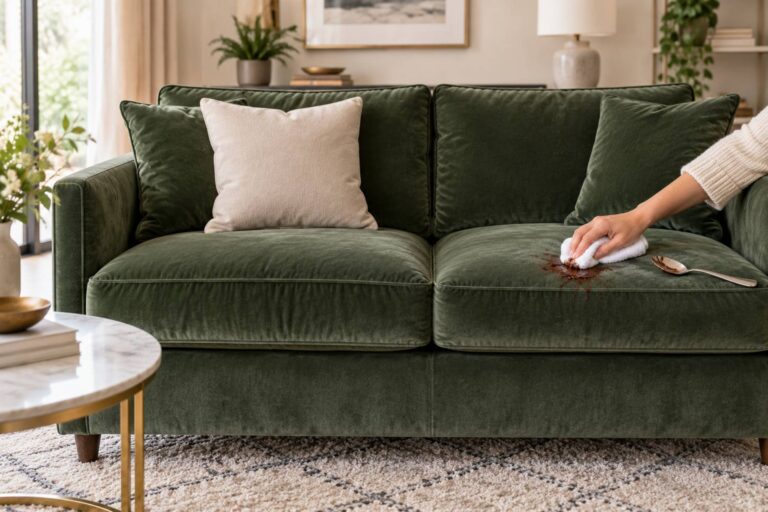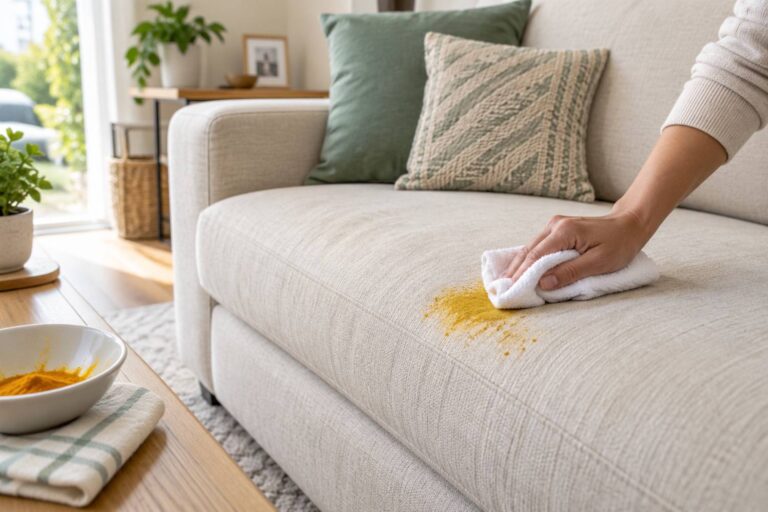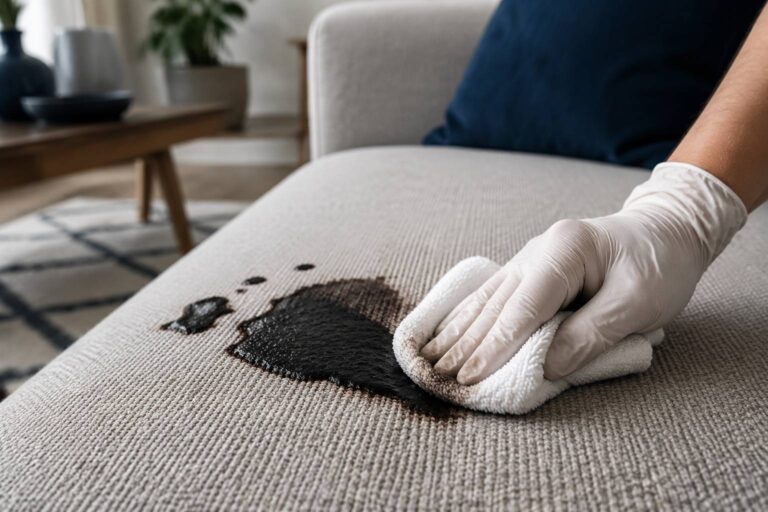
Chocolate on a velvet sofa needs careful treatment because you are dealing with both the stain and a sensitive pile fabric. Start by gently lifting away any solid chocolate with a blunt spoon, without rubbing or pushing it further into the fibres. Then check the sofa’s cleaning label before applying any liquid.
If the velvet is suitable for water-based cleaning, patch-test an appropriate upholstery cleaner and use only a very small amount through a clean white cloth. Blot rather than scrub, work from the outside of the stain towards the centre, and allow the area to dry naturally.
Avoid hot water, steam, aggressive rubbing and excessive moisture. If the velvet is marked S or X, the fabric type is unknown, or colour transfers during cleaning, stop DIY treatment and seek professional advice.
Why Is Chocolate Difficult to Remove from Velvet?
Chocolate is not a simple water-based stain. It normally contains cocoa solids, fats such as cocoa butter, sugar and, depending on the type of chocolate, milk ingredients.
This combination can leave both a visible brown mark and an oily residue. Simply adding water may therefore fail to remove the entire stain, while rubbing can spread the softened chocolate further through the upholstery.
Velvet introduces another complication because of its raised pile, sometimes called the nap. These fibres reflect light differently depending on their direction. If they are flattened, scrubbed or brushed incorrectly, the treated area can appear lighter or darker even after the chocolate itself has been removed.
This is why removing chocolate from velvet should be treated as a controlled spot-cleaning process rather than an attempt to wash the stain out.
The most important rule is to use as little moisture and friction as possible.
Check the Velvet Type and Cleaning Code Before You Start
Before trying to remove a chocolate stain from a velvet sofa, find the manufacturer’s care label. It may be underneath the sofa, beneath a seat cushion or attached to the frame.
Velvet describes the structure of the fabric rather than one specific fibre. A velvet sofa may contain polyester, cotton, viscose or rayon, silk, mohair, or a blend of several fibres.
Two velvet sofas can therefore react very differently to the same cleaning solution.
If you need a broader explanation of upholstery care before treating the stain, read our guide to how to clean a fabric sofa at home without damaging it.
The upholstery cleaning code can also help determine what type of treatment may be suitable:
Cleaning code | What it generally means | What to do with a chocolate stain |
W | Water-based upholstery products are permitted | A controlled, low-moisture water-based method may be suitable after patch testing |
S | Solvent-based cleaning only | Avoid water-based DIY solutions and follow the manufacturer’s approved method or seek professional advice |
WS / W-S | Water- or solvent-based products may be permitted | Choose a compatible product and always patch-test first |
X | Vacuuming or light brushing only | Do not apply liquid cleaner; remove loose chocolate only and seek specialist advice |
A W code does not mean the fabric can be soaked, steam-cleaned or put in a washing machine.
If you cannot find a cleaning label or confirm the type of velvet, the safest DIY approach is to remove only the loose chocolate and avoid applying liquid until you know what the upholstery can tolerate.
What You Will Need
For suitable W- or WS-coded velvet, you may need:
- A blunt spoon or dull-edged utensil
- Clean white microfibre cloths
- A clean white absorbent towel
- A small bowl
- Cool or lukewarm water, if permitted by the care label
- A manufacturer-approved upholstery cleaner
- A very mild clear washing-up-liquid solution only where appropriate for the fabric
- A soft upholstery or velvet brush, but only if the manufacturer permits brushing
White cloths are preferable because they make it easier to see whether chocolate or sofa dye is transferring during treatment. They also reduce the risk of colour from the cleaning cloth transferring onto damp upholstery.
How to Remove a Fresh Chocolate Stain from a Velvet Sofa
Fresh chocolate is usually easier to deal with than a stain that has dried into the pile, but acting quickly does not mean cleaning aggressively.
Follow these steps carefully.
Step 1: Lift Away the Excess Chocolate
Use the edge of a blunt spoon to lift as much chocolate as possible from the surface.
Work slowly. Try to lift the chocolate upwards rather than dragging the spoon across the velvet.
Do not:
- Rub the chocolate with a towel
- Scrape aggressively
- Press it deeper into the pile
- Use hot water to melt it
- Apply steam
If the chocolate is still soft, repeatedly wiping it may simply enlarge the affected area.
Step 2: Blot the Remaining Residue
Once the solid chocolate has been removed, place a clean white cloth against the remaining mark.
Use a gentle press-and-lift movement.
Do not scrub backwards and forwards. Friction can push oily residue further through the fibres and may disturb the velvet pile.
Move to a clean section of the cloth as chocolate transfers onto it.
At this stage, the goal is not necessarily to make the stain disappear completely. You are removing as much contamination as possible before introducing any cleaning solution.
Step 3: Patch-Test Your Cleaning Method
Never assume that a cleaner is safe simply because the sofa has a W or WS label.
Apply a tiny amount of your intended cleaning solution to an inconspicuous area, such as the back of the sofa or underneath a cushion.
Let the test area dry completely.
Then check for:
- Colour transfer onto your cloth
- Fading or discolouration
- A lighter or darker patch
- A water ring
- Stiffness
- Flattened pile
- A noticeable change in texture
Do not continue if the test area changes.
Step 4: Apply a Small Amount of Cleaner
If the velvet permits water-based cleaning and has passed the patch test, use a manufacturer-approved upholstery product wherever possible.
For some water-safe synthetic velvet, a very weak solution of clear mild washing-up liquid and cool or lukewarm water may be suitable if the manufacturer’s instructions allow it.
The solution should be mild. Adding extra detergent will not necessarily remove more chocolate and may leave a sticky residue behind.
Most importantly, apply the solution to the cloth rather than pouring or spraying it directly onto the sofa.
The cloth should be slightly damp, not wet enough to saturate the velvet.
Step 5: Blot from the Outside Towards the Centre
Start at the outer edge of the chocolate mark and gradually work towards its centre.
This helps limit the risk of spreading the stain.
Press the damp cloth gently onto the affected fibres and lift it away. Rotate the cloth frequently so that you are not repeatedly transferring removed chocolate back onto the sofa.
Avoid rubbing in circles.
Velvet can develop visible pile distortion from mechanical friction even when the cleaning product itself is compatible with the fabric.
Step 6: Remove Cleaning Residue
Leaving detergent inside upholstery can create its own problems. Residue may cause stiffness, attract dirt or leave a visible outline around the treated area.
If the sofa’s care instructions permit water, lightly dampen a second clean white cloth with cool water and wring it out thoroughly.
Gently blot the treated area to remove remaining cleaner.
Again, the aim is controlled moisture rather than rinsing the cushion.
If too much water is used and a visible drying ring develops, our guide explains how to remove water stains from a fabric sofa without leaving rings and when repeated wetting should be avoided.
Step 7: Absorb Moisture and Let the Velvet Air-Dry
Press a clean, dry white towel gently against the cleaned area to absorb surface moisture.
Do not twist, scrub or place heavy pressure on the cushion.
Then allow the velvet to dry naturally with good room-temperature airflow. Opening a window where appropriate or using a fan to circulate room air can help.
Avoid:
- Hairdryers
- Radiators
- Portable heaters directed at the sofa
- Steam cleaners
- Sitting on the damp area
Heat can affect certain fibres, finishes and adhesives, while using velvet before it is completely dry may compress the pile.
Drying time varies according to the velvet, cushion construction, amount of moisture used, room temperature and ventilation. For more detail, see our guide on how long sofas take to dry after cleaning.
Step 8: Restore the Velvet Pile Once It Is Completely Dry
Do not assess the final appearance while the velvet is damp.
Wet velvet naturally reflects light differently and may temporarily look darker.
Once the area is completely dry, inspect the pile from several angles.
If the manufacturer allows brushing, gently use an appropriate soft velvet or upholstery brush in the correct direction to help restore the pile.
Do not try to fix shading with a stiff brush or aggressive scrubbing.
How to Remove Dried Chocolate from Velvet Upholstery
Dried chocolate requires more patience because it may have hardened around the individual fibres.
Start by carefully lifting loose surface material with a blunt spoon. Work slowly and avoid forcing the edge into the velvet pile.
Do not try to make dried chocolate easier to remove by melting it with hot water, steam or a hairdryer. Heat can soften the chocolate and allow its oily components to travel further through the upholstery.
Once the loose material has been removed, check the cleaning code and complete the same hidden patch test described above.
If water-based cleaning is permitted, use a minimal amount of an approved cleaner through a cloth and blot rather than scrub.
You may not remove an old chocolate stain completely in one attempt.
Repeatedly soaking the same patch or increasing the strength of the cleaner can cause more visible damage than the original stain.
Stop DIY treatment if:
- A greasy shadow remains after one careful attempt
- Colour transfers to your cloth
- The area becomes lighter
- A water ring develops
- The pile becomes stiff or distorted
- The stain begins spreading
- You do not know what products were previously applied
A stubborn localised stain may be better suited to professional spot and stain removal than repeated home treatment.
What Should You Not Use on a Velvet Sofa?
One of the biggest risks when searching for ways to get chocolate out of velvet is finding a household recipe that assumes all upholstery behaves the same way.
It does not.
Bleach
Never use bleach as a general chocolate stain remover. Bleach may permanently remove the sofa’s original dye, leaving a pale patch that cleaning cannot reverse.
Hydrogen Peroxide
Hydrogen peroxide can have a bleaching effect on some dyes and fibres. It should not be treated as a universal velvet-safe stain remover.
Strong Multipurpose Cleaners
Products intended for kitchen worktops, floors or general household surfaces may contain chemicals unsuitable for upholstery.
Neat Washing-Up Liquid
Using washing-up liquid directly from the bottle can leave concentrated detergent residue in the pile. If a mild detergent is permitted, it should be appropriately diluted and used sparingly.
Hot Water
Hot water does not provide a safe shortcut for removing chocolate. It may soften and spread the oily components of the stain.
Steam
Do not automatically steam-clean chocolate from velvet. Heat and moisture can affect sensitive fibres, backing materials, dyes and the pile structure.
Vinegar
White vinegar is frequently recommended online for upholstery stains, but it is not suitable for every type of velvet, dye or finish.
Do not use it simply because it is considered a common household cleaner. Manufacturer instructions and fibre compatibility come first.
Bicarbonate of Soda
Bicarbonate of soda is also not universally suitable for velvet. Fine powder can become embedded in dense pile or seams, and combining it with moisture may leave residue.
Scrubbing Brushes
A stiff brush may remove visible chocolate while permanently changing the texture of the velvet.
Removing the stain is not a successful result if the cleaned patch is left flattened or noticeably different from the rest of the sofa.
Why Does Velvet Look Lighter or Darker After Cleaning?
A change in appearance does not always mean the sofa has faded.
There are three main possibilities.
The velvet is still damp. Damp fibres normally appear darker than dry fibres. Always allow the area to dry completely before deciding whether the colour has changed.
The pile direction has changed. Velvet reflects light according to the direction of its fibres. A flattened or disturbed area can therefore appear darker from one angle and lighter from another.
The dye has actually been damaged. If an unsuitable product has removed or altered the original colour, further cleaning will not restore that dye.
A useful test is to look at the completely dry area from several directions. If the appearance changes as you move around the sofa, pile shading may be involved. If a consistently pale patch remains, particularly after bleach or another strong chemical has been used, permanent colour loss is more likely.
Do not continue adding cleaning products in an attempt to remove a pale patch caused by missing dye.
When Should You Call a Professional Upholstery Cleaner?
Small fresh chocolate stains on suitable water-safe synthetic velvet may sometimes be managed carefully at home.
Professional assessment is a safer option when:
- The sofa is marked S or X
- You cannot identify the care code
- You do not know what type of velvet you have
- The upholstery contains silk, viscose, rayon, mohair or another sensitive fibre
- The chocolate stain is large or old
- An oily shadow remains after one controlled attempt
- Colour transfers onto your cleaning cloth
- A water ring develops
- The velvet pile becomes stiff or distorted
- Several DIY products have already been used
- The sofa is antique, designer, expensive or otherwise difficult to replace
Professional treatment cannot guarantee that every stain will disappear. Results depend on the fibre, dye stability, age of the chocolate stain and any chemicals already applied.
However, specialist equipment and assessment can allow the cleaning method to be adjusted to the upholstery rather than relying on a generic DIY recipe.
If the stain requires broader sofa cleaning or the fabric itself needs specialist attention, Hi Carpet Cleaner provides professional upholstery cleaning in London for sofas and other upholstered furniture.
How to Reduce the Risk of Future Chocolate Stains
Treat spills as soon as reasonably possible. The longer chocolate remains in the upholstery, the more opportunity its fats and pigments have to work through the pile.
Gently vacuum your sofa using an appropriate upholstery attachment and follow the manufacturer’s routine-care instructions. For velvet, avoid heavy pressure that flattens the pile.
If chocolate or another food is spilled, lift solids first and blot liquid or oily residue instead of rubbing.
Throws may also provide additional protection in households where children, pets or regular sofa snacking make spills more likely.
Most importantly, keep the sofa’s care information somewhere accessible. Knowing whether the upholstery is W, S, WS or X-coded before an accident happens makes it much easier to respond safely.

Frequently Asked Questions
Can chocolate permanently stain a velvet sofa?
Yes. Chocolate can leave permanent discolouration in some circumstances, particularly if the stain is old, heat has been applied, the dye is unstable or previous cleaning products have affected the fabric.
The chances of improvement depend on the velvet fibre, chocolate composition, stain age and previous treatment. Early, careful removal generally gives you a better opportunity to deal with the stain without spreading it.
Can I use washing-up liquid on velvet?
Not on every velvet sofa.
A very weak solution of clear, mild washing-up liquid may be suitable for certain W- or WS-coded synthetic velvet fabrics, but only if this is compatible with the manufacturer’s care instructions and the fabric passes a hidden patch test.
Do not apply neat washing-up liquid directly to velvet.
How do I remove dried chocolate from velvet upholstery?
Carefully lift away the dried surface chocolate using a blunt spoon. Do not scrape aggressively or use heat to melt it.
Check the sofa’s cleaning code before applying any product. If water-based treatment is permitted, patch-test an appropriate upholstery cleaner and use it sparingly through a white cloth.
If the dried stain leaves a greasy shadow after one controlled attempt, avoid repeatedly wetting the area.
Can I use white vinegar on a velvet sofa?
Vinegar should not be treated as a universal velvet stain remover.
Different velvet fibres, dyes and protective finishes can react differently to acidic products. Unless the sofa manufacturer permits the method, it is safer to use a product specifically approved for the upholstery.
How long should I wait before using the sofa again?
Wait until the treated area is completely dry rather than relying on a fixed number of hours.
Drying depends on the fabric, cushion thickness, amount of moisture used, temperature and airflow. If the velvet still feels damp, cool or different from the surrounding upholstery, give it more time.
Using the sofa while the pile is damp can compress the fibres and change its appearance.