To deep clean a mattress at home, remove and wash all bedding, vacuum the entire mattress, spot-clean stains with minimal moisture, apply bicarbonate of soda to reduce mild odours, and let the mattress dry completely before use. Always check the manufacturer’s care instructions first, and never soak the mattress or apply cleaning solution directly to its surface.
Even with regularly washed bedding, a mattress can gradually collect dust, dead skin cells, body oils, sweat and accidental spills. The following steps explain how to remove this build-up safely while protecting the mattress fabric, foam and internal filling from excess moisture or unsuitable cleaning products.
What Does Deep Cleaning a Mattress Involve?
Deep cleaning a mattress does not mean washing it with large amounts of water. Most mattresses cannot be rinsed and dried in the same way as washable fabrics, and moisture trapped inside the filling may result in unpleasant odours, mould or material damage.
A safe home deep clean generally involves:
- Removing loose dust, hair and debris
- Vacuuming seams, edges and upholstered surfaces
- Treating individual stains
- Reducing surface odours
- Cleaning both sides when appropriate
- Allowing the mattress to dry completely
This process can improve the condition of a mattress, but it may not remove every deeply embedded stain, allergen or odour. If the mattress needs more than surface-level treatment, professional mattress cleaning in London may provide a more controlled solution.
What You Need to Deep Clean a Mattress
Gather everything before removing the bedding so that you can complete the process without leaving the mattress damp for longer than necessary.
You may need:
- A vacuum cleaner with a clean upholstery attachment
- A crevice tool
- Clean white microfibre cloths
- A soft brush
- A bowl of lukewarm water
- A small amount of mild liquid detergent
- Bicarbonate of soda
- A suitable stain remover when necessary
- A fan or dehumidifier
- Protective gloves
White cloths are preferable because coloured materials can sometimes transfer dye when they become wet. Before applying any product, read the mattress care label and test the solution on a small, inconspicuous area.
Do not mix different cleaning products. In particular, never combine bleach with ammonia, acids or other household chemicals.
How to Deep Clean a Mattress at Home Step by Step
1. Check the Mattress Care Instructions
Begin by checking the mattress label and any cleaning information supplied by the manufacturer. Recommendations can differ depending on whether the mattress contains memory foam, latex, natural fibres, springs or a pillow-top layer.
The instructions may tell you:
- Whether liquid cleaners can be used
- Whether steam cleaning is permitted
- Whether the cover is removable and washable
- Whether the mattress can be flipped
- Which products or methods could affect the warranty
If the label prohibits wet cleaning, limit the process to vacuuming and other manufacturer-approved methods.
2. Remove and Wash All Bedding
Strip the bed completely. Remove sheets, pillowcases, blankets and the mattress protector, then wash each item according to its own care label.
If the mattress has a zipped cover, do not assume that it is removable or machine washable. Some covers contain materials that can shrink or lose their shape. Only remove and wash the cover when the manufacturer specifically permits it.
Keep clean bedding away from the mattress until the cleaning is finished and every surface is dry.
3. Inspect the Mattress Carefully
Look over the entire mattress in good light before applying any cleaning solution. Check the top, sides, seams and underside for:
- Sweat or body-oil marks
- Food and drink spills
- Blood or urine stains
- General discolouration
- Damp patches
- Musty odours
- Torn fabric or exposed filling
- Signs of mould or pest activity
Different stains require different treatments. Identifying them first prevents you from applying one general cleaning solution to every mark.
Do not continue with routine home cleaning if the mattress has widespread mould, extensive water damage or signs of bed bugs. These problems require specialist assessment and may make replacement the safer option.
4. Vacuum the Entire Mattress
Vacuuming is one of the most important parts of the process because it removes loose material before moisture is introduced.
Use a clean upholstery attachment and work slowly across the mattress in overlapping passes. Vacuum the top, sides and accessible underside. Pay particular attention to stitched edges, buttons, tufted sections and piping, where dust and hair can collect.
Use a crevice tool around seams and other narrow areas. Avoid pressing so hard that the attachment damages the fabric.
If the mattress is double-sided, vacuum one side first and turn it over only when it is safe to do so. Ask someone to help with a heavy mattress rather than trying to lift or rotate it alone.
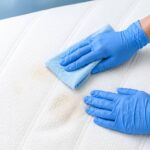
5. Spot-Clean Visible Stains
Mattress stains should be treated individually rather than by saturating the entire surface.
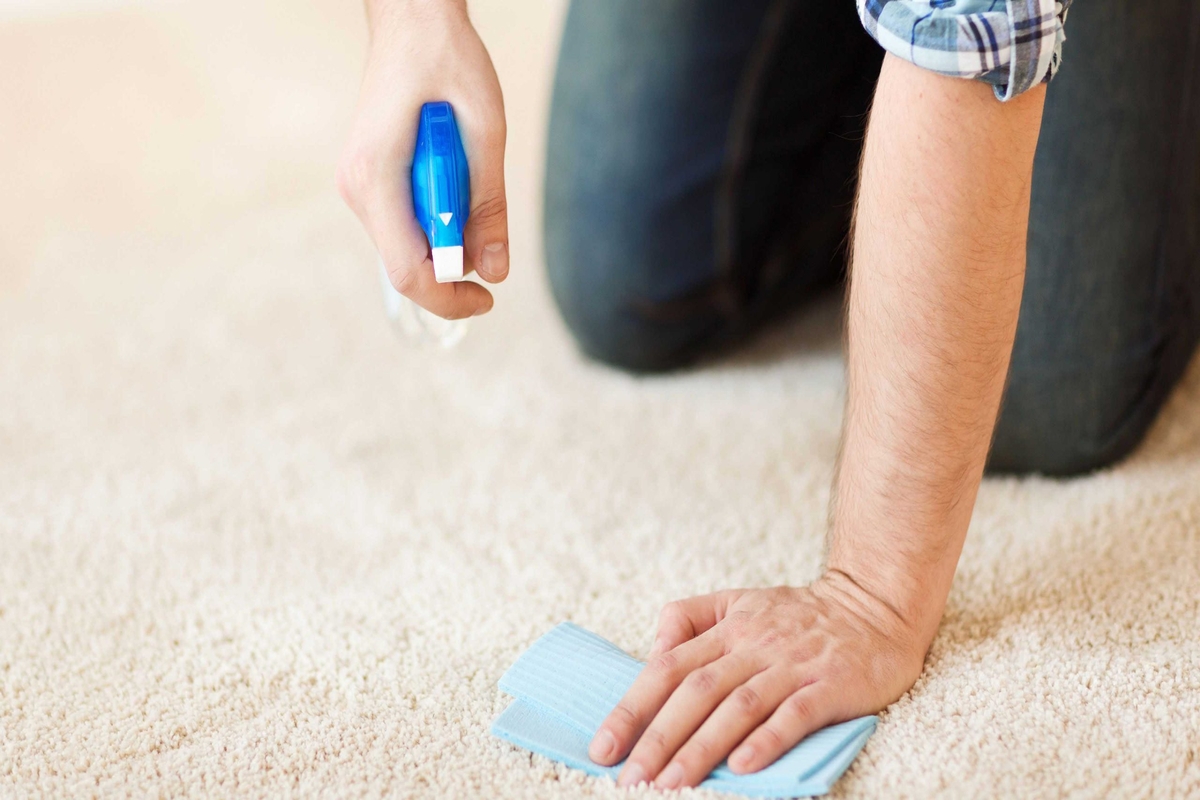
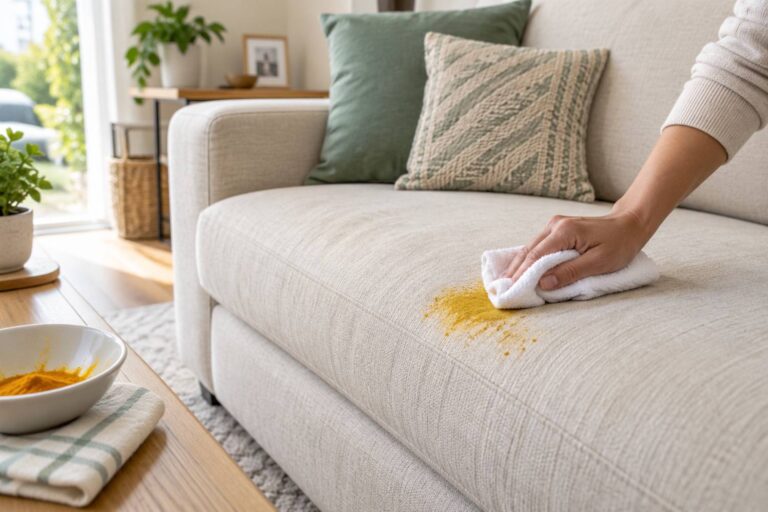
For light, general marks, mix a small quantity of mild detergent with lukewarm water. Apply the resulting solution to a clean cloth instead of spraying it directly onto the mattress.
Blot the stain gently from its outer edge towards the centre. This can help prevent the mark from spreading. Avoid aggressive scrubbing, which may push the contamination further into the fabric or damage the surface fibres.
Use a second cloth, lightly dampened with clean water, to lift away detergent residue. Then press a dry towel against the area to absorb as much moisture as possible.
Protein-based stains such as blood and urine may require an appropriate enzyme cleaner, but it must be suitable for the mattress material. Follow the product instructions and complete a patch test before treating a visible area.
Old or deeply absorbed marks may not respond fully to home treatment. Repeatedly soaking the area can make the problem worse. Where a stain is persistent or covers a large section, a specialist spot and stain removal service may be more appropriate.
6. Deodorise the Mattress
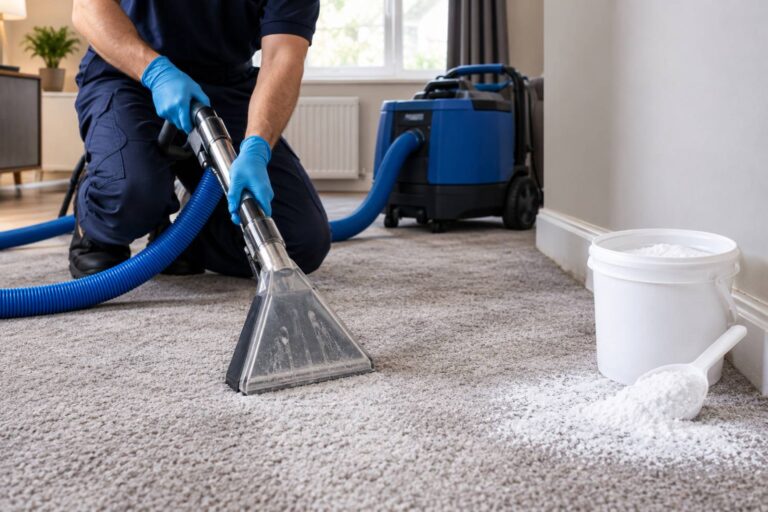
Once stain treatment is complete and the surface is no longer wet, a light application of bicarbonate of soda may help absorb mild surface odours.
Sprinkle a thin, even layer over the mattress and leave it for several hours if the care instructions allow. Afterwards, vacuum the surface thoroughly until no visible powder remains.
Bicarbonate of soda can help with mild smells and surface moisture, but it does not wash away embedded contamination or disinfect the inside of a mattress. A persistent odour may indicate that liquid has penetrated deeper than the surface.
Avoid masking the problem with perfume or heavily fragranced sprays. These products can leave residue and may be uncomfortable for people with sensitive skin or respiratory conditions.
7. Clean the Other Side When Appropriate
If you have a double-sided mattress, allow the first side to dry before turning it over. Repeat the vacuuming and spot-cleaning process on the second side, using the same minimal-moisture approach.
Not every mattress is designed to be flipped. Many memory foam, hybrid and pillow-top models have a designated sleeping surface. If yours is single-sided, follow the manufacturer’s rotation instructions and clean only the accessible surfaces.
8. Let the Mattress Dry Completely
Drying is not an optional final step. A mattress that feels dry on the surface may still contain moisture within its fabric or upper filling.
Improve ventilation by opening windows where weather and security allow. Use a fan to move air across the surface or operate a dehumidifier in the room. Keep the mattress uncovered and do not replace the protector or bedding prematurely.
Drying time varies according to the amount of moisture used, the mattress material, indoor humidity, ventilation and room temperature. Our guide to mattress drying time after cleaning explains these factors in more detail.
Do not sleep on the mattress until it is completely dry. Covering a damp mattress can trap moisture and encourage musty odours or microbial growth.
How to Clean Different Types of Mattresses Safely
The same method is not suitable for every mattress. The construction of the mattress should determine how much moisture, heat and agitation can safely be used.
Memory Foam Mattresses
Memory foam can absorb liquid and may take a long time to release trapped moisture. Vacuum it carefully and use only a small amount of cleaning solution for individual stains.
Apply the solution to a cloth, not directly to the foam, and dry the area promptly. Do not use steam unless the manufacturer expressly approves it, as heat and moisture may affect the structure of some foams.
Pocket-Sprung and Hybrid Mattresses
These mattresses combine upholstered layers with an internal spring system. Excess liquid may travel through the upper layers and remain trapped inside.
Use careful spot cleaning rather than attempting to wash the entire surface. Give extra attention to drying so that moisture does not remain around the internal filling or metal components.
Latex Mattresses
Natural and synthetic latex mattresses can be sensitive to certain chemicals, direct heat and prolonged sunlight. Always follow the manufacturer’s directions and avoid harsh cleaning products.
Use minimal moisture and do not apply high heat to accelerate drying unless the care information specifically allows it.
Pillow-Top Mattresses
The deep, cushioned surface of a pillow-top mattress can hold more dust and moisture than a flatter fabric panel. Vacuum slowly around its stitching and padded sections.
Because the top layer may take longer to dry, be particularly cautious when spot-cleaning. Multiple light treatments are safer than saturating the fabric in one attempt.
Can You Wash a Mattress with Water?
You should not wash or soak an entire mattress with water. Most mattresses cannot be rinsed or dried like washable fabrics, and water trapped inside the foam or filling may lead to odours, mould and deterioration.
There is an important difference between washing and spot cleaning. Spot cleaning applies a controlled amount of solution to a defined area, while washing usually introduces far more liquid than a mattress can safely release.
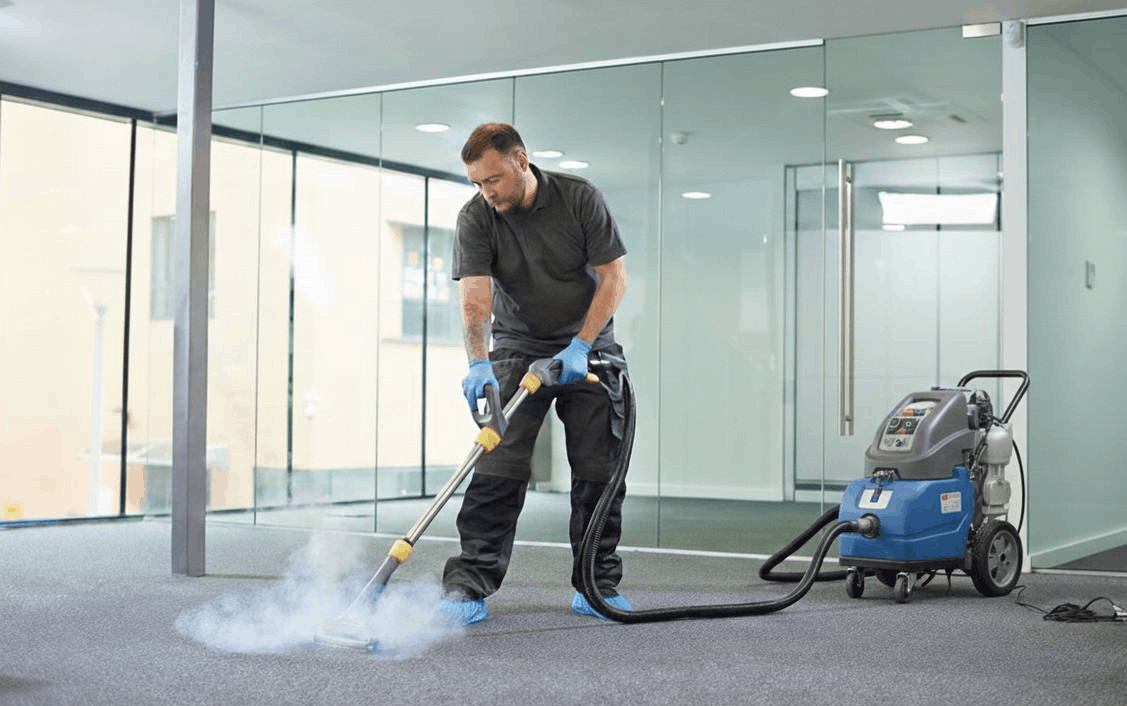
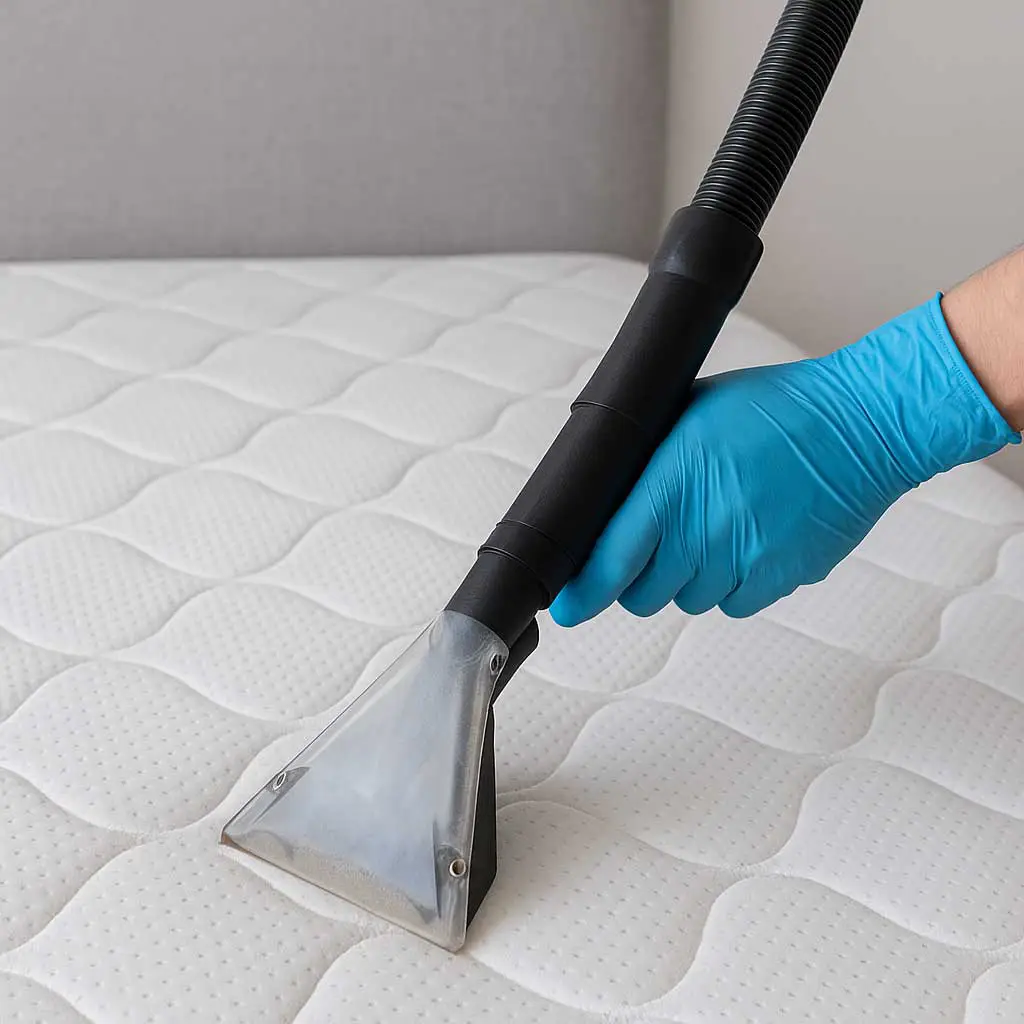
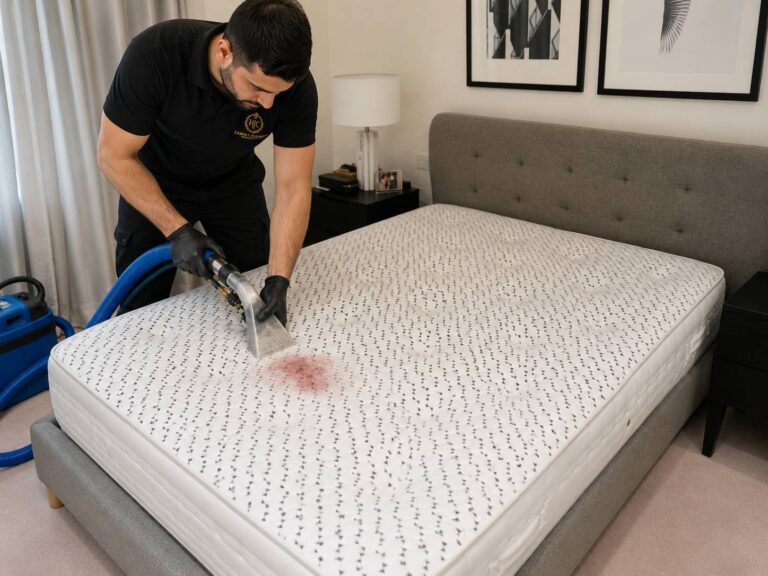
Professional cleaning is also different from soaking a mattress. Appropriate professional equipment can apply and recover cleaning solution in a controlled way, although the correct method still depends on the material, construction and condition of the mattress.
A domestic carpet cleaner should not automatically be used on a mattress. The machine may release too much liquid or lack sufficient extraction power for the mattress structure. Check both the mattress instructions and the machine manufacturer’s guidance before considering it.
Can You Use Baking Soda to Clean a Mattress?
Baking soda, or bicarbonate of soda, can be useful for absorbing mild surface odours and a small amount of moisture. However, it does not remove every stain, eliminate all microorganisms or clean contamination buried inside the mattress.
To use it safely:
- Make sure the mattress surface is not wet.
- Apply only a light, even layer.
- Leave it in place for the time permitted by the manufacturer.
- Vacuum the mattress thoroughly.
- Check seams and tufted areas for remaining powder.
Using more baking soda does not necessarily produce a better result. Excess powder can become difficult to remove, particularly from deeply textured fabrics.
Common Mattress-Cleaning Mistakes to Avoid
Soaking the Mattress
More water does not mean more cleaning power. Saturating a mattress makes extraction and drying difficult and can move contamination deeper into the filling.
Spraying Cleaner Directly onto the Surface
Direct spraying can create uneven wet patches. Applying the solution to a cloth gives you greater control over how much liquid reaches the mattress.
Scrubbing Stains Aggressively
Hard rubbing may spread the stain, distort the fabric or damage the upper comfort layer. Blotting is usually safer.
Using Bleach or Harsh Chemicals
Strong chemicals can discolour fabric, damage foam and leave residues close to the skin. Never use a chemical unless both its label and the mattress instructions confirm that it is suitable.
Mixing Cleaning Products
Combining cleaning chemicals can create dangerous fumes or unpredictable reactions. Use one suitable product at a time and follow its instructions.
Using Steam Without Checking the Mattress Type
Steam introduces heat and moisture. Some mattress materials may tolerate it, while others can be damaged or become difficult to dry. Manufacturer approval should be checked first.
Making the Bed Too Soon
Replacing sheets or a mattress protector before the surface and filling have dried can trap moisture. When uncertain, allow more drying time.
When Is Professional Mattress Cleaning the Better Option?
Home cleaning is most suitable for routine maintenance, loose dust, mild odours and small surface marks. Professional help may be more appropriate when the mattress has:
- Several old or deeply set stains
- An odour that returns after cleaning
- Heavy overall soiling
- Large liquid marks
- Uncertain care requirements
- Failed previous home treatments
- A need for deeper cleaning with controlled moisture recovery
A specialist should first assess the mattress material and condition, as no single cleaning method is right for every mattress. It is also important to understand that some permanent discolouration, mould damage or deterioration cannot be reversed through cleaning.
Hi Carpet Cleaner provides professional mattress cleaning across London, with the cleaning approach selected according to the mattress material, care requirements and level of soiling.
If you are comparing professional treatment with replacement or home cleaning, our guide to mattress cleaning costs in London explains the main factors that influence the price.

Frequently Asked Questions
What Is the Best Way to Deep Clean a Mattress at Home?
The safest method is to vacuum every surface, spot-clean individual stains with minimal moisture, deodorise the mattress when appropriate and let it dry completely. Always check the care label first and avoid soaking the fabric or internal filling.
Can I Deep Clean a Mattress by Hand?
Yes. A mattress can be cleaned by hand using a vacuum cleaner, clean cloths and a small amount of suitable cleaning solution. Apply liquid to the cloth rather than pouring it onto the mattress, blot stains gently and prioritise complete drying.
Can I Wash a Mattress with a Carpet Cleaner?
Only use a carpet-cleaning machine when both the mattress manufacturer and equipment instructions confirm that it is suitable. Domestic machines may apply excessive moisture or fail to recover enough water, leaving the internal layers damp.
How Long Does a Mattress Take to Dry After Cleaning?
Drying may take several hours or longer depending on the mattress type, the quantity of liquid used, room temperature, humidity and ventilation. Keep it uncovered and do not sleep on it until it is completely dry. See our complete mattress drying guide for further advice.
Does Baking Soda Really Clean a Mattress?
Baking soda can help absorb mild odours and surface moisture, but it does not remove all stains, allergens or deeply embedded contamination. It should be treated as one part of mattress maintenance rather than a complete deep-cleaning method.
Can You Sleep on a Mattress Immediately After Cleaning It?
No. You should wait until the mattress is completely dry before replacing the bedding or sleeping on it. Using a damp mattress can trap moisture and contribute to odours, mould or material damage.
When Should a Mattress Be Professionally Cleaned?
Consider professional cleaning when stains or odours remain after careful home treatment, the mattress is heavily soiled, its material requires specialist handling or you need a deeper clean with controlled moisture extraction.