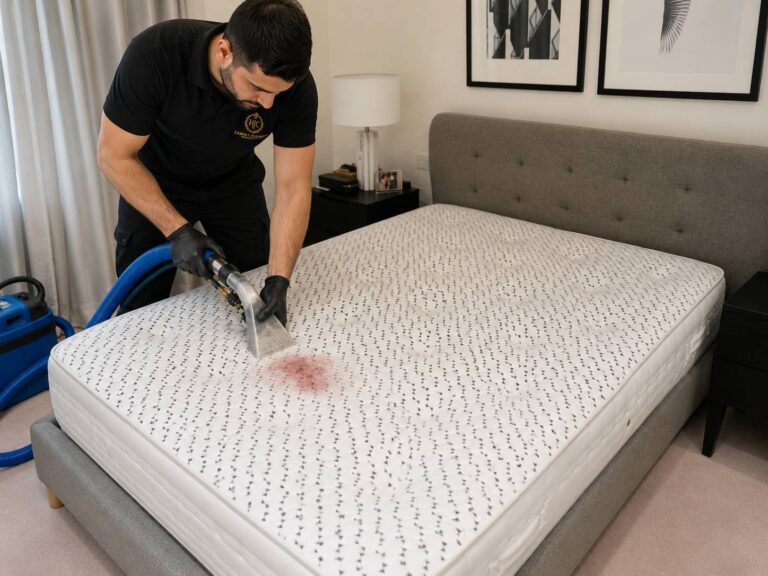
To get pee out of a mattress, remove the bedding, blot up as much urine as possible without rubbing, treat the affected area with a suitable cleaner and leave every layer to dry completely before remaking the bed. Fresh urine can often be treated with diluted white vinegar followed by bicarbonate of soda, while dried stains and persistent odours may require an enzyme cleaner.
The safest method depends on whether the stain is fresh or dry, how deeply the urine has penetrated and what materials the mattress contains. Always check the manufacturer’s care instructions, patch-test any cleaner and avoid soaking the mattress. Excess moisture can carry urine deeper into the filling and leave the internal layers damp long after the surface appears dry.
Key Takeaways
- Act quickly: Remove the bedding and blot fresh urine with clean white towels before it penetrates deeper into the mattress.
- Blot rather than scrub: Rubbing can spread the stain and push urine further into the fabric and filling.
- Use minimal moisture: Apply a mattress-safe cleaner sparingly and never soak memory foam, latex or internal padding.
- Treat dried stains differently: Old urine residue and persistent smells may require a suitable enzyme cleaner rather than repeated surface cleaning.
- Dry every layer completely: Keep the mattress uncovered and use ventilation, a fan or a dehumidifier before replacing the bedding.
- Avoid risky DIY methods: Do not mix cleaning chemicals or use bleach, ammonia, uncontrolled heat or hydrogen peroxide without checking compatibility.
- Seek professional help when needed: Arrange an assessment if the affected area is large, the smell returns after drying or urine has reached the deeper layers.
- Get free professional advice: Send a photo of your mattress to Hi Carpet Cleaner on WhatsApp for a free assessment and guidance on whether specialist mattress cleaning is suitable.
What Should You Do Immediately After Bedwetting?
The sooner you respond to bedwetting, the easier it is to limit staining and prevent urine from reaching the deeper layers of the mattress.
Remove all sheets, blankets, mattress protectors and other affected bedding. Follow the care labels when washing them, and do not leave wet bedding on the mattress while you prepare the cleaning supplies.
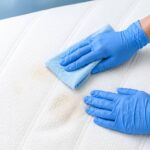
Next, press clean white towels or absorbent paper towels firmly onto the wet area. Replace them as they absorb the liquid and continue until they come away almost dry. Do not rub or scrub the mattress, as this can spread the stain and push urine further into the fabric and filling.
Before applying a cleaning solution, find the mattress care label or check the manufacturer’s instructions online. Memory foam, latex, sprung and hybrid mattresses do not all respond to moisture or cleaning products in the same way.
What You Need to Get Pee Out of a Mattress
You will not necessarily need every item below. The products required will depend on whether the urine is fresh or dry and which cleaning method is suitable for your mattress.
- Clean white towels or microfibre cloths
- Protective gloves
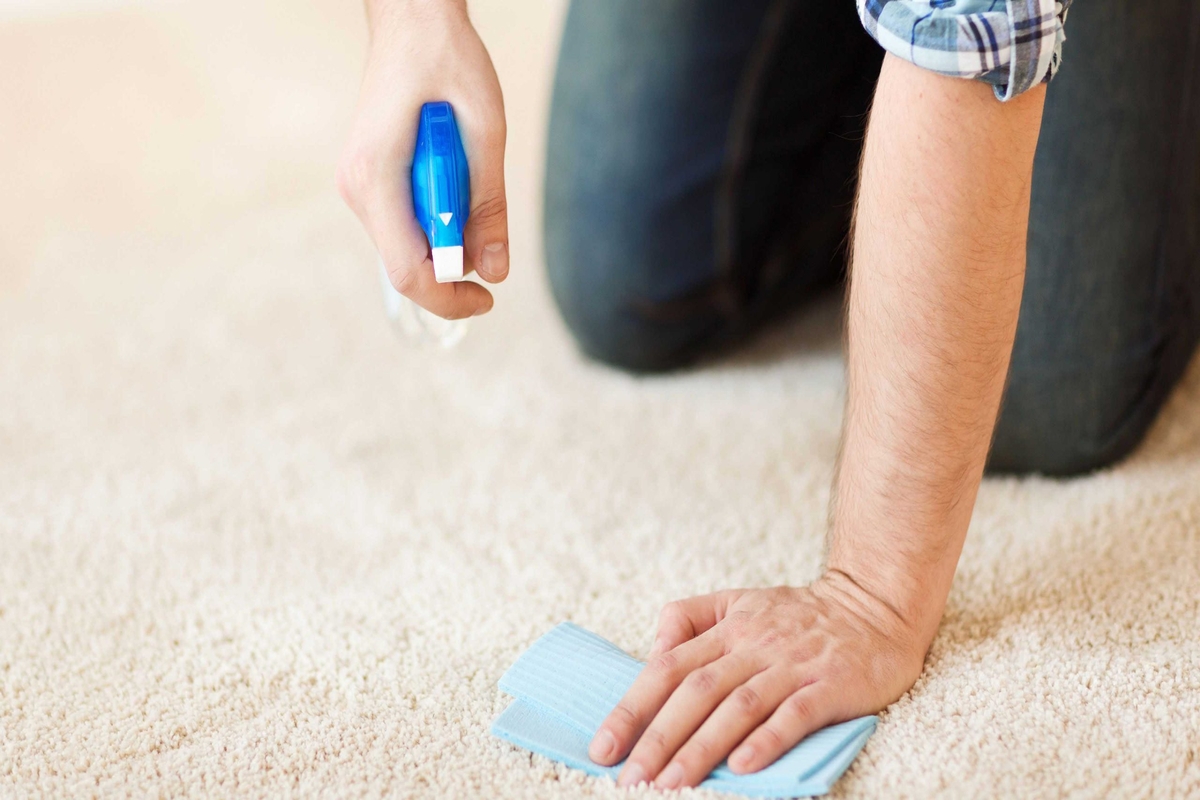
- A spray bottle
- Cold or lukewarm water
- Distilled white vinegar
- Bicarbonate of soda
- A suitable enzyme cleaner
- A vacuum cleaner with an upholstery attachment
- A fan or dehumidifier
White cloths are preferable because coloured towels may transfer dye when wet. Avoid preparing several cleaning solutions at once or mixing different household products together. More chemicals and more water do not necessarily produce a better result.
If the accident also affected the flooring, use a separate treatment suitable for removing pet urine smell from carpet rather than applying mattress-cleaning advice to the carpet.
How to Get Fresh Pee Out of a Mattress
Fresh urine should be treated before it has time to penetrate further or dry inside the mattress. Work carefully and use as little moisture as the treatment requires.
Step 1: Absorb as Much Urine as Possible
After removing the bedding, press a folded white towel firmly onto the wet area. Lift it straight up rather than dragging it across the mattress.
Repeat the process with dry sections of the towel. For a larger accident, you may need several towels. Continue until pressure no longer draws out a noticeable amount of liquid.
Step 2: Patch-Test the Cleaning Solution
If permitted by the mattress manufacturer, prepare a diluted solution of equal parts distilled white vinegar and water. Before treating the visible area, test a small amount on an inconspicuous part of the mattress.
Wait for the test area to dry and check for colour loss, water marking or changes in texture. If the surface reacts, stop and choose a product specifically approved for that mattress.
Step 3: Apply the Solution Carefully
Lightly mist the affected area rather than pouring the solution directly onto the mattress. The goal is to treat the same depth reached by the urine without flooding the internal filling.
Allow the solution a short contact time, following the mattress or cleaning-product instructions where available. Avoid scrubbing, as friction may spread the contamination or damage the surface fabric.
Step 4: Blot the Area Again
Press a fresh, dry towel onto the treated area to absorb the cleaning solution and loosened residue. Continue blotting with dry sections of the towel until you have removed as much moisture as possible.
If the mattress remains very wet, do not add another application immediately. Extract the existing moisture and begin drying it first.
Step 5: Reduce the Remaining Odour
If the care instructions permit it, apply an even layer of bicarbonate of soda over the slightly damp area. It can help absorb residual moisture and reduce mild surface odours.
Leave it in place until both the powder and mattress surface are completely dry. Then remove it thoroughly with a clean upholstery attachment. Bicarbonate of soda can support the process, but it cannot remove urine that has penetrated deeply into the mattress on its own.
Step 6: Dry the Mattress Completely
Leave the mattress uncovered in a well-ventilated room. Position a fan so that air moves across the treated area, and use a dehumidifier if the room is humid or poorly ventilated.
Do not replace the bedding or sleep on the mattress until it is completely dry. The surface can feel dry while foam and other internal materials still contain moisture.
How to Remove Dried Urine Stains from a Mattress
Dried urine is more difficult to treat because it may have penetrated the filling and left concentrated residue behind. The mark may also have been present long enough to affect the surface colour.
Begin by checking the care instructions and vacuuming loose surface debris. Apply a suitable enzyme cleaner according to its label, using only enough to reach the affected area without unnecessarily soaking the mattress. Enzyme cleaners are intended to break down organic residues responsible for persistent stains and odours rather than merely covering the smell.
Do not apply vinegar, bicarbonate of soda or another cleaner on top of the enzyme product unless its manufacturer specifically permits it. Mixing treatments may interfere with how they work, produce an unwanted reaction or leave additional residue inside the mattress.
After the specified contact time, blot away excess liquid and allow the area to dry fully. Inspect it only after drying. A wet treated area may temporarily look darker, making it difficult to judge whether the original stain remains.
If necessary, repeat a controlled treatment after the mattress has dried. Several limited applications are generally safer than saturating the mattress in a single attempt.
Can You Use Hydrogen Peroxide on Dried Urine?
Hydrogen peroxide can help lighten some dried urine stains, but it is not suitable for every mattress. It acts as a mild bleaching agent and may discolour the outer fabric or affect foam, latex and other sensitive materials.
Only consider it if the manufacturer’s instructions permit its use. Choose a low-strength household product, patch-test it in a concealed area and avoid combining it with vinegar, bleach, ammonia or another cleaner.
Apply a limited amount to the affected surface and blot it away after the recommended contact time. If you cannot confirm that hydrogen peroxide is compatible with the mattress, use an approved upholstery or enzyme cleaner instead.
If the mattress has other stubborn marks in addition to urine, our professional stain removal service in London can assess the stain type, affected material and safest treatment method.
How to Remove Urine Smell from a Mattress
Removing the visible mark does not necessarily eliminate the smell. Urine may have travelled beyond the surface and remained inside foam, padding or other absorbent layers.
A suitable enzyme cleaner is usually the most practical home option for a persistent urine smell. It treats the organic residue responsible for the odour instead of disguising it with fragrance. Select a product suitable for upholstery and the relevant type of urine, and follow its directions closely.
Bicarbonate of soda may help absorb mild residual odour and surface moisture after the initial cleaning, but it cannot reliably reach contamination held deep inside the mattress. Similarly, air fresheners and essential oils may temporarily mask the smell without removing its source.
A smell that disappears while the mattress is dry but returns in warm or humid conditions can indicate contamination within the internal layers. Repeatedly wetting the surface is unlikely to resolve a deeply embedded problem and may make drying more difficult.
How to Dry a Mattress After Bedwetting
To dry a mattress after bedwetting, first absorb as much liquid as possible, leave the mattress uncovered and create continuous airflow across the damp area. A fan and dehumidifier can accelerate evaporation, but the mattress must remain unused until its internal layers are dry.
Remove Moisture Before Air-Drying
Ventilation works more efficiently after the bulk of the liquid has been physically removed. Press dry towels onto the affected area and replace them whenever they become damp.
Do not use direct high heat from a hairdryer, heater or iron. Excessive heat can damage foam, adhesives, fire-resistant treatments and surface fabrics. Heat may also make some stains more difficult to treat.
Keep the Mattress Uncovered
Remove all bedding and leave the treated area fully exposed. Putting a sheet or waterproof protector over a damp mattress restricts evaporation and may trap moisture inside.
If the mattress can be safely repositioned according to its care instructions, increasing airflow around its sides and underside may help. Do not bend or stand a heavy foam or sprung mattress in a way that could damage its construction.
Improve Airflow Around the Bed
Open windows when weather and outdoor humidity allow. Position a fan so that it moves air across the mattress rather than blowing directly into one small spot.
For London homes with limited ventilation or high indoor humidity, a dehumidifier can help remove moisture from the surrounding air. Keep the bedroom door open where practical to support circulation.
How Long Does a Mattress Take to Dry After Bedwetting?
There is no reliable drying time that applies to every mattress. A lightly treated surface stain may dry within several hours, while a larger accident that has reached thick foam or internal padding may take considerably longer.
Drying time is affected by:
- The amount of urine absorbed
- The amount of cleaning solution applied
- The mattress type and thickness
- Room temperature and humidity
- Air circulation
- Whether moisture has reached the underside
Do not rely on a fixed number of hours. Check the condition of the mattress itself before using it.
How Can You Tell Whether the Mattress Is Dry?
Press a clean, dry towel firmly onto the treated area. It should not pick up moisture, and the mattress should not feel noticeably cool or damp compared with the surrounding surface.
Check the seams, sides and underside near the affected area where accessible. There should be no damp or musty smell. If the urine smell becomes stronger when you press on the mattress, liquid or residue may remain below the surface.
Wait longer if you are uncertain. Sleeping on or covering a damp mattress can trap moisture and contribute to musty odours, material deterioration or mould growth.
Drying time varies considerably by mattress construction and room conditions, so read our complete guide to how long a mattress takes to dry after cleaning.
Can You Clean Urine from a Mattress Without a Vacuum?
It is possible to treat a fresh urine accident without a vacuum if you avoid powdered products. Absorb the liquid thoroughly, apply an appropriate liquid cleaner sparingly and blot away the remaining moisture before air-drying the mattress.
If you use bicarbonate of soda, it must be removed completely after drying. Brushing may push fine particles further into the fabric, so a vacuum with a clean upholstery attachment is normally the safer option.
When no suitable vacuum is available, use a mattress-compatible enzyme cleaner that does not require a powdered finishing treatment. Follow its directions and confirm that any residue should be blotted rather than vacuumed.
Can You Clean a Mattress Without Bicarbonate of Soda or Vinegar?
You can clean urine from a mattress without bicarbonate of soda or vinegar. A mattress-safe enzyme cleaner or an upholstery stain treatment approved by the manufacturer can be used instead.
Vinegar may help with some fresh surface accidents, while bicarbonate of soda can absorb mild odours and moisture, but neither is essential. They should not be treated as universal remedies for every mattress material or depth of contamination.
The most important steps are removing as much urine as possible, selecting a compatible treatment, controlling the amount of moisture and drying the mattress completely.
Does the Method Change for Different Types of Mattress?
Mattress construction affects how quickly urine is absorbed, which cleaners can be used and how long drying may take.
Memory Foam Mattresses
Memory foam is highly absorbent and can retain moisture below the surface. Use minimal liquid, blot thoroughly and allow extra time for internal drying. Do not assume that the mattress is ready to use merely because its cover feels dry.
Latex Mattresses
Natural and synthetic latex may react poorly to certain chemicals or excessive moisture. Follow the manufacturer’s instructions and avoid hydrogen peroxide or other oxidising treatments unless they are specifically approved.
Sprung and Hybrid Mattresses
Urine can pass through the upholstered surface and reach comfort layers surrounding the springs. Treat the area promptly and check the sides and underside for signs that the liquid has travelled further.
Mattresses with Removable Covers
A removable cover is not necessarily machine washable. Check its label before removing or washing it. Washing an unsuitable cover can cause shrinkage, damage the zip or make it difficult to refit.
For broader routine care beyond the affected area, follow our guide on how to deep clean a mattress at home without damaging it.
Mistakes That Can Make the Stain or Smell Worse
Rubbing is one of the most common mistakes because it spreads the urine and forces it further into absorbent materials. Pouring water or cleaner directly onto the mattress can cause a similar problem.
Avoid using bleach or ammonia-based products. Bleach may damage the fabric and internal materials, while ammonia-based cleaners can leave a strong smell and are particularly unsuitable for pet accidents. Never combine household cleaning chemicals.
Hot water, steam, hairdryers and heaters should also be used cautiously. Uncontrolled heat and moisture can affect foam, adhesives and surface fabrics without reliably extracting urine from the internal layers.
Do not cover the mattress while it is damp, and do not judge the result until the area is fully dry. Both the stain and smell may change during drying.
If you are considering specialist treatment, our guide to mattress cleaning costs in London explains how mattress size, material and the severity of staining can affect the price.
When Should You Arrange Professional Mattress Cleaning?
Professional assessment is advisable when the affected area is large, the urine has been present for a long time or the smell returns after the mattress dries. It may also be safer when repeated accidents have occurred in the same place, the mattress contains moisture-sensitive materials or several DIY products have already been applied.
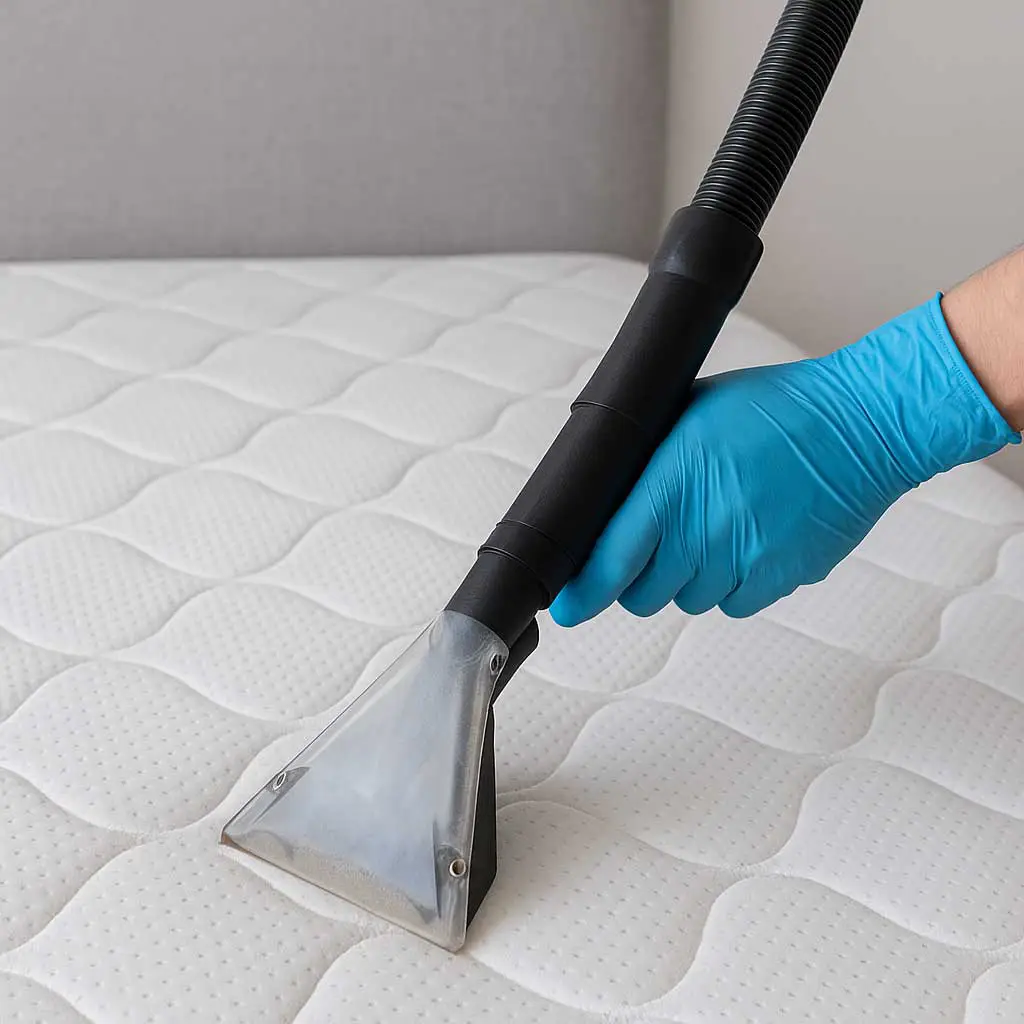
A professional treatment may offer better moisture control and extraction than repeated surface cleaning. However, complete removal cannot be guaranteed in every case. The outcome depends on the age and depth of the contamination, the mattress construction and any previous treatments.
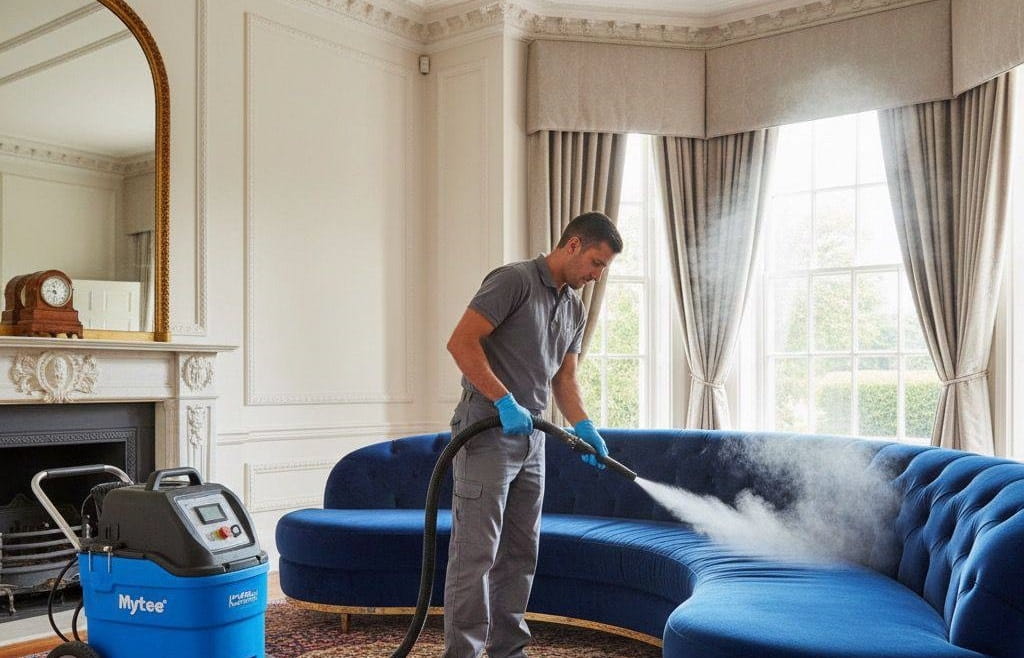
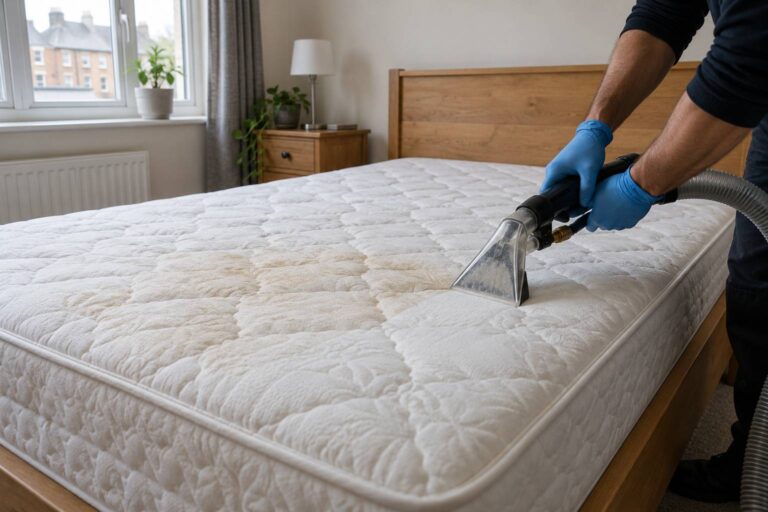
If the stain has penetrated the internal layers or the smell returns after drying, professional mattress cleaning in London can provide a more controlled treatment using methods selected for the mattress and contamination level.

How to Protect a Mattress from Future Bedwetting Accidents
A washable waterproof mattress protector creates a barrier between the bedding and the mattress. It can make future accidents easier to manage and reduce the likelihood of liquid reaching the internal filling.
For recurring bedwetting, consider keeping a second protector and clean set of bedding ready. A washable absorbent bed pad can provide another removable layer, particularly when rapid overnight changes are needed.
Wash the protector according to its care label and let it dry completely before putting it back on the bed. Inspect it regularly for cracks, damaged seams or worn waterproof backing.